

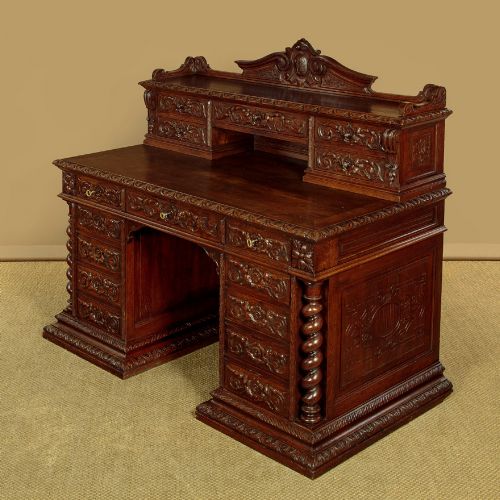


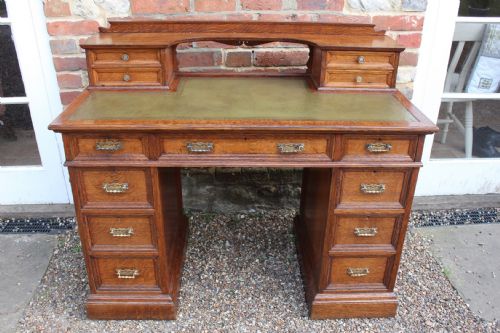
Victorian Superstructure Desk
A victorian superstructure desk combines a traditional writing surface with a tiered upper cabinet of pigeonholes and small drawers.
Victorian Superstructure Desk
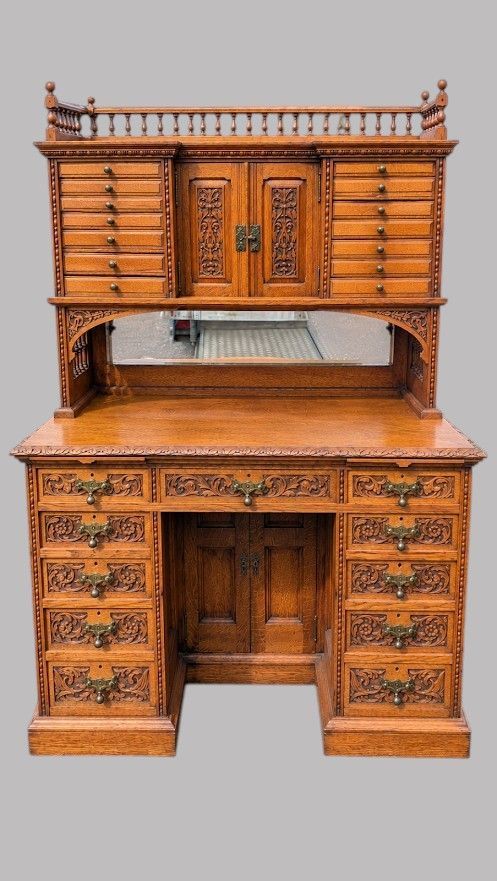
A victorian superstructure desk is a substantial nineteenth-century writing table featuring an attached upper tier of compartments, small drawers, or a cabinet top. The form accommodates the administrative needs of the period, providing dedicated storage for correspondence directly above the main working surface.
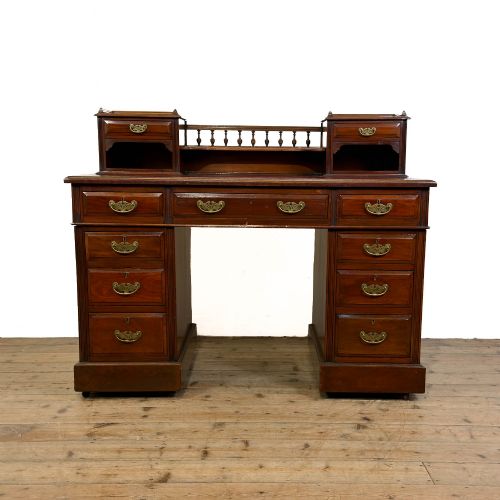
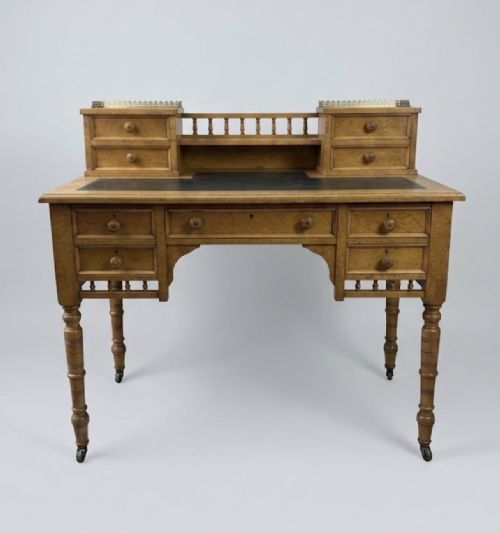
Most examples encountered on this page date from the decades between eighteen sixty and nineteen hundred, spanning the broader Victorian era. These pieces appear in forms such as kneehole desks, pedestal desks, and writing tables fitted with cabinet tops or raised drawer structures.
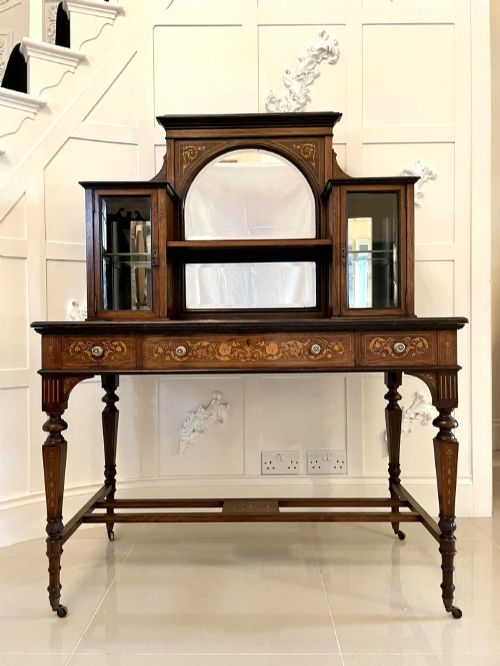
Woods such as oak, mahogany, rosewood, and burr walnut dominate the construction, often enhanced with marquetry, brass mounts, or carved detailing. Regional variations include Scottish country house pieces alongside sophisticated urban productions.
How they were made
Cabinet makers utilised dense hardwoods like mahogany and oak for the primary carcases, adding decorative veneers such as burr walnut and birds-eye maple to prominent surfaces. Drawer linings typically employ secondary timbers, constructed with traditional dovetail joints to ensure durability.
Surface treatments included brass hardware, ormolu mounts, leather writing inserts, and inset mirror glass panels. The upper superstructure was either built integrally with the lower desk or constructed as a separate cabinet top secured to the writing surface.
The evidence shows desks spanning from eighteen sixty to nineteen hundred, encompassing Aesthetic, Gothic, and Renaissance Revival styles.
What varies in quality
Quality in a victorian superstructure desk rests upon the selection of timber figures and the precision of the cabinet work, particularly in the alignment of numerous small drawers within the upper tier. Superior pieces exhibit continuous grain matching across drawer fronts and refined secondary timbers.
The presence of documented maker signatures or exhibition-standard craftsmanship elevates an example from standard commercial production to workshop attribution. Decorative additions such as fine marquetry inlay, gilt-bronze mounts, or carved oak details further distinguish finer commissions.
Hobbs & Co.·George Faulkner Armitage·Thomas Turner·Howard & Son·James Lamb, Manchester
The Victorian Superstructure Desk Glossary
- Superstructure
- The tiered arrangement of small drawers, pigeonholes, or a cabinet mounted upon the rear of a writing desk. This upper section provides segregated storage for letters and stationery.
- Pedestal desk
- A heavy writing table supported by two banks of drawers reaching down to the floor. These forms often carry the superstructure across the twin pedestals.
- Kneehole desk
- A compact writing desk featuring a central recess for the sitter's legs, flanked by single or double banks of drawers. The style appears frequently in oak throughout the nineteenth century.
- Marquetry
- Decorative patterns formed by fitting together contrasting veneers of wood or other materials onto a structural carcase. This technique appears on high-status Victorian writing furniture.
- Bureau de dame
- A small decorative ladies writing desk, often featuring fitted interior compartments and delicate cabriole legs or cabinet tops. These lighter pieces suit domestic reception rooms.
Victorian Superstructure Desk: Frequently Asked Questions
What is a Dickens desk?
A Dickens desk is a specific form of pedestal desk featuring a raised superstructure of pigeonholes and small drawers flanking a central writing space. The design allows the user to organise documents while keeping the main leather-inset surface clear for writing.
These pieces typically date from the mid to late nineteenth century and were favoured for estate management and study use.
How do I date a Victorian desk?
Dating relies upon timber selection, construction methods, and stylistic cues recorded across the Victorian period. Earlier examples often feature solid mahogany and restrained classical proportions, whilst later pieces embrace oak revival styles or aesthetic movement details.
Maker stamps, registry marks, and secondary wood choices also assist in narrowing the decade of manufacture between eighteen sixty and nineteen hundred.
Were these desks used in offices?
Victorian superstructure desks served in private libraries, country house estate offices, and urban administrative settings. The tiered compartments provided private filing space for correspondence before the advent of modern office furniture.
Finer decorative models were equally suited to domestic drawing rooms and ladies writing boudoirs.
How should I care for the leather top?
Writing surfaces inset with leather require gentle cleaning using a damp cloth without harsh detergents or excessive moisture. Periodic application of specialist leather balm preserves the suppleness of the hide.
Keeping the desk away from direct sunlight and heat sources prevents the leather and underlying timbers from drying and cracking.