


Victorian Street Scene
These Victorian street scene paintings capture the daily life, architecture and atmospheric weather of nineteenth-century towns and cities.
Victorian Street Scene
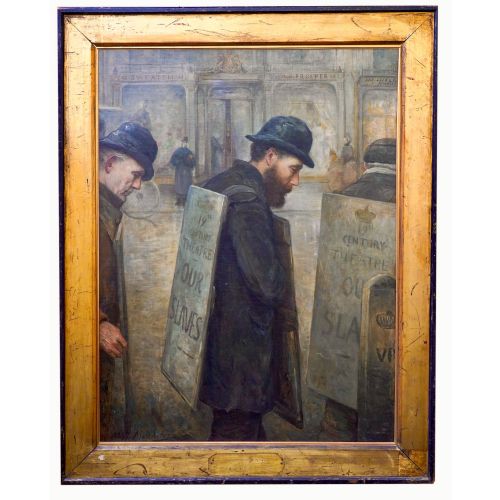
A victorian street scene depicts the urban or village thoroughfares of the nineteenth and early twentieth centuries, populated by figures such as chestnut sellers, cab takers and market crowds. These works record the changing character of domestic and continental locations, from London and York to Paris, Cairo and Dutch towns.
Buyers mostly encounter framed paintings executed in oil or watercolour, ranging from intimate watercolours on paper to substantial oil paintings on canvas or board. They frequently capture specific atmospheric conditions, including moonlit roads, winter twilight or bright daylight against architectural backdrops like cathedrals and churches.
The aesthetic encompasses styles such as Victorian social realism, genre realism and continental townscapes. Works vary from detailed topographical records to moody, atmospheric depictions of urban life after dark.
How they were made
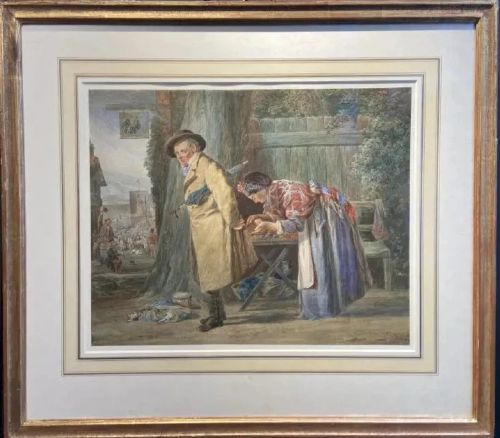
Artists painted these urban subjects primarily using oil or watercolour on supports like canvas, panel, paper and board. Oil paints provided rich textures for figures, horses and carts, while watercolours allowed for swift, transparent washes suited to townscapes and architectural views.
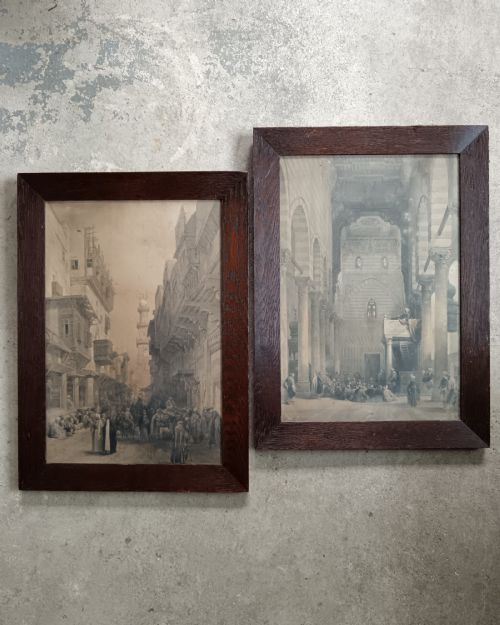
Many surviving works retain their period framing, utilising materials such as wood, giltwood and gold leaf to house the paintings behind glass or in traditional mouldings. Lithographs also appear, demonstrating printmaking techniques alongside original hand-painted art.
Chestnut sellers and moonlit London bridges pop up repeatedly, proving that nineteenth-century commuters had a serious fondness for evening drama.
What varies in quality
The ability of the artist to handle perspective, architecture and the natural movement of figures defines the upper tier of these works. Skilled hands manage complex urban compositions involving buildings, crowds, horses and carts with convincing spatial depth.
Atmospheric command distinguishes exceptional pieces, particularly in challenging lighting conditions such as moonlight, winter twilight or dusk. The preservation of the original framing, whether giltwood or dedicated workshop mouldings, adds material integrity to the piece.
Felix Stone Moscheles·Joseph H Barnes·David Roberts·Louis Haghe·Albert Ludovici Jnr·William Manners·Léon Joseph Voirin·Cornelis Christian Dommersen·William George Meadows·Lewis J Wood·Robert Hollands Walker·Joseph W Milliken·Walter Meegan·David Small·Charles H Poingdestre·Walter Emsley·William Greaves·Tom Dudley·Matthew Hale·Henry Schafer
The Victorian Street Scene Glossary
- Genre painting
- A style of art depicting scenes from everyday life, typically involving ordinary people engaged in common activities. These works focus on mundane moments rather than grand historical or mythological subjects.
- Social realism
- An artistic movement that highlights the everyday conditions of the working classes and the poor, often addressing social and economic realities. In street scenes, this involves honest portrayals of laborers, vendors and urban hardship.
- Giltwood
- Wood that has been treated and covered with a thin layer of gold leaf or gold paint. Frames utilising this technique were standard for displaying finished fine art during the nineteenth century.
- Watercolour
- A painting method in which the paints are made of pigments suspended in a water-based solution. Artists apply these transparent washes to paper to create luminous effects.
Victorian Street Scene: Frequently Asked Questions
What subjects appear in these scenes?
These works typically depict urban thoroughfares, market days, architectural views and figures engaged in daily routines. Common motifs include horse-drawn carts, cab stands, street vendors and prominent local buildings like churches and cathedrals.
Settings range from British towns and London streets to continental European locations such as Paris, Dutch towns and Cairo. Artists frequently captured specific weather and lighting, including moonlight and winter twilight.
How do I care for a watercolour?
Watercolours on paper require protection from direct sunlight to prevent the pigments and paper from fading over time. Displaying them away from moisture-heavy rooms helps preserve the paper support.
Glazing with glass helps shield the delicate paint surface from atmospheric pollutants and physical damage. Retaining or restoring appropriate framing ensures the work remains properly supported.
What is the difference between oil and watercolour?
Oil paintings use pigment suspended in drying oils applied to canvas, wood or board, offering rich textures and deep colour layering. Watercolours employ water-soluble pigments on paper, resulting in lighter, more translucent compositions.
Oils generally require sturdy supports like stretcher frames, whereas watercolours are almost invariably framed under glass to protect the paper.
How are periods identified?
Periods are determined through a combination of stylistic markers, artist active dates, framing materials and physical evidence on the reverse of the canvas or board. Signatures, inscriptions and labels from period framers provide primary clues.
Clothing styles of the figures, architectural details and transport methods like horses and carts also help narrow down the decade of execution.