



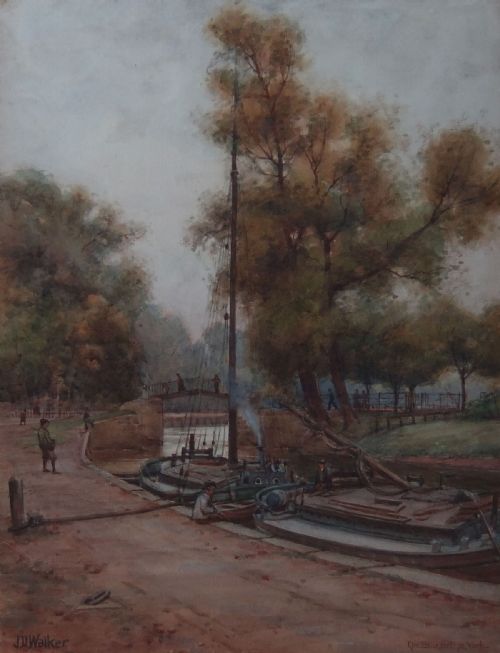

Earthy Tone Watercolour Landscape
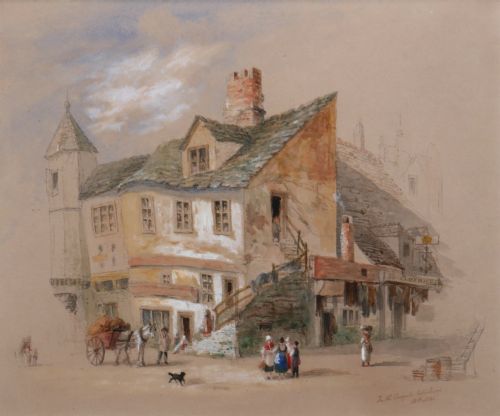
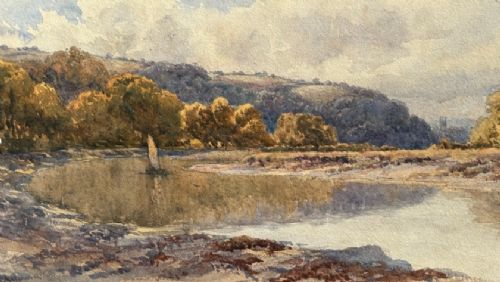
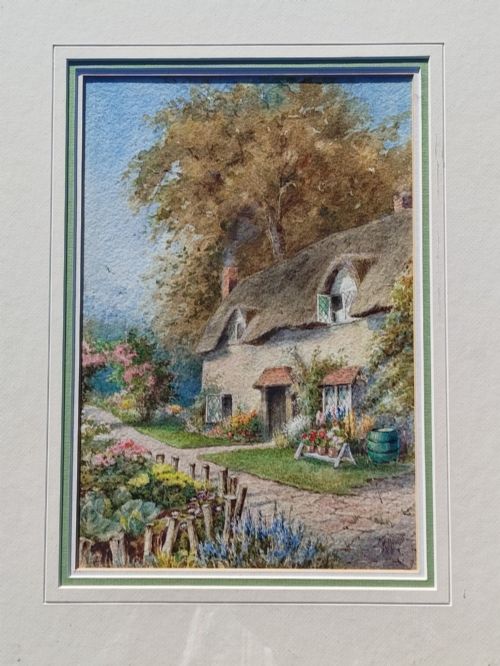
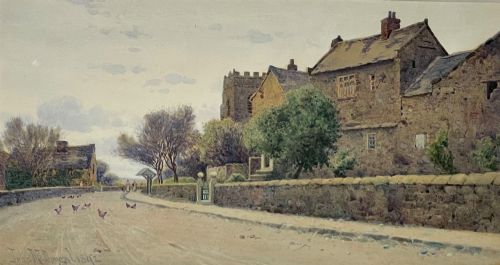
These earthy tone watercolour landscape works capture pastoral and urban scenes through muted pigments on paper.
Earthy Tone Watercolour Landscape
An earthy tone watercolour landscape presents views of British and European countryside, streets, and rural yards rendered in subtle, natural pigments. When exploring an earthy tone watercolour landscape, buyers encounter depictions ranging from Scottish rivers and Yorkshire bridges to French village scenes and Spanish vistas.
The selections span the nineteenth century through the 1930s, encompassing Victorian topographical art, Edwardian views, British Impressionism, and Post-Impressionism. Most examples on this page date from the Victorian era up to the interwar period.
Makers represented include Thomas Fenwick, David Law, John McDougal, John Atkinson, G Villiers Stuart, Charles H Poingdestre, Rowland Henry Hill, Francis William Topham, Maurice Asselin, Fred C. Jones, John D. Walker, William Kay Blacklock, Fred Lawson, and George Soper.
How they were made
These works rely on watercolour pigment and watercolour paint applied to paper supports, frequently augmented with graphite underdrawing. Artists employed fluid washes to build up tones across the surface.
Framing typically involves glass protection paired with wood or gilt wood surrounds, preserving the delicate water-soluble pigments from atmospheric damage.
Earthy Tone Watercolour Landscape Retail Price Guide 2026
Typical asking prices for earthy tone watercolour landscape among the pieces listed under this phrase on Sellingantiques today, from the lower quarter to the upper quarter. They describe what is for sale here now, not the wider market.
Listings feature works spanning the nineteenth century, Victorian period, Edwardian era, and the 1920s and 1930s.
What varies in quality
Quality rests upon the artist's handling of tone and perspective, distinguishing spontaneous topographical records from stiffer, formulaic compositions. The subtlety of pigment layering dictates the depth achieved within the landscape.
Preservation of the paper and the retention of muted pigment integrity without excessive fading separate exceptional examples from compromised sheets.
Thomas Fenwick·David Law·John McDougal·John Atkinson·G Villiers Stuart·Charles H Poingdestre·Rowland Henry Hill·Francis William Topham·Maurice Asselin·Fred C Jones·John D Walker·William Kay Blacklock·Fred Lawson·George Soper
The Earthy Tone Watercolour Landscape Glossary
- Watercolour pigment
- Finely ground colour particles suspended in a water-soluble binder. This medium allows artists to achieve transparent washes and delicate tonal gradations.
- Graphite
- A form of crystalline carbon used for initial sketching beneath the pigment. Artists relied on it to map out composition lines before applying washes.
- Topographical art
- Accurate visual recording of specific locations and buildings. These works served as both artistic expressions and historical records of towns and countryside.
- Gilt wood
- Timber frames treated with a thin layer of gold leaf or metallic gilt. This traditional finishing method enhances the presentation of works on paper.
Earthy Tone Watercolour Landscape: Frequently Asked Questions
What is an earthy tone watercolour landscape?
These works are original paintings on paper utilising muted water-soluble pigments to depict rural views, street scenes, and topographical subjects. They date primarily from the nineteenth century through the early decades of the twentieth century.
Artists utilised these natural palettes to convey the atmospheric conditions of British, European, and overseas locations, ranging from Scottish rivers to Spanish landscapes.
How should I hang these watercolours?
Watercolours require protection from direct sunlight to prevent the pigments from fading over time. Glazed frames keep dust and moisture away from the paper surface.
Positioning works away from direct heat sources and strong daylight ensures the preservation of the paper support and the subtle tones within the composition.
How do I date a landscape watercolour?
Dating relies upon artist signatures, inscribed titles on the mount or reverse, and stylistic markers associated with movements such as Victorian topographical art or British Impressionism. Framing styles can also offer clues to the period.
Paper characteristics and handwritten notes by the artist frequently provide verifiable dates, such as the mid-nineteenth century or the interwar period.
Who painted these landscapes?
The works are produced by named artists, professional painters, and regional figures active during the nineteenth and early twentieth centuries. Many exhibited within specific artistic groups of their era.
Creators include notable figures associated with British Realism, Post-Impressionism, and topographical traditions, recording scenes from Yorkshire, Scotland, and abroad.