
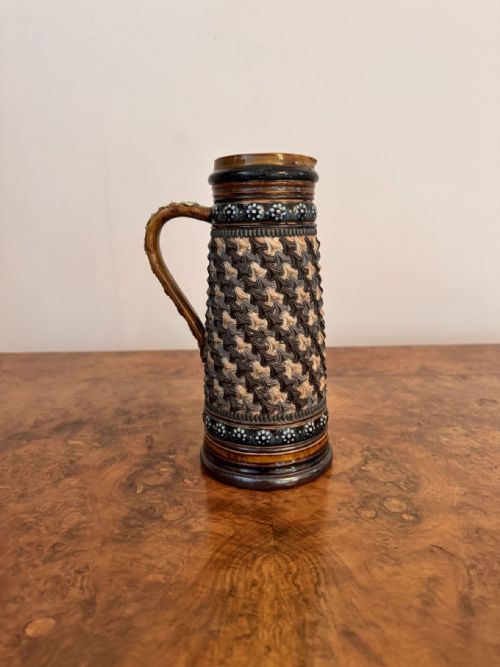
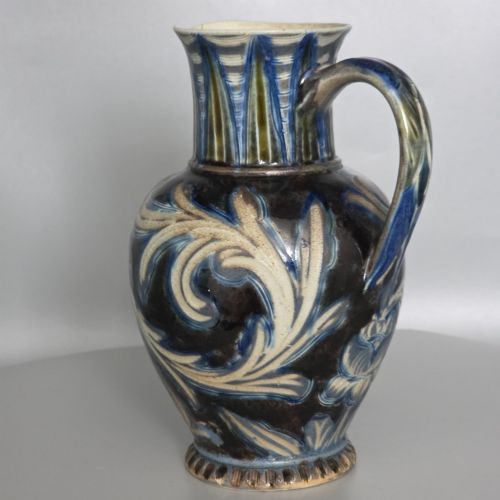
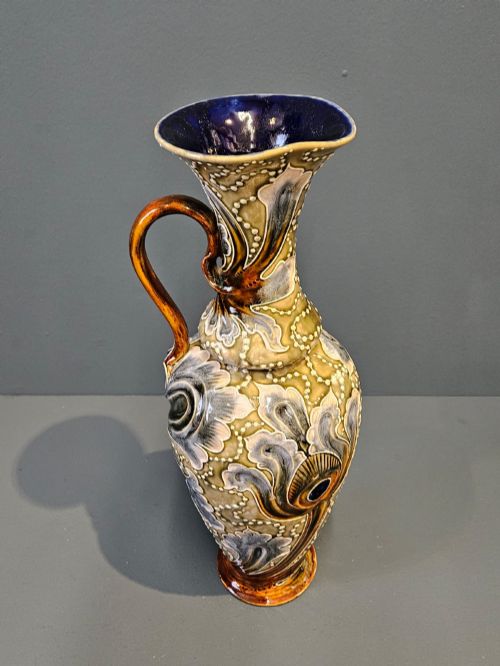
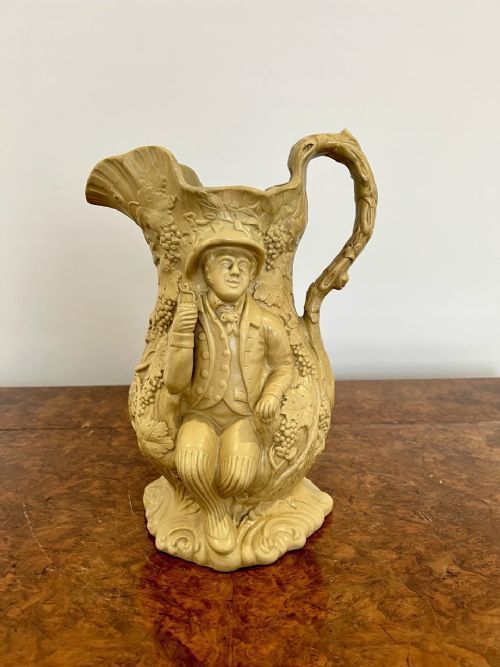


Victorian Stoneware Water Jug
These Victorian stoneware water jugs are robust, salt-glazed, and relief-moulded vessels designed for serving water at the nineteenth-century dining table.
Victorian Stoneware Water Jug
A Victorian stoneware water jug is a heavy, durable vessel produced primarily during the nineteenth century for domestic service. These pieces commonly take the form of jugs, pitchers, and ewers utilised for holding and pouring water at the table.
The selections encountered here span several decades of the Victorian era, notably featuring robust salt-glazed bodies alongside refined art pottery and moulded earthenware. Makers produced both utilitarian vessels and highly decorative display pieces.
Forms range from large exhibition pieces and monumental harvest jugs down to smaller graduated sets designed for daily household use. Collectors typically find pieces finished with applied sprigged decoration, incised patterns, or glazed surfaces.
Materials and manufacturing methods
Potters relied heavily on dense stoneware and salt glaze techniques, throwing or moulding heavy clay bodies before firing them at high temperatures. The introduction of salt during the kiln firing created the characteristic pitted, orange-peel texture unique to salt-glazed ceramic.
Relief moulding allowed makers to press intricate figural scenes, classical motifs, and botanical patterns directly into the damp clay body. Other pieces utilised incised decoration, applied cream sprigs, or specialised coloured glazes upon buff-coloured and earthenware bodies.
The selection includes prominent works carrying stamps and inscriptions from nineteenth-century English potteries and named decorative artists.
Distinctions in quality
Quality rests upon the crispness of the relief moulding and the control evident in the firing of the salt glaze. Sharp, deep detailing on figural and botanical motifs separates superior vessels from softer, worn production pieces.
The reputation of the studio, pottery, or named decorator elevates certain jugs above standard utilitarian output. Art pottery examples displaying individual hand-incising or painted details by recognised artists command greater appreciation than routine commercial wares.
Doulton Lambeth·Charles Meigh·Jones And Walley·Minton
The Victorian Stoneware Water Jug Glossary
- Salt glaze
- A vitreous coating formed by throwing common salt into the kiln during high-temperature firing. This reaction produces a glossy, slightly textured finish resistant to liquids.
- Relief-moulded
- A technique where decorative patterns are pressed in high relief onto the exterior surface of the jug. It creates tactile historical and classical scenes.
- Parian ware
- A fine-grained, unglazed porcelain biscuit resembling white marble. Named after Parian marble from the Greek island of Paros, it was favoured for decorative drinks jugs.
- Sprigging
- The process of applying separately moulded clay motifs onto the wet body of a vessel before firing. These applied ornaments often appear in a contrasting cream or pale tone.
- Ewer
- A large jug featuring an elaborate spout and handle, traditionally designed for hand-washing or formal water service. Many Victorian examples functioned primarily as decorative centerpieces.
Victorian Stoneware Water Jug: Frequently Asked Questions
Were these jugs used daily?
Many of these sturdy stoneware and salt-glazed pieces served practical, daily roles in nineteenth-century households for carrying and pouring water.
Larger exhibition pieces and delicate Parian ware or art pottery jugs, however, remained strictly for display or formal dining.
How do I date a Victorian water jug?
Examine the stylistic cues, potter's marks, and manufacturing techniques recorded on the base or body. Victorian pieces often incorporate registration marks, specific maker stamps, or stylistic movements like Arts and Crafts.
Comparing the relief moulding style and glaze type against known production periods helps narrow down the decade of manufacture.
Can these jugs hold liquids safely today?
Most antique stoneware and salt-glazed jugs remain watertight and structurally sound for holding water. However, hairline cracks or historic repairs require caution.
Inspect the interior and base closely for seepage before using any antique vessel for serving beverages at the table.