


Victorian Starburst Diamond Pendant
A Victorian starburst diamond pendant captures celestial brilliance in gold and silver, offering timeless elegance for the discerning collector.
Victorian Starburst Diamond Pendant
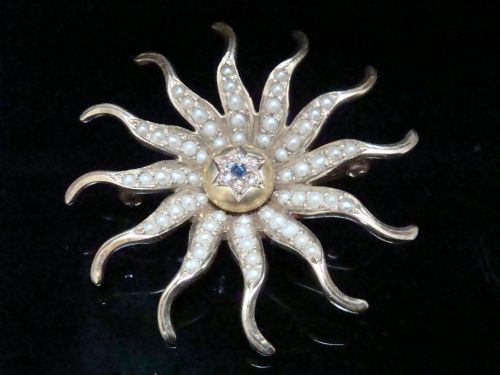
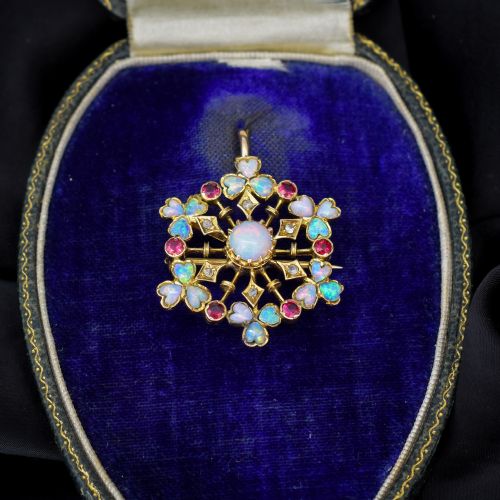
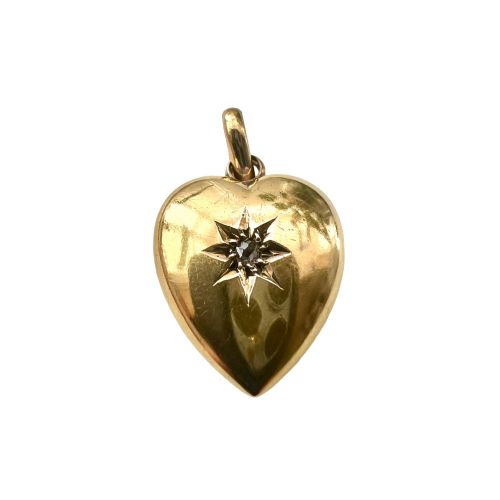
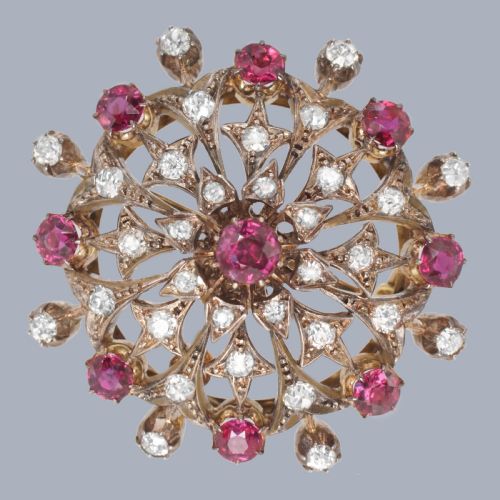
These pieces comprise intricate jewellery designed to resemble celestial bodies, frequently doubling as brooches thanks to convertible fittings. The listings here showcase items originating from the nineteenth century, including specific dates such as eighteen eighty and eighteen ninety.
Buyers encounter numerous variations featuring central diamond clusters flanked by radiating points. Many examples incorporate coloured gemstones alongside diamonds, creating distinctive floral or star motifs rooted in Victorian design.
Distinguishing quality across pieces
Superior examples demonstrate meticulous gemstone selection and secure setting work where silver and gold integrate seamlessly. The weight and proportion of the diamonds relative to the supporting metal define the overall impact of the piece.
Versatility also affects appreciation, as convertible items functioning as both brooches and pendants display advanced mechanical ingenuity. Original boxes and gem reports further elevate the desirability of specific items.
Victorian starbursts let wearers literally walk around wearing a little piece of the night sky right on their lapel.
The Victorian Starburst Diamond Pendant Glossary
- Starburst
- A decorative motif radiating outwards from a central point to mimic a glowing star. This design dominated late nineteenth-century celestial jewellery.
- Convertible
- A piece of jewellery featuring detachable or folding findings that allow it to be worn as both a brooch and a pendant. Such versatility was highly prized by Victorian wearers.
- Old-cut
- A diamond faceting style prevalent before the invention of the modern brilliant cut in nineteen nineteen. These stones typically feature smaller tables and higher crowns.
- Rose-cut
- A historic diamond cut featuring a flat base and a domed crown covered in triangular facets. It produces a soft, translucent shimmer rather than intense modern brilliance.
- Seed pearl
- A very small, naturally formed pearl often utilised in clusters or delicate borders. Victorian jewellers frequently incorporated them into floral and celestial designs.
Victorian Starburst Diamond Pendant: Frequently Asked Questions
How do I wear a convertible pendant?
These versatile pieces typically feature a hidden or removable bail alongside a secure pin mechanism on the reverse. Owners slide a chain through the bail for neckwear or fasten the pin safely to garments when utilising the brooch function.
Checking the hinge and clasp ensures the mechanism remains secure during daily wear.
What metals are common in these pendants?
Victorian jewellers frequently combined yellow gold with silver for the top settings. Silver provided a bright, white backdrop that enhanced the appearance of the diamonds.
Gold purity varied, with fifteen-carat and eighteen-carat alloys appearing alongside lower carat standards and unmarked gold.
How are these pieces dated accurately?
Dating relies upon hallmarks, stylistic conventions, and mounting techniques characteristic of the nineteenth century. Evaluators examine the cut of the diamonds and the construction of the pin stems for period indicators.
Independent gem reports sometimes accompany pieces to verify stone treatments and origins.
Can I replace missing seed pearls?
Specialist restorers can source period-appropriate natural seed pearls to fill vacant settings carefully. Matching the exact size, lustre, and colour tone requires considerable expertise.
Preserving original components maintains the integrity and historical value of the item.