






Gold Diamond Flower Pendant
A gold diamond flower pendant brings together precious metals and sparkling stones in a botanical form, offering a wearable piece of garden history.
Gold Diamond Flower Pendant
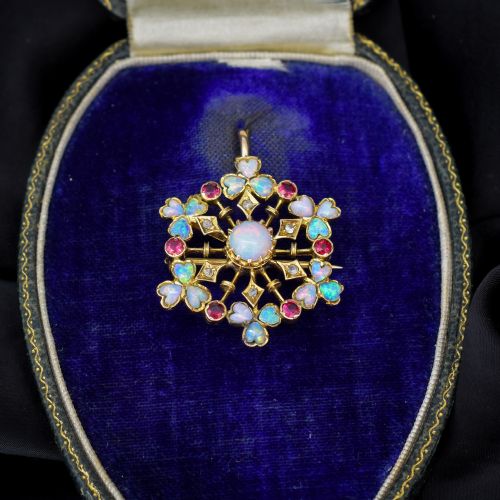
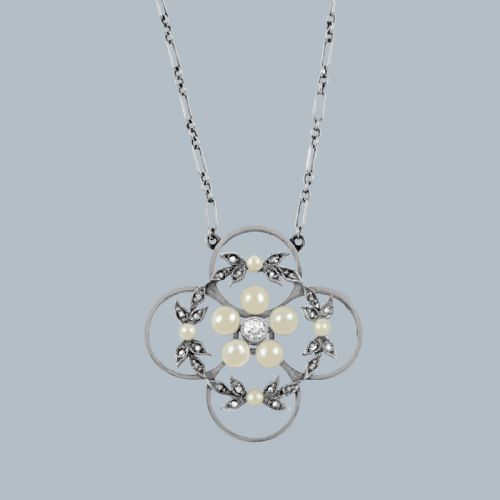
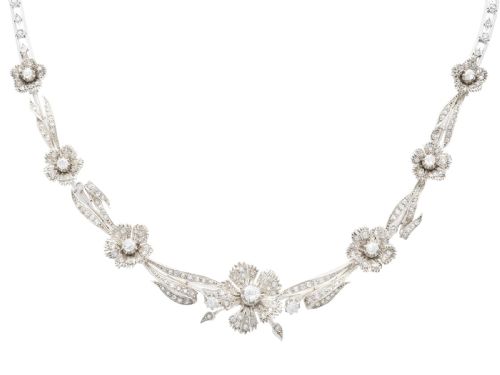
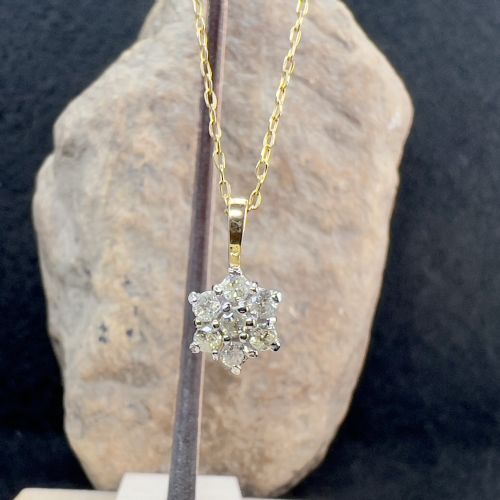
A gold diamond flower pendant takes floral motifs and translates them into wearable ornaments fashioned from gold, silver, and precious gems. When searching for a gold diamond flower pendant, collectors encounter items spanning the nineteenth century through the mid twentieth century, including Victorian, Edwardian, and mid century examples.
The selection ranges from early nineteenth century Georgian designs to 1960s starburst and cluster necklaces. Many pieces double as brooches, featuring convertible mechanisms that allow the jewel to pin to a lapel or suspend from a chain.
French origins appear frequently, alongside traditional and contemporary styles. Forms include daisies, roses, and stylized clusters incorporating pearls, rubies, and opals alongside the central diamond work.
How they were made
Goldsmiths utilised various carats of gold, including 9ct, 14ct, 15ct, and 18ct, often combining yellow and rose gold with silver settings for the stones. Silver toppings on gold mounts helped reflect maximum light through old cut diamonds during the Victorian and Edwardian eras.
Gemstones such as rubies, pearls, and opals were integrated as central stamens or accent petals within cluster and starburst arrangements. Enamel work also appears on select pieces to add colour and botanical detail to the metal petals.
What varies in quality
The distinction between standard examples and exceptional pieces rests upon the fineness of the metalwork and the character of the stones. Hand cut diamonds, such as old cut or rose cut stones, display individual sparkle that differs from later standardised faceting.
Artisanal execution dictates the charm of floral jewellery, seen in the realistic articulation of petals and leaves. Convertible pieces that function as both pendants and brooches demonstrate advanced mechanical skill in their hidden loops and pin stems.
The Gold Diamond Flower Pendant Glossary
- Old cut diamond
- A hand faceted diamond shape common in nineteenth century jewellery, featuring a smaller table and higher crown than modern stones. This cut produces a softer, more intimate candlelit gleam.
- Rose cut diamond
- A dome shaped diamond with a flat base and triangular facets arranged in a symmetrical pattern. It resembles an unopened rosebud.
- Cluster pendant
- A jewellery setting where multiple smaller gemstones surround a larger central stone to form a dense floral or geometric pattern. This arrangement maximises visual impact.
- Convertible pendant and brooch
- An ornament fitted with a removable bail and a secure pin stem on the reverse. This dual purpose design allows versatile wear on chains or garments.
- Silver topped gold
- A historical manufacturing technique where a thin layer of silver is soldered over a gold backing. This method permitted white metal settings for diamonds while retaining the strength of gold.
Gold Diamond Flower Pendant: Frequently Asked Questions
What is the difference between old cut and modern diamonds?
Old cut diamonds were shaped by hand rather than by machine, resulting in unique proportions and broader facets. They capture ambient light differently than modern stones, often showing a warmer glow.
These historic stones suit antique jewellery because their softer brilliance matches the handmade gold and silver settings of the period.
How can I date my floral pendant?
Dating relies on the materials, hallmarks, and cutting styles of the gemstones present in the piece. Victorian and Georgian items often feature closed back settings and silver on gold construction, while mid century pieces utilise standardised 9ct or 14ct yellow gold.
Examining the pin findings and the style of the floral motif helps narrow the decade of origin.
Are these pendants suitable for daily wear?
Antique and vintage floral jewellery requires mindful handling due to the age of the settings and delicate nature of stones like pearls or opals. Regular checks by a jeweler ensure the prongs and claws remain secure.
Removing the necklace during vigorous physical activity helps preserve the delicate metalwork and gemstone settings.