


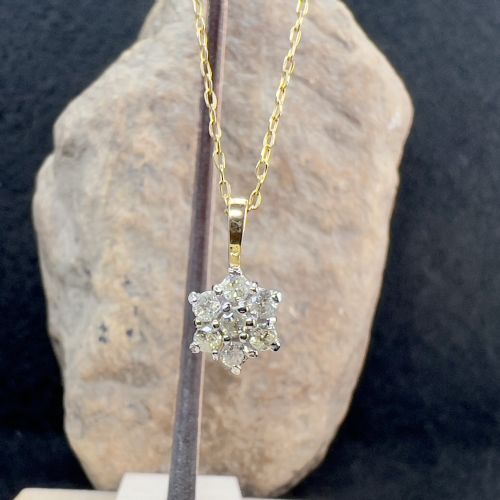


Flower Cluster Necklace
These flower cluster necklace designs bring together precious stones and metals in botanical forms that range from Victorian gold work to mid-century diamond arrangements.
Flower Cluster Necklace
A flower cluster necklace centres on a pendant or drop formed of stones arranged in a floral or starburst pattern, suspended from a chain, collar or strand. The form encompasses traditional diamond and ruby clusters alongside pearl daisy clasps and multi-stone arrangements.
Most examples found here span the Victorian era through the mid-twentieth century, including pieces dated to the 1850s, 1860s, 1870s, 1880s, 1890s, Edwardian period, 1950s and 1960s. Alongside standalone pendants, the selection includes convertible brooch-pendants and complete suites featuring matching earrings or bracelets.
Buyers will encounter both delicate gold mountings set with peridot, turquoise or sapphires and substantial diamond-heavy formations utilising silver-on-gold techniques. The overarching shape remains botanical, translating natural blooms into enduring wearable ornaments.
How they were made
Goldsmiths utilised varying purities of gold, including 9ct, 14ct, 15ct, 18ct and high-carat yellow and rose gold, frequently pairing them with silver settings to enhance the brilliance of diamonds. Natural pearls, paste, turquoise, garnets, rubies, sapphires and padparadscha sapphires were secured using traditional claw, bezel or foil-backed techniques appropriate to each period.
Earlier pieces from the nineteenth century often combine silver-topped gold construction with hand-cut stones like old-cut diamonds and rose-cut diamonds, whilst mid-century examples display cleaner mountings in yellow gold. Convertible pieces required intricate hinges and hidden loops to allow a pendant to function equally as a brooch.
The listings demonstrate flower cluster necklace designs spanning from the Victorian era through the Edwardian period and into mid-century 1950 and 1960 styles.
What varies in quality
Quality rests upon the harmony of the central stone grouping and the integrity of the metalwork, distinguishing master craftsmanship from simpler production. The selection, matching and secure setting of coloured gemstones such as rubies, sapphires and opals dictate the visual impact of the cluster.
The sophistication of the gold or silver mount reveals the maker's hand, particularly in antique pieces where hand-carved petals and detailed wirework define the floral silhouette. Convertible mechanisms and original clasps also indicate the original tier of production.
The Flower Cluster Necklace Glossary
- Cluster
- A style of jewellery where multiple smaller stones are grouped tightly around a central stone to create a single focal design. This arrangement frequently mimics the petals of a flower.
- Old cut
- An early form of diamond cutting characterised by a smaller table, higher crown and open culet, commonly seen in antique pieces predating modern brilliant cuts. These stones produce a distinctive softer glow under candlelight.
- Silver-topped gold
- A historical manufacturing technique where a thin layer of silver is soldered over a gold backing, designed to provide a bright white surface for diamond settings whilst retaining the strength of gold underneath.
- Paste
- Hand-cut and polished lead glass used as an affordable gemstone substitute in antique and vintage jewellery. High-quality paste was laboriously faceted by hand to imitate genuine stones.
Flower Cluster Necklace: Frequently Asked Questions
How do I date a flower cluster pendant?
Dating relies on the cut of the stones, metal purity hallmarks, and the construction methods used in the mounting. Nineteenth-century pieces often feature closed-back settings or silver-topped gold, whereas mid-century examples show standardised gold purities.
Examining the chain, clasp style, and the overall botanical symmetry provides further clues to whether a piece originates from the Victorian era or the nineteen-fifties.
Are these necklaces convertible into brooches?
Certain Victorian and antique iterations function as both pendants and brooches, featuring hidden bails and pin mechanisms on the reverse. This versatility allowed nineteenth-century owners to pin the floral cluster to a bodice or suspend it from a chain.
Inspecting the reverse side reveals these functional elements without disturbing the front-facing stone arrangement.
What is a cluster necklace and bracelet suite?
A suite comprises matching pieces of jewellery designed to be worn together, such as a necklace paired with a matching bracelet or earrings sharing the same floral motif. These matched sets utilise uniform stones like pearls or turquoise set in gold.
Finding a surviving suite offers insight into how jewellery was coordinated during periods like the Victorian era.
How should I care for antique cluster jewellery?
Antique and vintage cluster pieces require gentle handling due to older setting techniques and delicate materials like pearls, opals or paste. Professional cleaning is recommended rather than harsh chemical dips, particularly for foiled stones or softer organic gems.
Storing each piece separately prevents metalwork from scratching softer gemstones within the floral cluster.