
Victorian Standing Shelf
When you search for a Victorian standing shelf, you encounter multi-tiered display pieces designed to hold books and ornaments in nineteenth-century interiors.
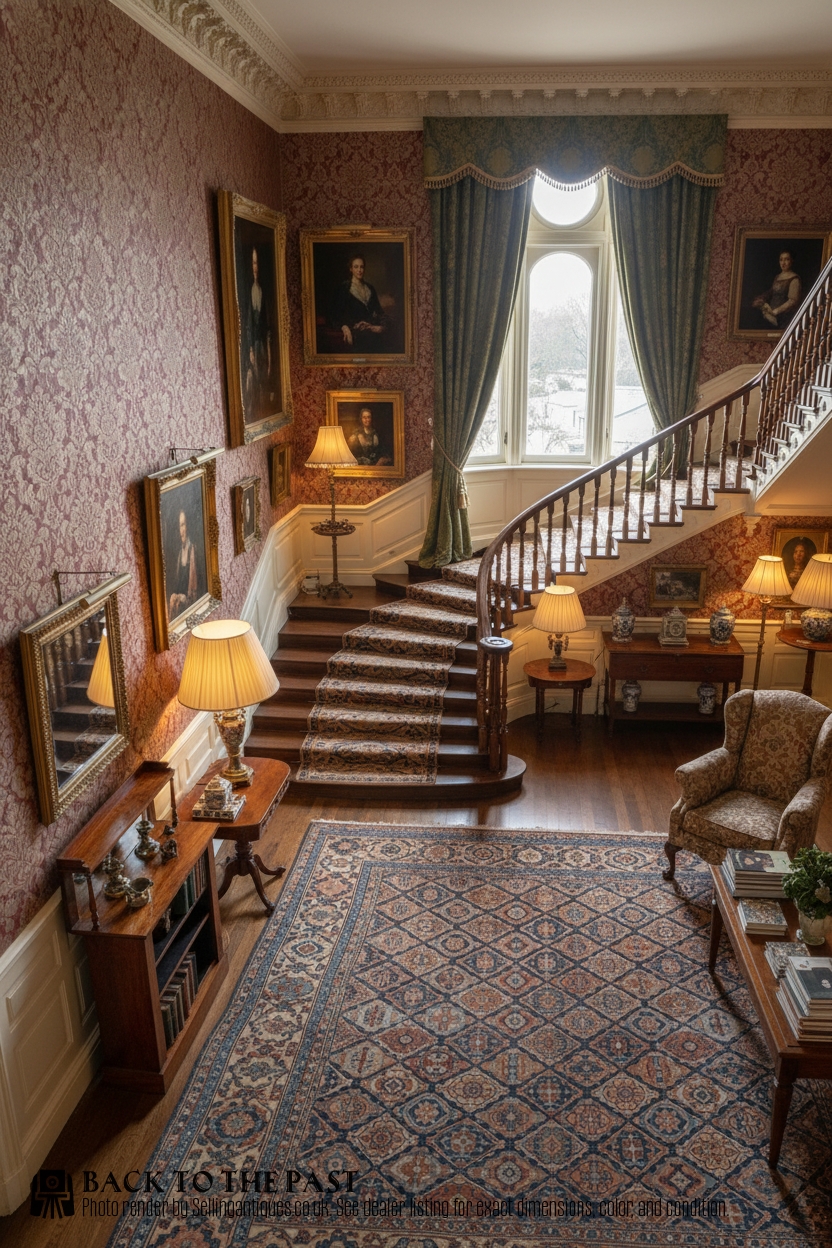
Victorian Standing Shelf
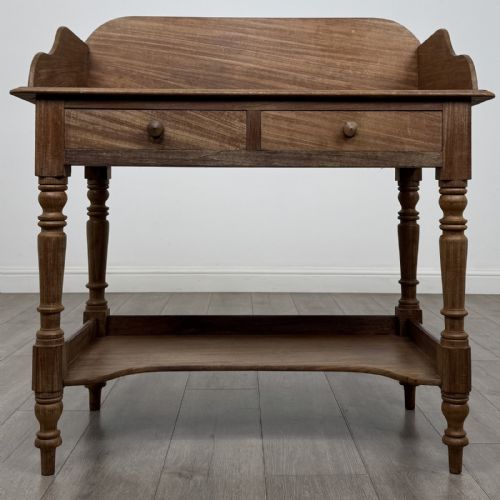
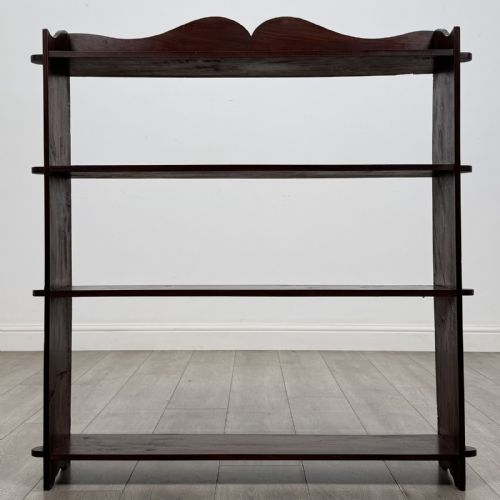
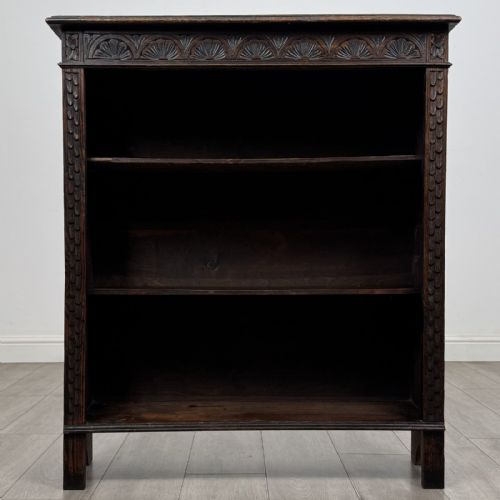
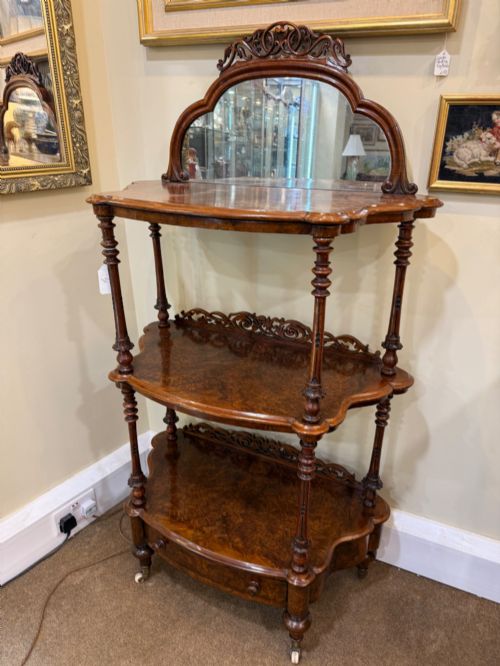
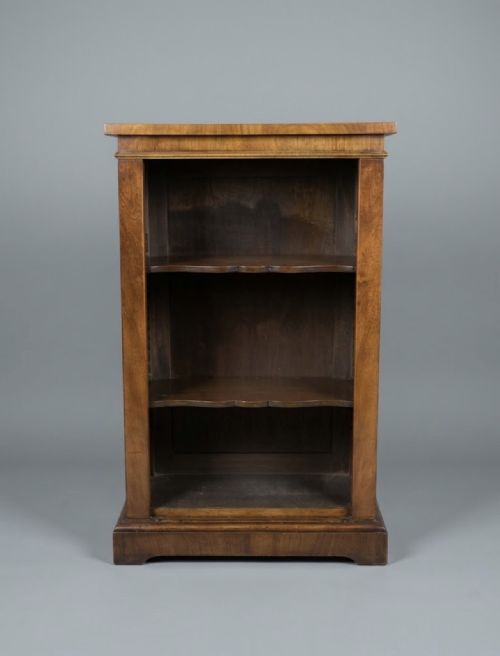
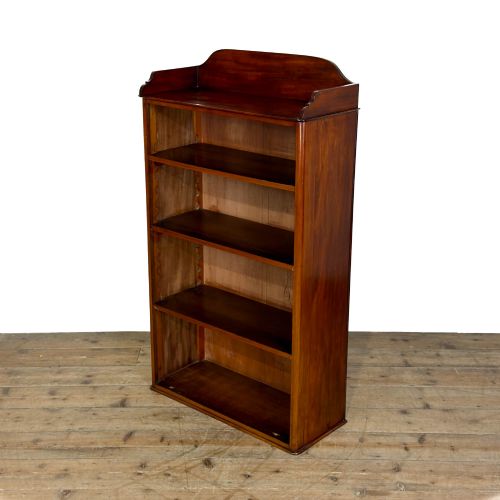
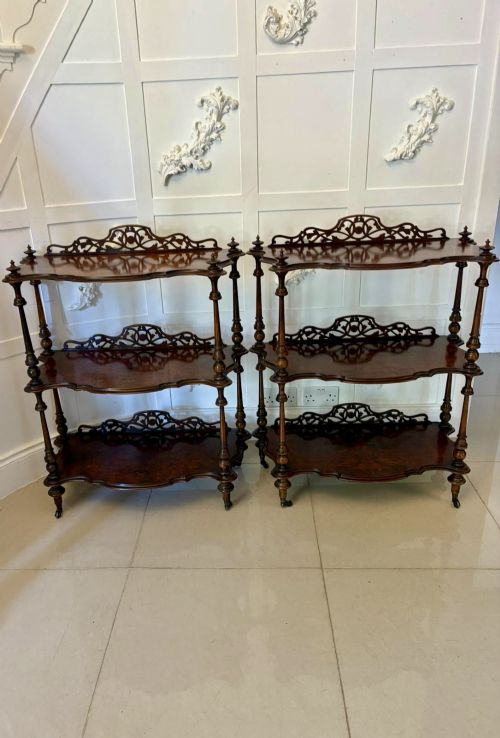
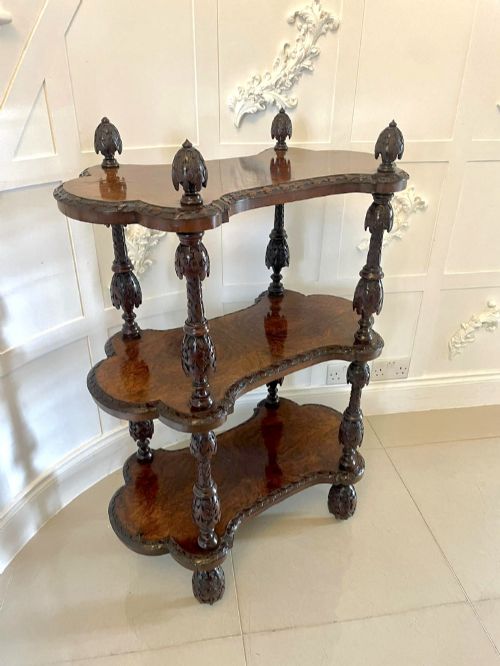
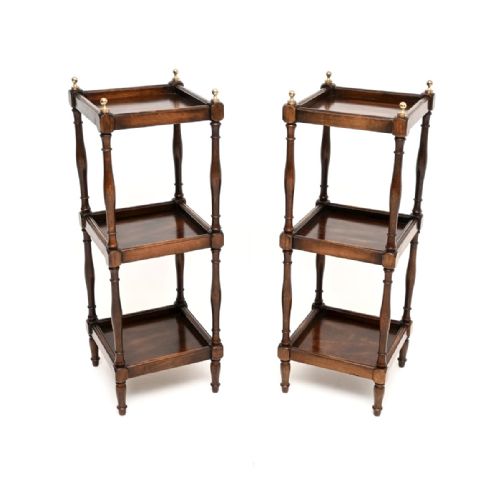
A victorian standing shelf typically takes the form of a whatnot, etagere, or open bookcase designed for vertical display. These pieces provide tiered storage surfaces supported by uprights, allowing owners to exhibit books and decorative objects in principal rooms.
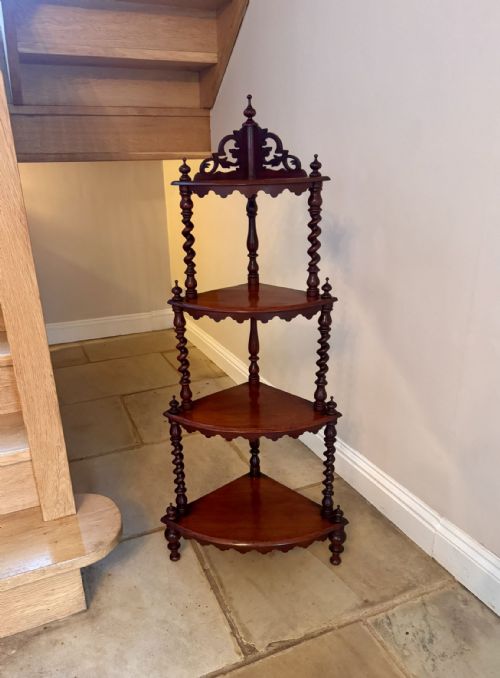
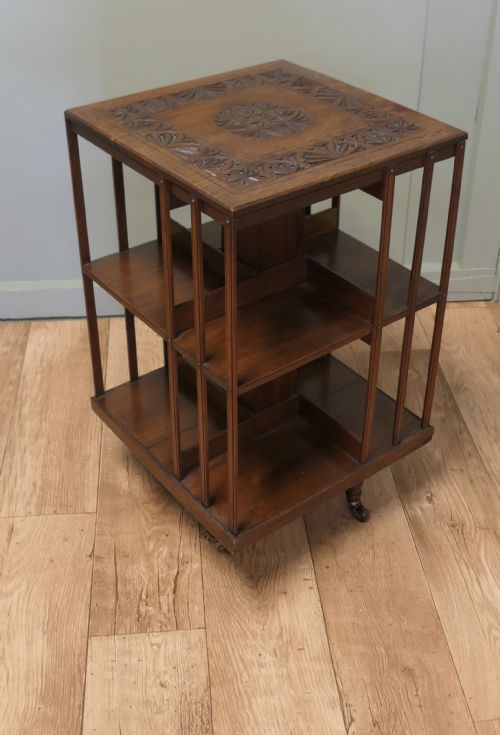
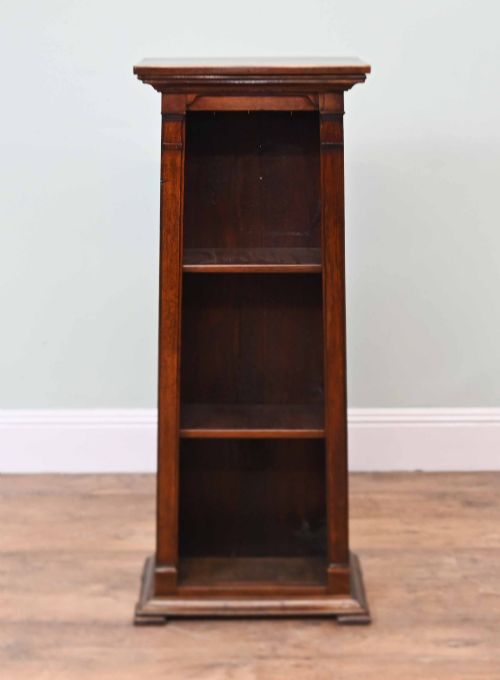
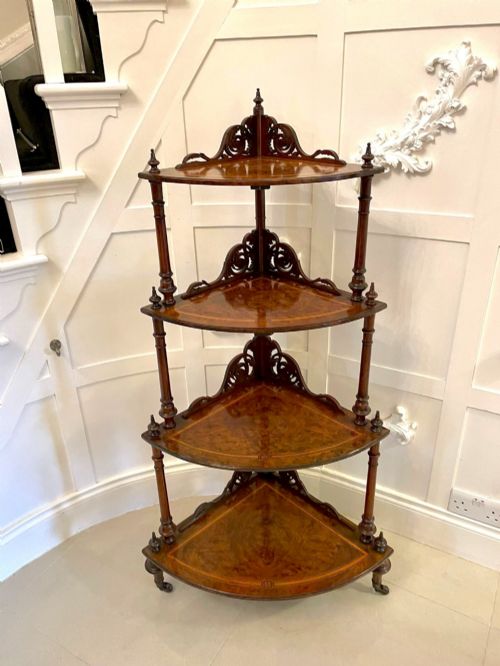
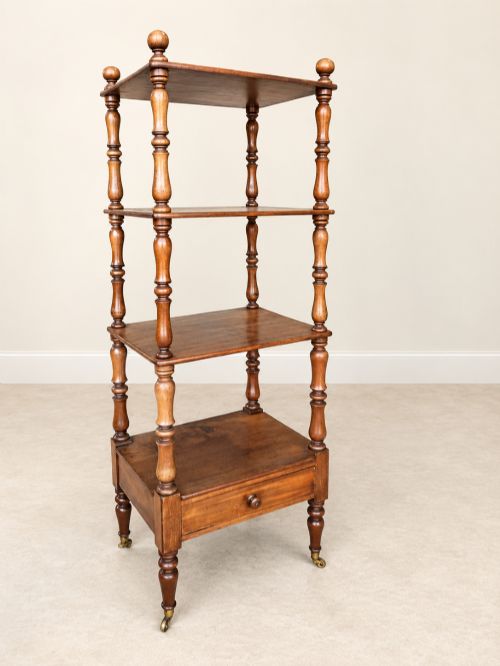
The versions most frequently met on this page include mahogany, walnut, and rosewood whatnots alongside oak and pine open bookcases. Many examples feature three or more tiers, occasionally incorporating corner designs or lower cabinets to maximise utility in domestic spaces.
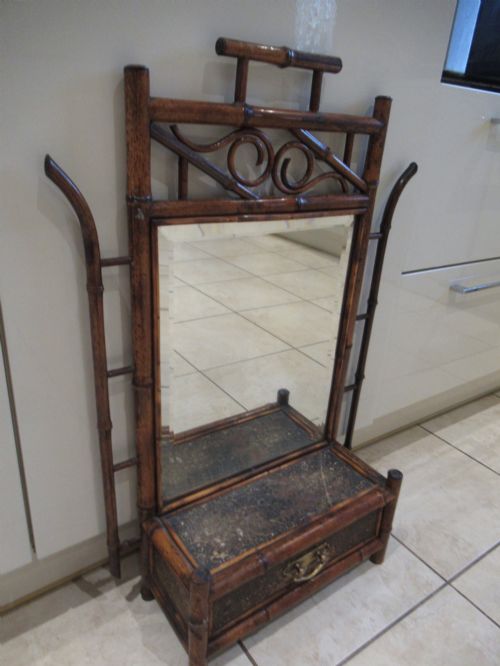
Origins span the nineteenth century, encompassing standard Victorian production alongside related styles like Aesthetic Movement, Arts and Crafts, and Anglo-Indian variations. Makers utilised diverse timbers to suit changing parlour and library fashions throughout the period.
How they were made
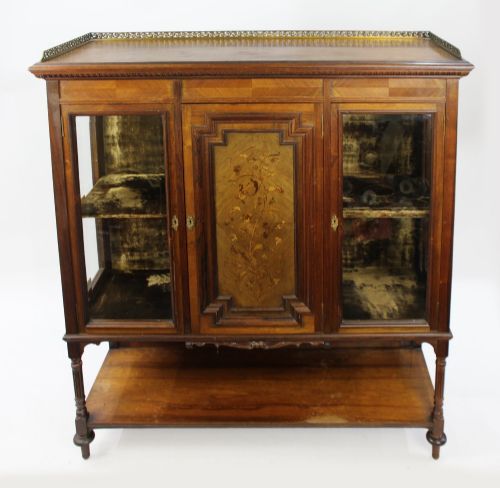
Cabinetmakers constructed these frames using dense hardwoods including mahogany, walnut, burr walnut, and rosewood, frequently accented with brass castors, inlay, or turned barley twist supports. Timber selection dictated the structural integrity of multi-tiered shelving units.
Joinery techniques relied on traditional framing and shelving housing, with open bookcases occasionally incorporating adjustable wooden supports. Surface finishes involved polished wood veneers, ebonisation, or carved detailing across structural uprights and gallery rails.
Some nineteenth-century makers even designed multi-tiered stands to hold sheet music alongside books.
What varies in quality
Quality separates standard utility pieces from exceptional salon furniture through timber selection and decorative ambition. Burr walnut veneers, serpentine shaping, intricate marquetry inlay, and substantial brass hardware distinguish finer workshops from plain production.
Structural refinement also defines the grade of a piece, observable in the precision of turned barley twist supports, the integration of matching pairs, and the crispness of carved oak or mahogany details rather than applied ornamentation.
Gabriel Viardot·Liberty and Co·Edwards and Roberts
The Victorian Standing Shelf Glossary
- Etagere
- A set of open shelves for displaying small objects or curiosities. Originating in France, this form gained popularity in Victorian drawing rooms for its light, decorative appearance.
- Burr walnut
- A prized timber marked by swirling, knotted grain patterns caused by growth excrescences on walnut trees. Cabinetmakers sliced these sections into decorative veneers for high-status furniture fronts and tops.
- Barley twist
- A type of turned wooden support resembling the spiral twist of barley sugar. This decorative woodworking technique frequently appears on nineteenth-century table legs and whatnot uprights.
- Serpentine
- A furniture front or shelf edge curved in a convex-concave-convex wave shape. This contour requires skilled shaping and adds dynamic visual movement to cabinet work.
Victorian Standing Shelf: Frequently Asked Questions
What is a Victorian standing shelf used for?
These tiered units served as display surfaces for decorative objects, ceramics, and books within nineteenth-century parlours and drawing rooms. Their open construction allowed homeowners to showcase curated collections in living spaces.
They also functioned in libraries and studies as accessible bookcases or bedside storage. The tiered format provided vertical capacity without dominating smaller room dimensions.
How do I distinguish a whatnot from an etagere?
A whatnot generally refers to British multi-tiered shelving units with functional divisions, often incorporating small drawers or corner configurations. They prioritise stable display surfaces for books and everyday objects.
An etagere leans toward lighter, highly decorative French-influenced designs intended primarily for displaying ornaments. The distinction often blurs in nineteenth-century trade catalogues where terms were used interchangeably.
Where should I place a standing shelf in my home?
These pieces suit living rooms, hallways, and studies where vertical storage integrates with surrounding furniture. Corner variants fit dead architectural spaces while adding display capacity.
Avoid positioning delicate rosewood or burr walnut surfaces in direct sunlight or beside active heat sources. Stable indoor humidity preserves the integrity of old timber veneers and joints.
How do I identify a 19th-century piece?
Examination of construction materials reveals period characteristics, such as solid mahogany framing, hand-cut dovetails, and secondary softwoods behind veneers. Hand-turned supports and patinated brass castors provide further chronological indicators.
Stylistic cues also help, as Aesthetic Movement ebonising and Victorian burr walnut veneers reflect specific manufacturing decades. Comparing timber ageing and joinery methods against documented examples confirms the era.