




Victorian Stag Antlers
Victorian stag antlers bring the dramatic spirit of the nineteenth-century country house and hunting lodge directly into modern interiors.
Victorian Stag Antlers
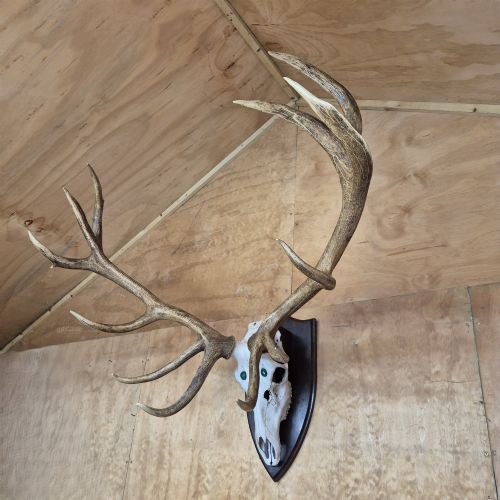
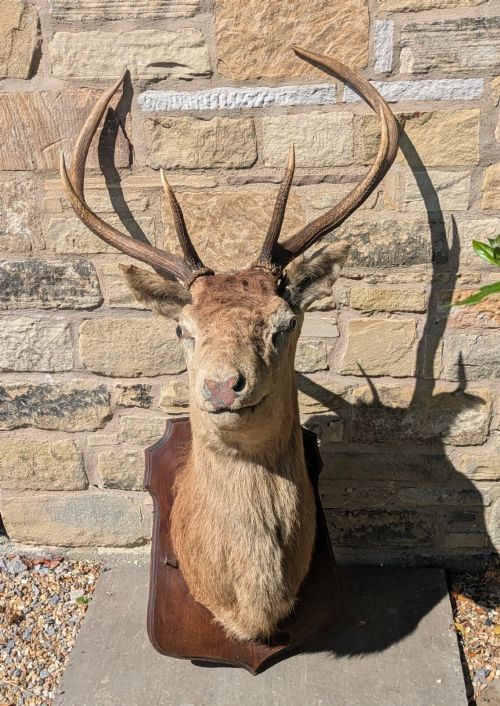
Victorian stag antlers encompass a striking range of taxidermy mounts and functional domestic items shaped from natural horn. When you search for victorian stag antlers, you encounter wall-mounted heads, shields, and impressive groupings of red deer and roebuck horns.
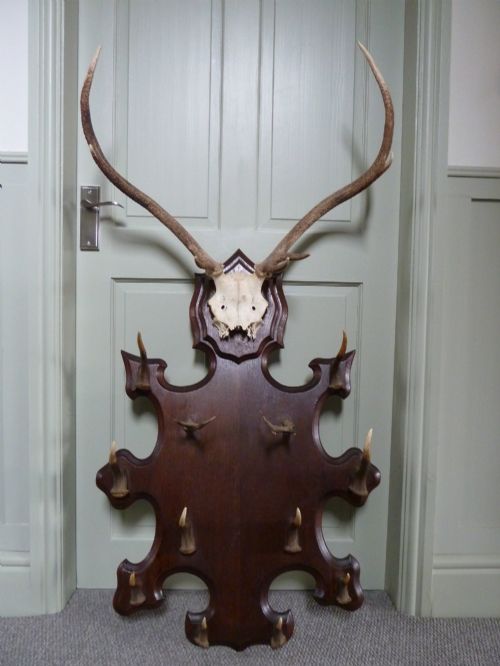
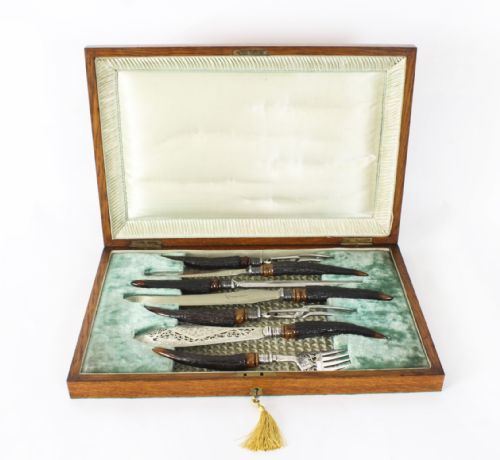
The pieces on this page span the nineteenth century into the early twentieth century, taking forms such as hallstands, armchairs, and carving sets. Many of these items reflect a distinct Highland traditional and Victorian sporting aesthetic designed for country houses.
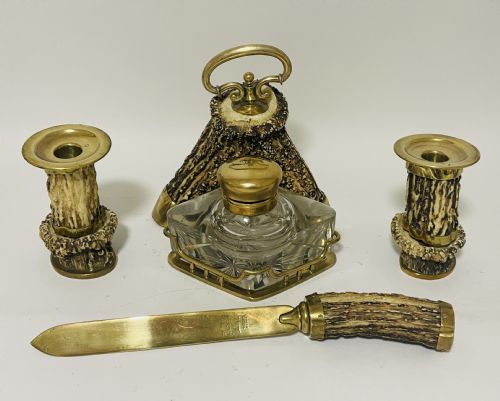
You also find smaller accessories including walking stick handles, cribbage boards, and desk sets that incorporate stag horn and bone. These objects combine natural materials with skilled craftsmanship, utilising oak and silver mountings to create utilitarian household goods.
How they were made
Makers utilised the natural structure of antler and stag horn alongside seasoned oak and carved wood to build substantial furniture and wall mounts. Taxidermy mounts required careful preparation of the skull and hide, secured firmly to wooden shields or panels.
Metalworking techniques appear across silver-plated cutlery sets, collars for hunting whips, and brass desk mountings. Carvers shaped the dense horn material for walking stick handles and cribbage boards, exploiting the organic texture of the antler.
What varies in quality
The scale and symmetry of the antler formation dictate much of the visual impact, particularly in large red deer mounts and royal sets. Superior pieces display careful taxidermy preservation and robust construction in supporting elements like oak shields or chair frames.
Detailing in secondary materials such as silver collars, brass mountings, and carved wooden shields distinguishes standard utilitarian items from finer decorative pieces. The clever construction of complex furniture forms, including armchairs and hallstands, shows the skill of the maker.
The Victorian Stag Antlers Glossary
- Taxidermy mount
- The preserved head and horns of an animal, prepared for display on a wall. These mounts range from simple roebuck shields to full stags heads.
- Hallstand
- A large piece of hall furniture incorporating hooks and racks, often constructed from stag horn for coats and hats. These items served practical purposes in country houses.
- Carving set
- A matched knife and fork utensil combination featuring antler handles used for serving meat at the dining table. They frequently include silver-plated ferrules and mounts.
- Cribbage board
- A traditional scorekeeping board for the card game cribbage, carved from bone or horn. Good examples utilise the natural contour of the material.
- Shield
- A shaped wooden plaque, often carved in oak, serving as the backplate for mounting antlers or animal heads. This provides a secure and decorative wall fixing.
Victorian Stag Antlers: Frequently Asked Questions
What is a royal antler set?
A royal antler set refers to a large arrangement of red deer horns with twelve distinct points on the antlers. These impressive specimens indicate a mature stag and carry strong associations with Highland hunting traditions.
Such substantial pieces typically form the focal point of a room, mounted on carved wooden shields or integrated into large wall displays.
How should I clean horn and antler items?
Dust natural horn and antler surfaces regularly using a soft, dry cloth to prevent the accumulation of dirt in the textured grooves. Avoid using liquid cleaners, polishes, or water on taxidermy mounts and exposed bone.
For metal components like silver collars or brass mountings, use a specialised metal cloth carefully to avoid touching the surrounding horn.
Can antler furniture support everyday use?
Antler armchairs and hallstands were constructed with structural wooden frames hidden beneath or supporting the natural horn elements. While sturdy, these pieces benefit from careful placement away from heavy traffic areas to protect delicate tips.
Regularly check the stability of mounted horns on furniture items to ensure that fixings remain secure over time.