
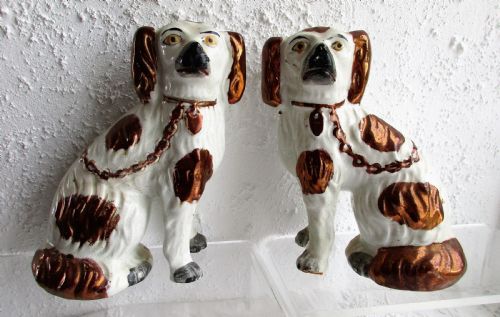
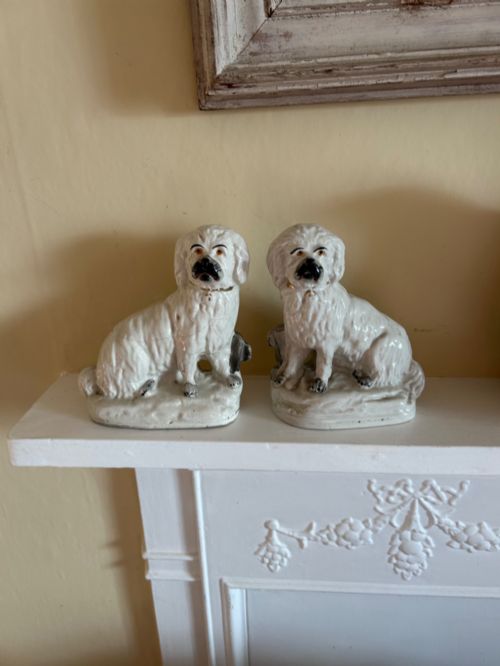


Victorian Staffordshire Spaniel Pair
These earthenware figures bring character to a mantelpiece, matching the search phrase victorian staffordshire spaniel pair.
Victorian Staffordshire Spaniel Pair
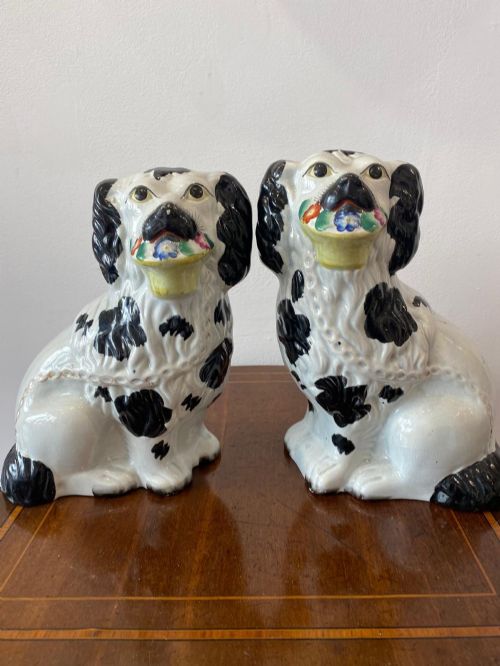
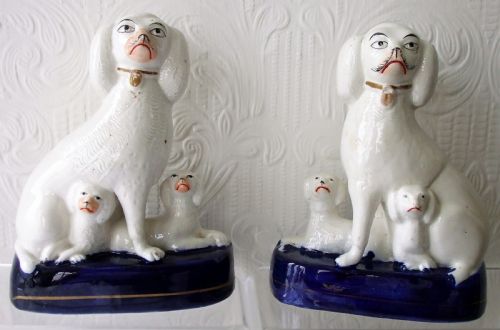
A victorian staffordshire spaniel pair typically depicts seated dogs facing each other, designed to sit on either end of a mantelpiece. These ceramic figures originate primarily from the nineteenth century, spanning periods from the regency era into the early twentieth century.
Makers produced these decorative objects in various canine forms beyond spaniels, including poodles, maltese terriers, and pugs. Many examples function merely as ornaments, while others incorporate practical elements such as spill vases or quill holders.
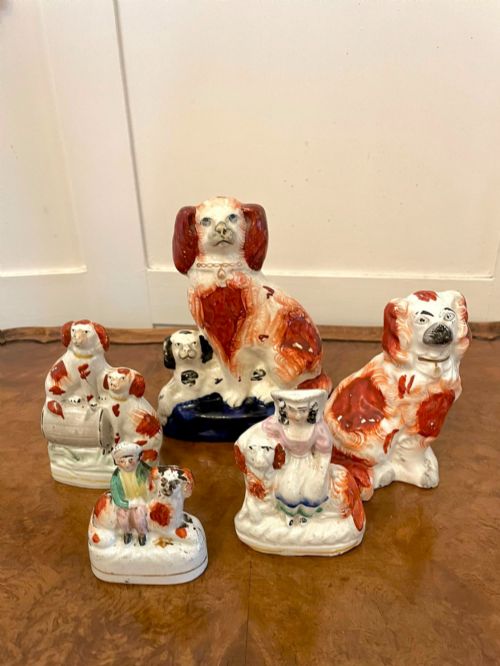
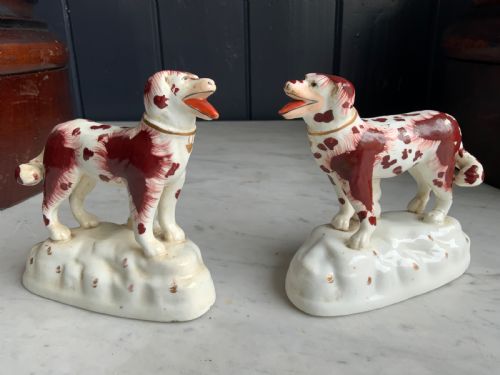
The domestic interior of the Victorian period often displayed these mantle dogs, frequently called comforter spaniels or wally dogs. Pairs appear in differing colourways, from standard white and gilt to copper lustre, black and white, and red and white.
How They Were Made
Potters shaped these figures from earthenware clay, utilising press moulds to form the hollow bodies of the dogs. Artisans then applied lead glaze over the ceramic surface to achieve a smooth and reflective finish.
Enamel colours and metallic accents such as gilt or copper lustre were painted by hand onto the fired pottery. Certain pieces feature additional decorative details like encrusting or glass eyes inserted prior to the final firing stage.
Some spaniels stare out with actual glass eyes, giving the mantelpiece a remarkably watchful presence.
What Varies in Quality
Scale and proportion influence desirability, with larger dimensions or unusual configurations such as separate legs commanding attention. The survival of original matching pairs without extensive restoration determines their standing among collectors.
Beswick
The Victorian Staffordshire Spaniel Pair Glossary
- Comforter spaniels
- A traditional term for Staffordshire pottery dogs placed on hearths and mantelpieces during the Victorian era. These figures represent the pet spaniels popular in nineteenth-century households.
- Spill vases
- Hollow cylindrical vessels attached to the figures designed to hold wooden spills for lighting fires or pipes. They combine decorative appeal with practical utility.
- Copper lustre
- A metallic pottery glaze containing copper that creates a reflective, iridescent sheen on the surface of the ceramic. This finish appears frequently on mid-nineteenth-century Staffordshire wares.
- Earthenware
- A porous pottery body fired at lower temperatures than stoneware or porcelain. It forms the structural base for virtually all Staffordshire animal figures.
- Wally dogs
- A regional Scottish and northern English colloquialism for ceramic mantelpiece dogs. The name derives from wally, meaning porcelain or earthenware.
Victorian Staffordshire Spaniel Pair: Frequently Asked Questions
Where did these dogs sit?
Victorian households traditionally placed these pottery pairs on either end of the fireplace mantelpiece in the parlour or drawing room. They faced inward toward each other, guarding the hearth.
Over time, collectors moved them to side tables, sideboards, and bookshelves as interior decoration standards shifted away from formal period room settings.
What are comforter spaniels?
Comforter spaniels refer specifically to the pottery dog figures modelled after King Charles spaniels, which were popular lapdogs during the Victorian period. Potters produced them in vast quantities to satisfy middle-class domestic demand.
The term distinguishes these mantel ornaments from other canine breeds like poodles or terriers also manufactured in Staffordshire.
How do spill vases work?
A spill vase incorporates an open vertical cylinder positioned beside or behind the figure designed to hold thin wooden spills. Victorian residents pulled these spills from the holder to transfer flames from the hearth fire to candles or lamps.
Many surviving Staffordshire pieces combine figurative sculpture with this functional household accessory.