



Antique Ceramic Chimney Dogs
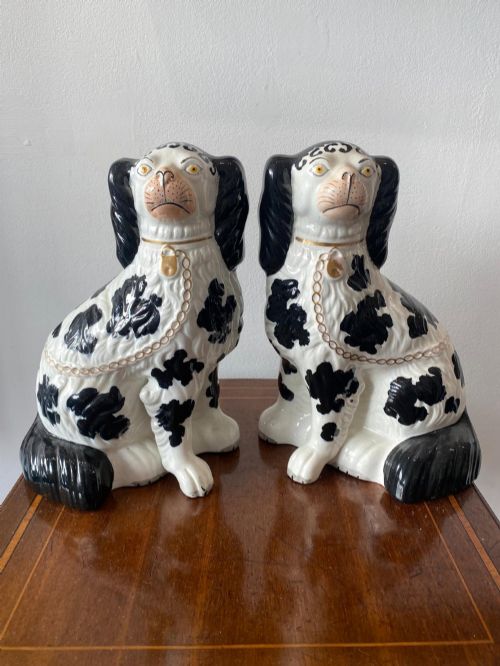
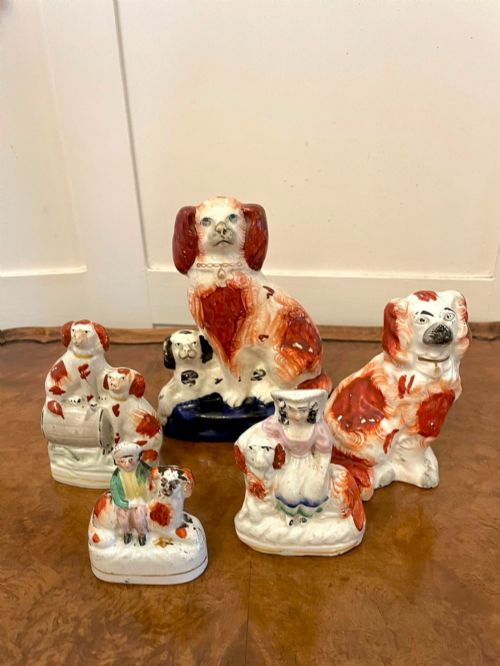
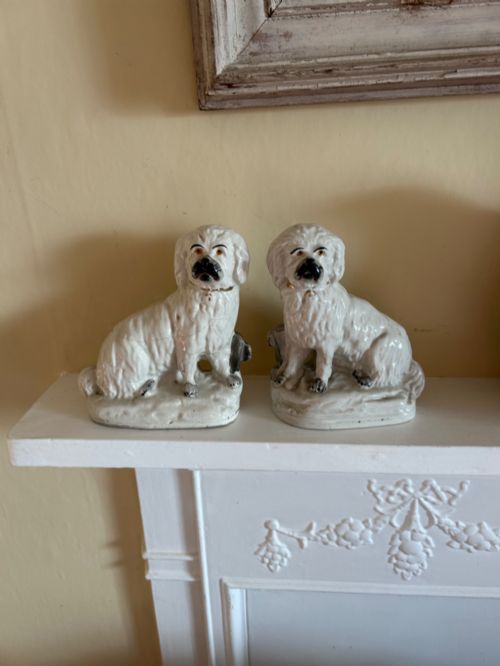
These antique ceramic chimney dogs bring spirited Victorian character to a mantelpiece, offering the cheerful presence of spaniels, pugs, and poodles.
Antique Ceramic Chimney Dogs
When you search for antique ceramic chimney dogs, you are looking at Staffordshire figures modelled as domestic pets intended to sit upon hearths and mantelpieces. These decorative objects date predominantly from the Victorian era, specifically spanning the decades around eighteen sixty to nineteen hundred.
The pieces on this page are overwhelmingly found in pairs, capturing various breeds including spaniels, pugs, poodles with pups, and Maltese terriers. Makers produced these decorative figurines to face one another across a fireplace, a traditional arrangement that remains popular for period interiors today.
How they were made
These figures are constructed from earthenware and glazed ceramic, shaped into pottery figurines before being fired in kilns. The foundational body consists of porous earthenware coated in a smooth glaze to seal the clay.
Antique Ceramic Chimney Dogs Retail Price Guide 2026
Typical asking prices for ceramic chimney dogs among the pieces listed under this phrase on Sellingantiques today, from the lower quarter to the upper quarter. They describe what is for sale here now, not the wider market.
Many of these ceramic hounds wear padlocked chains, a charming detail meant to keep the loyal pets from wandering off the mantelpiece.
What varies in quality
The distinction between ordinary and superior examples lies in the crispness of the modelling and the hand-painting of the facial expressions. Finer pieces display attentive detail in the fur texture and the application of enamel colours.
Proportion and scale also separate standard pairs from larger or more ambitious models. Taller Victorian Staffordshire figures demand greater technical skill during the firing process to avoid warping in the kiln.
The Antique Ceramic Chimney Dogs Glossary
- Earthenware
- A type of porous pottery fired at lower temperatures and glazed to hold water. It forms the standard ceramic body for nineteenth century Staffordshire figures.
- Enamel
- Opaque glass-like paint applied over the glaze and fired again to fix the colour. It provides the black, white, and gilt markings seen on these dogs.
- Staffordshire figures
- Pottery ornaments produced in the pottery districts of Staffordshire during the Victorian period. They include the spaniels and pugs commonly placed on chimney breasts.
- Gilt
- A thin layer of gold leaf applied to highlight collars, lockets, and chains. It reflects the flickering light of a coal fire.
Antique Ceramic Chimney Dogs: Frequently Asked Questions
Where were chimney dogs displayed?
These ceramic figures traditionally sat on either end of a mantelpiece above a fireplace. Their outward-facing gazes created a balanced arrangement designed to frame the hearth.
Today, they are still placed on mantelpieces, bookshelves, and sideboards to introduce a touch of Victorian domestic history to a room.
Which breeds appear most often?
Spaniels dominate the available selection, reflecting the immense popularity of King Charles spaniels and similar lapdogs during the reign of Queen Victoria. Pairs of pugs and poodles with pups also appear regularly in these nineteenth century ceramics.
Less common breeds, such as Maltese terriers, occasionally turn up among the standard spaniel pairs.
How can I tell the period?
Dating relies on stylistic markers such as the modelling of the clay, the depth of the glaze, and the specific application of enamel colours. Pieces from the middle of the nineteenth century often feature hand-painted details over an earthenware body.
Comparing the facial expressions and the weight of the ceramic helps distinguish Victorian examples from later reproductions.
Are they always sold as pairs?
The vast majority of these decorative objects were manufactured as matching pairs to sit symmetrically on either side of a fireplace. Surviving sets preserve the left-facing and right-facing configuration intended by the potter.
Occasional groupings may include additional figures, such as pups accompanying a larger poodled parent.