





Victorian Staffordshire Cow
These Victorian Staffordshire cow figures bring character and pottery tradition directly into the home.
Victorian Staffordshire Cow
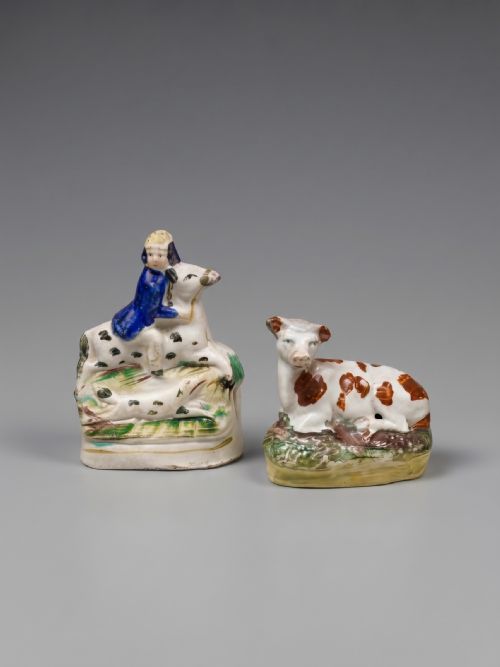
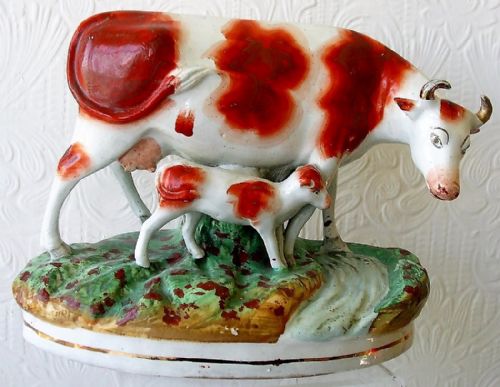
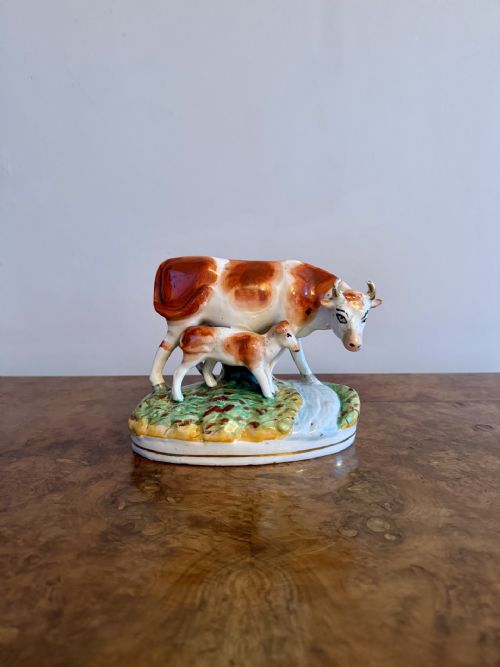
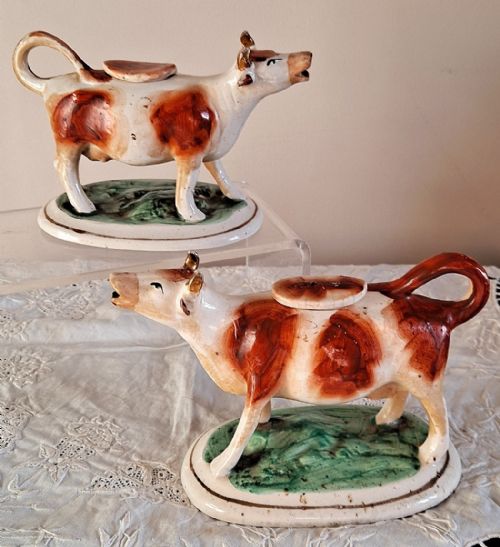
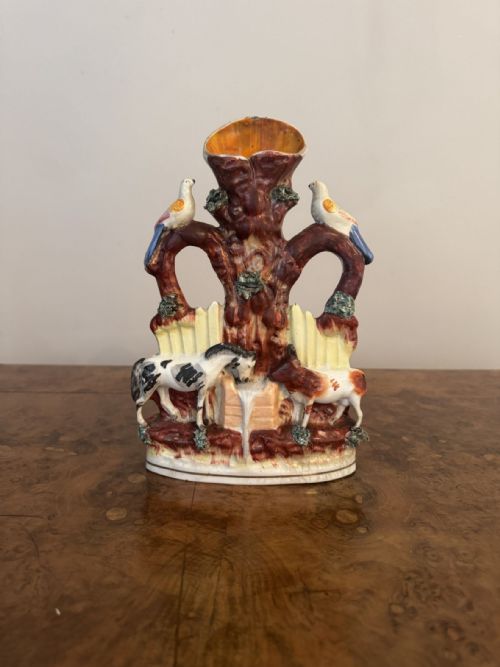
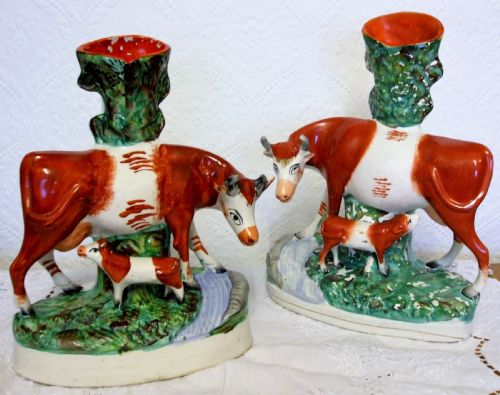
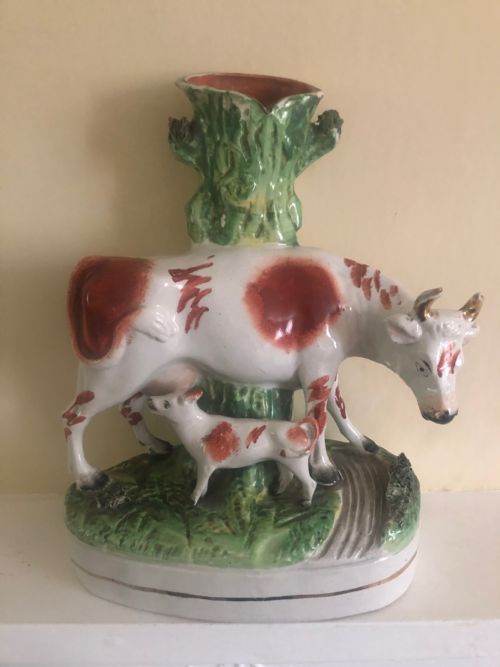
When you search for a Victorian Staffordshire cow, you encounter earthenware figures shaped as cattle, often accompanied by calves or modelled as functional cream jugs and spill vases. These ceramics reflect the cottage industries and potters of nineteenth-century England.
The pieces on this page appear as single figures, matched pairs, or functional creamers designed to sit on a table or mantelpiece. Many examples feature flat backs intended to face a wall, capturing the domestic decorative tastes of the era.
How they were made
Potters shaped these earthenware figures using moulds before firing the ceramic body in a kiln. Artisans then applied colourful glazes and enamel details by hand, sometimes adding gilt highlights.
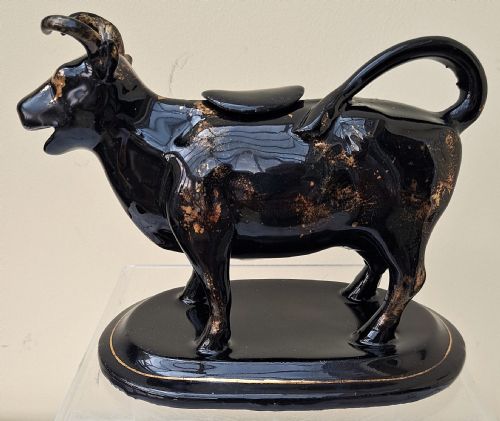
Specific variations include the dark, lustrous glaze seen on Jackfield pottery cow creamers. These techniques produce the characteristic glossy finishes and hand-painted markings found across the period.
Victorian Staffordshire Cow Retail Price Guide 2026
Typical asking prices for victorian staffordshire cow among the pieces listed under this phrase on Sellingantiques today, from the lower quarter to the upper quarter. They describe what is for sale here now, not the wider market.
Cows often share mantelpiece space with calves and milkmaids, bringing an entire pastoral farmyard indoors.
What varies in quality
Completeness also dictates standing within the category, particularly for matched pairs and accessories like covers for cream jugs. The application of glaze and enamel richness separates ordinary production from superior work.
The Victorian Staffordshire Cow Glossary
- Earthenware
- Porous pottery fired at lower temperatures than stoneware or porcelain. It serves as the primary ceramic body for these nineteenth-century figures.
- Creamer
- A small jug designed for holding milk or cream for tea. Several Staffordshire cow figures double as functional creamers with openings on the back.
- Spill vase
- A hollow cylindrical holder attached to a figure, intended to hold wooden spills for lighting fires or candles. They combine decorative appeal with practical utility on the hearth.
- Flatback
- A figure with an unadorned or flat rear surface designed to stand flush against a wall. This construction method saved materials and suited mantelpiece display.
- Jackfield
- A type of British pottery characterised by a deep black glaze, often accented with gilt. It takes its name from a Shropshire village associated with the technique.
Victorian Staffordshire Cow: Frequently Asked Questions
What is a Staffordshire cow creamer?
A Staffordshire cow creamer is a hollow ceramic container shaped like a cow, featuring a removable lid or a hole on the back for filling with milk. These pieces combined playful animal forms with practical use on the tea table.
Potters produced them in matched pairs or single models throughout the nineteenth century. They remain popular decorative objects for collectors of Victorian ceramics.
How do I identify a spill vase?
A spill vase incorporates an attached vertical tube or cylinder alongside the main animal figure. Victorian households used these vessels to hold wooden matches or tapers for lighting lamps and fires.
In Staffordshire figures, the vase often sits behind the cow or calf. This design adds height and a functional element to the decorative sculpture.
What is a flatback figure?
A flatback figure has a finished front and sides while the reverse remains largely unadorned and flat. Potters designed these pieces to sit securely on narrow mantelpieces or shelves against a wall.
This method reduced the weight and cost of production while keeping the visual impact from the front. Most Victorian Staffordshire figurines adopt this format.
How should I clean my pottery?
Dust these glazed earthenware pieces gently with a soft, dry brush to remove surface particles. Avoid submerging antique ceramics in water, especially if they have delicate enamel or gilt decorations.
Using moisture can damage old glazes and pigments. Careful handling preserves the hand-painted details applied by nineteenth-century potters.