





Antique English Pottery Cow
These antique English pottery cow figures and creamers combine utility and folk charm, offering characterful additions to any mantelpiece or cabinet.
Antique English Pottery Cow
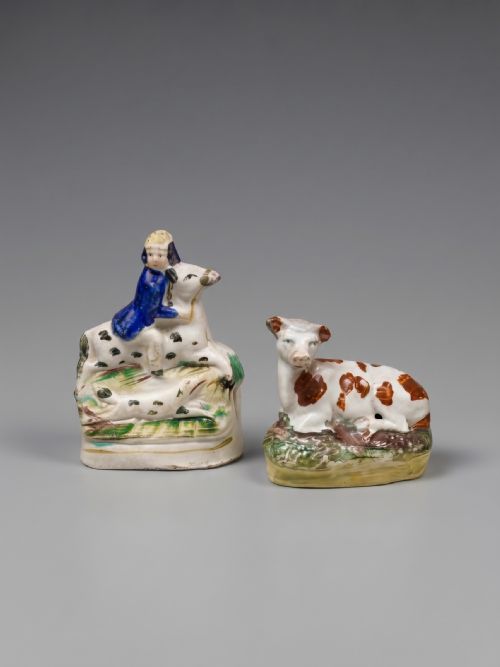
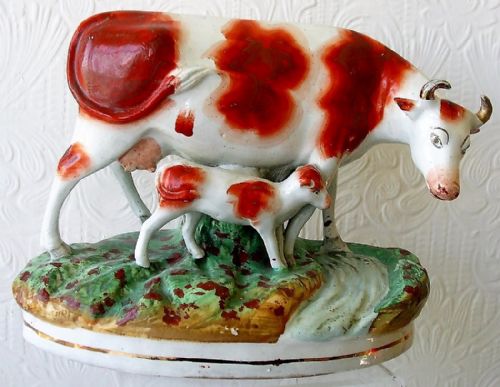
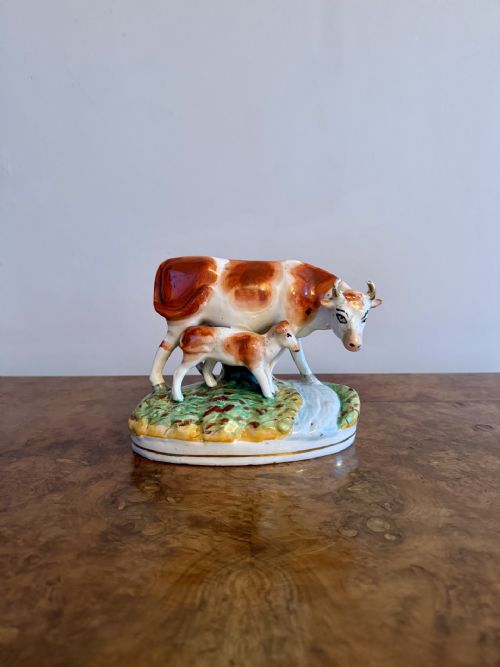
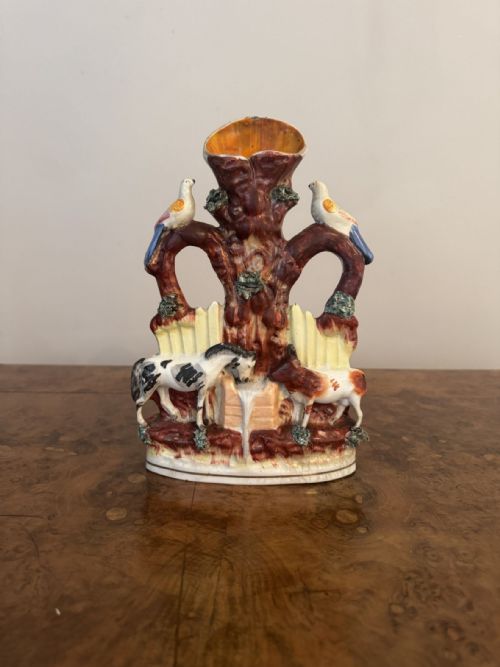
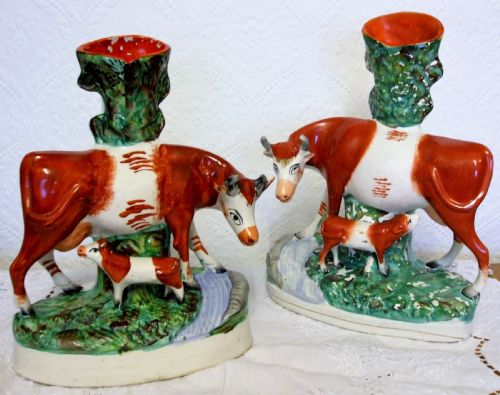
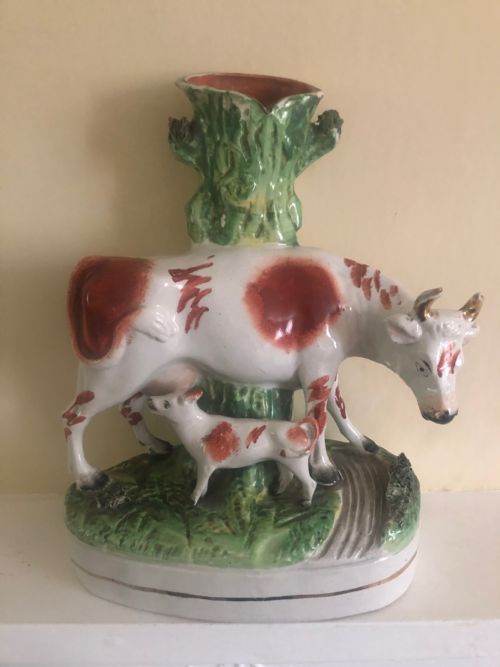
The antique English pottery cow encompasses functional creamers, spill vases, and decorative figures produced across the Georgian, Regency, and Victorian eras. These ceramic beasts appear singly, in pairs, or accompanied by calves, milkmaids, and milkmen.
Most examples found here date to the nineteenth century, reflecting the robust output of Staffordshire potteries alongside Yorkshire pearlware traditions. Collectors encounter both utilitarian vessels designed to hold cream at the table and decorative flatback figures meant for display.
Form and purpose merge in these pieces, transforming a simple farmyard animal into a sophisticated mantle ornament. The regional variations show distinct regional methods, moving from pearlware bodies to glazed earthenware.
Materials and construction
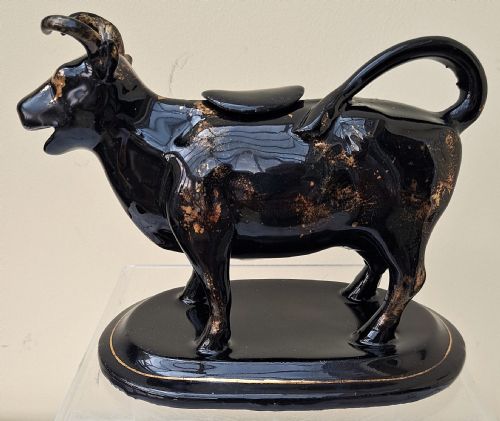
Specialised finishes such as the dark Jackfield glaze gave certain cow creamers a deep, lustrous black surface. Makers modelled the figures in moulds before applying hand-painted details and transfer-printed patterns.
Antique English Pottery Cow Retail Price Guide 2026
Typical asking prices for english pottery cow among the pieces listed under this phrase on Sellingantiques today, from the lower quarter to the upper quarter. They describe what is for sale here now, not the wider market.
Every ceramic cow wears a slightly different expression, ranging from mild astonishment to absolute bovine serenity.
Assessing quality and finish
Quality rests upon the crispness of the moulding and the skill of the hand-painted enamels. Finer specimens display detailed facial expressions and carefully rendered harness work on accompanying milkmaids.
The sophistication of the glaze application and the preservation of original gilt highlights distinguish superior examples. Early pearlware bodies and well-modelled spill holders demonstrate greater sculptural ambition than standard production pieces.
The Antique English Pottery Cow Glossary
- Cow creamer
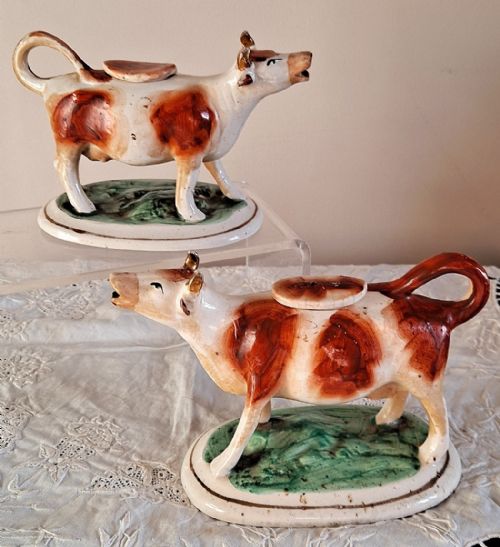
- A hollow ceramic vessel modelled as a cow, featuring a removable lid on the back and a pouring mouth through the snout. These items served dairy at tea tables during the Georgian and Victorian periods.
- Pearlware
- A refined earthenware developed in the late eighteenth century, featuring a subtle bluish glaze that pooled in recesses. It bridges the gap between creamware and later white earthenwares.
- Spill vase
- A hollow cylindrical holder attached to a figure, designed to hold wooden spills for lighting candles and pipes. They represent a common domestic accessory in nineteenth-century parlours.
- Jackfield pottery
- A style of Staffordshire pottery characterised by a dark, metallic-looking black glaze over an earthenware body. It gained popularity during the Victorian era for novelty wares.
- Flatback figure
- A Staffordshire ceramic figurine modelled with a finished front and a plain, unpainted flat back intended to stand against a wall. This construction saved materials and kiln space.
Antique English Pottery Cow: Frequently Asked Questions
What is an antique cow creamer?
A cow creamer is a ceramic vessel shaped like a cow, featuring an opening on its back for filling with cream and a pouring spout at the mouth.
Potters made these novelty items for use at the tea table, combining practical function with whimsical folk art appeal.
How do I date a Staffordshire cow?
Dating relies on examining the ceramic body, glaze characteristics, and underlying paste colours. Early nineteenth-century pieces often use pearlware, while later Victorian examples feature heavier earthenware and distinct enamel palettes.
Base construction and marking styles also help place the figures within the Georgian or Victorian eras.
Are these figures functional or decorative?
Some pieces, such as cow creamers, were made to hold and pour cream during meals. Others, including flatbacks and spill vases, served purely as decorative mantel ornaments or practical holders for lighting spills.
Many survivors transitioned from domestic utility to cabinet display over the course of the nineteenth century.
What is a flatback figure?
A flatback figure is a ceramic sculpture designed with a detailed front and a flat, unglazed or plain-backed reverse. This allowed the object to sit flush against a cottage mantelpiece or shelf.
Staffordshire potteries produced thousands of these figures during the Victorian period for domestic display.