




Victorian Sporting Sculpture
Victorian sporting sculpture captures the movement of hounds, game and players in bronze, silver and wood.
Victorian Sporting Sculpture
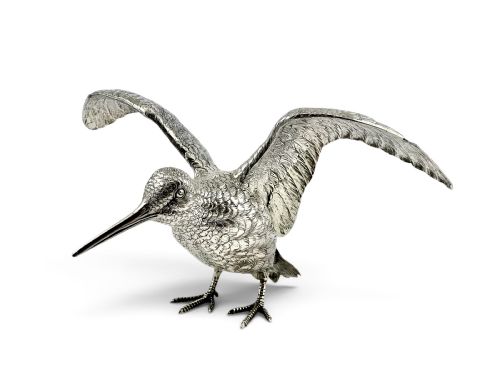
Victorian sporting sculpture comprises works in bronze, silver, parian ware and wood depicting animals, hunt scenes and athletic pursuits from the nineteenth century. These pieces record the pursuits of the period through depictions of hunting dogs, game birds and players.
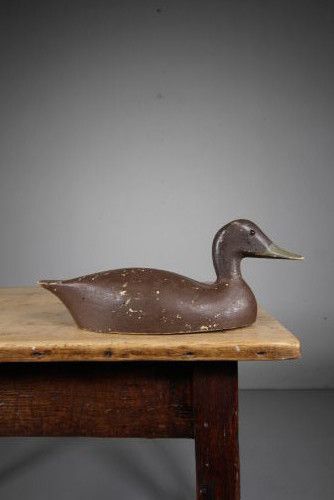
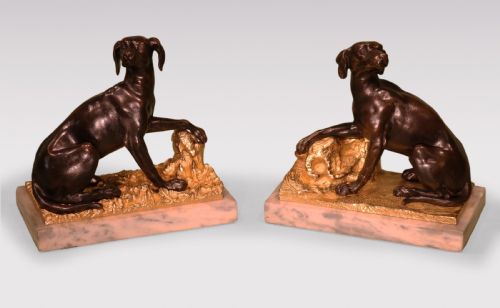
The versions most commonly met on this page include animalier bronzes of hounds and setters, carved wooden decoy ducks, and metal figures of rugby players. Makers rendered these subjects in styles ranging from French animalier to English country folk art.
The selection reflects both refined foundry production and domestic folk art traditions. Buyers encounter everything from signed French bronzes to English decoys.
Materials and methods of construction
Makers utilised bronze, gilt bronze and sterling silver, often casting figures using the lost-wax method to capture anatomical detail in hounds and game. Cold painting was applied to bronze surfaces to render plumage and fur with naturalistic colour.
Parian ware and biscuit porcelain provided an alternative medium for white ceramic hunting groups, whilst wooden decoys relied on hand carving and simple paint finishes for field use.
Listings feature 19th-century works in bronze, silver, marble, wood and parian ware spanning the Victorian period.
Distinctions in craftsmanship and finish
Quality in these sculptures rests upon the crispness of the casting and the fidelity of the animal anatomy. Finer bronzes retain sharp detail in the fur and feathers without losing definition in the underlying muscle structure.
The quality of the patination or cold painting alters the character of a piece. Skilled application of colour enhances depth and realism, whereas coarse finishes obscure the sculptural form beneath.
Jules Moigniez·H Risch·Auguste Nicholas Cain·John Willis Good
The Victorian Sporting Sculpture Glossary
- Animalier
- A nineteenth-century artistic style focusing on the realistic depiction of animals, particularly in action. Sculptors in this tradition studied anatomy closely.
- Parian ware
- A type of fine biscuit porcelain developed to resemble marble, frequently used for nineteenth-century figures. It fires to a smooth, unglazed finish.
- Cold painted bronze
- Bronze sculpture finished with paint applied without heat after casting. This technique added naturalistic colour to birds and dogs.
- Decoy
- A carved or moulded bird used to attract wildfowl during shooting. Working examples show simple wooden construction and working paint layers.
Victorian Sporting Sculpture: Frequently Asked Questions
What is an animalier bronze?
An animalier bronze is a nineteenth-century sculpture focusing on the realistic portrayal of animals, particularly dogs, horses and wildlife in motion. These works emerged from French and English studios.
Artists utilised the medium to capture the tension and musculature of subjects like hunting hounds and game birds.
How were wooden decoys used?
Wooden decoys served a practical function in shooting, placed on water or fields to attract wildfowl within range. Carvers shaped them from wood and finished them with flat paint.
Over time, exposure to weather created natural wear across the surface of these working objects.
What is parian ware?
Parian ware is a type of hard-paste porcelain that mimics the appearance of carved marble. It was frequently utilised for Victorian figures and sculptural groups.
The material has a matte, unglazed surface that highlights fine detail in drapery and animal forms.
How do I care for bronze sculpture?
Bronze sculpture requires minimal intervention beyond gentle dusting with a soft, dry cloth to prevent the accumulation of grime. Wax coatings should be applied sparingly if needed.
Avoid abrasive cleaners and moisture, which can damage the patinated surface over time.