
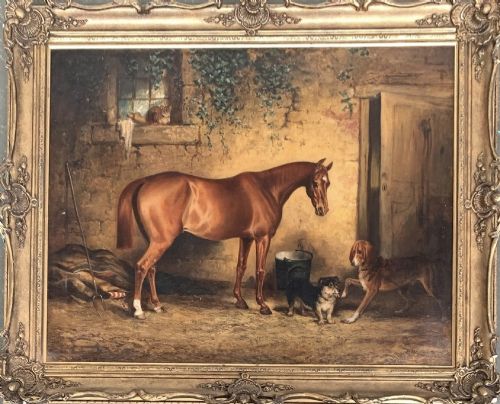
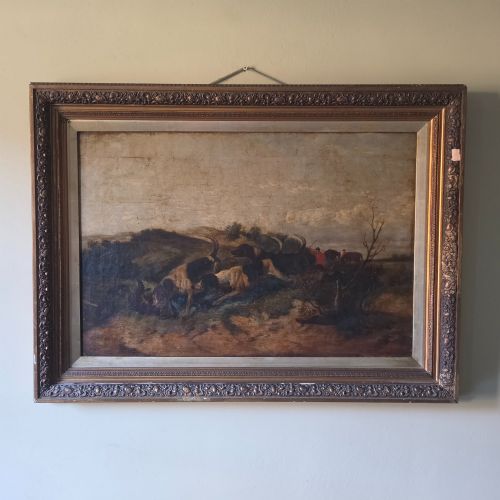
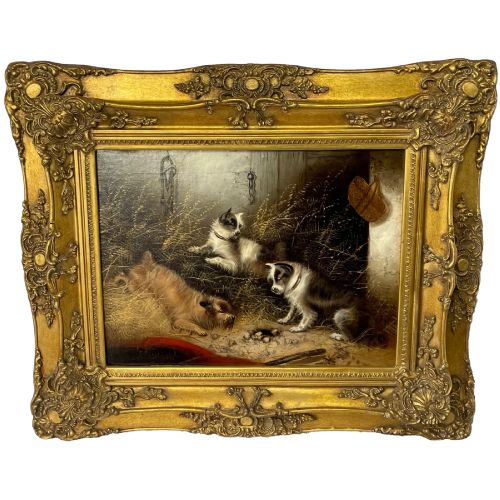
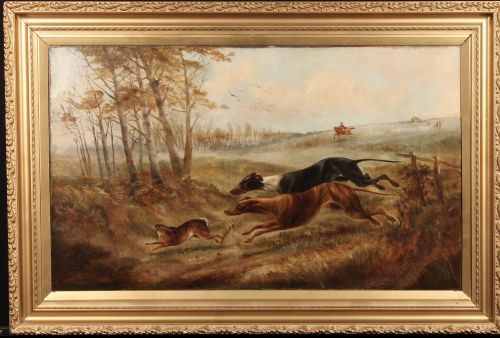
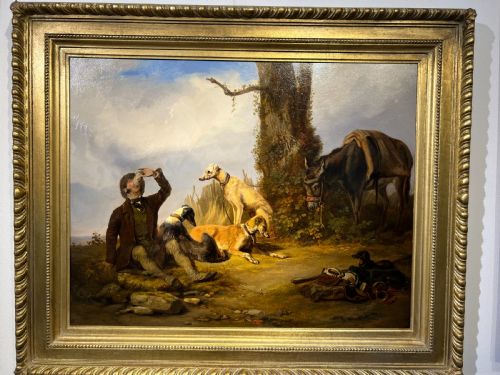


Victorian Sporting Dog Painting
A victorian sporting dog painting captures the working canine in the field, moor or farm with sharp historical fidelity.
Victorian Sporting Dog Painting
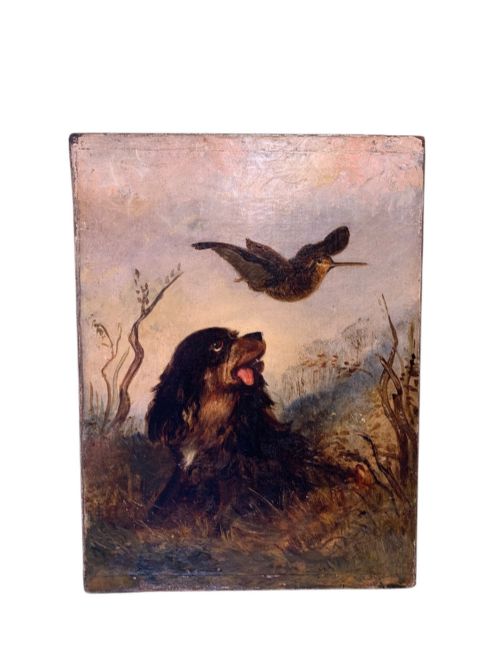
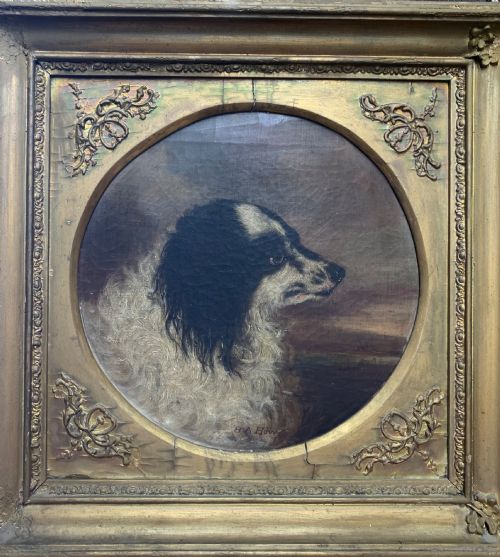
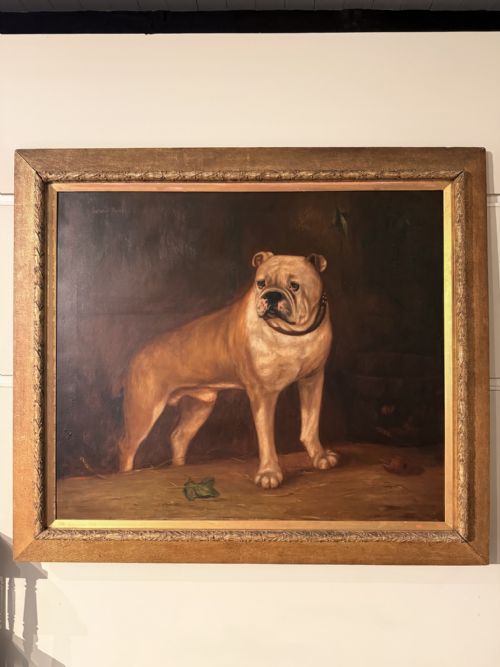
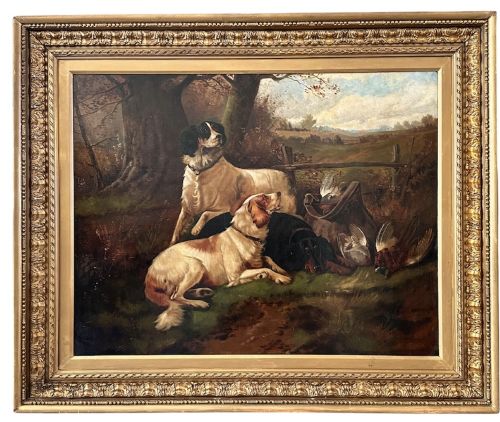
A victorian sporting dog painting depicts breeds such as spaniels, setters, pointers, hounds and terriers within nineteenth-century landscapes and rural settings. These works record prized gun dogs, hunting packs and farm terriers either at rest or actively working alongside their masters. The pieces appearing here span the nineteenth century into the early twentieth century, utilising oil on canvas, oil on board and watercolour mediums.
Most examples encountered on this page present single portraits or small groups in pastoral landscapes, often framed in period giltwood. Canvas works dominate the selection, accompanied by occasional watercolours and oil on board formats.
Materials and construction
Artists painted these works primarily in oil paint upon stretched canvas or board, employing wood for traditional stretchers and frames. Giltwood and gesso feature heavily in the ornate framing techniques characteristic of the period.
Techniques range from fine brushwork capturing individual hairs and wet-paint surfaces to looser watercolour washes on paper. Supporting structures utilise timber frames finished with gold leaf.
The documented production dates span the nineteenth century, extending from the eighteen-fifties into the early nineteen-twenties.
Distinctions in execution
Quality rests upon the artist's command of canine anatomy, expression and movement within a convincing natural light. Superior works demonstrate meticulous attention to coat texture, eye luminosity and the distinct conformation of specific working breeds.
The sophistication of the landscape background and the harmony between the animal and its environment further separate standard decorative works from master animalier productions.
Henry Barraud·George Armfield·Sir Edwin Henry Landseer·John Emms·John Frederick Herring Senior·Arthur Wardle·William Barraud·Valentine Thomas Garland·John Trivett Nettleship·Fannie Moody·Robert Cleminson·Colin Graeme Roe·Philip Eustace Stretton·Charles Bilger Spalding
The Victorian Sporting Dog Painting Glossary
- Oil on Canvas
- Pigment mixed with drying oil applied to a woven fabric support. This serves as the primary medium for the majority of the works listed here.
- Giltwood
- Timber carved and coated with gold leaf or metallic paint. It provides the traditional heavy framing seen around nineteenth-century canvas paintings.
- Gesso
- A plaster-like binder mixture applied to wood frames before gilding. It allows for crisp ornamental moulding and relief detail.
- Gun Dog
- A classification of canine trained to assist hunters in finding and retrieving game. These form the primary subject matter across the sporting art genre.
Victorian Sporting Dog Painting: Frequently Asked Questions
What breeds appear most often?
Setters, spaniels, pointers, terriers and hounds dominate the canine subjects across these nineteenth-century canvases.
Artists frequently painted these specific working dogs because landowners valued them highly for shooting and hunting expeditions.
How should these paintings be hung?
Traditional giltwood frames look best against neutral walls in well-lit rooms away from direct sunlight.
Keeping oil paintings clear of intense heat sources protects both the canvas and the original gesso framing.
Are watercolours common in this genre?
Watercolour works appear occasionally alongside the dominant oil on canvas medium used by animal painters.
Works on paper typically require protective glass framing to preserve the delicate pigments over time.
How are periods identified?
Dates rely upon artist lifespan records, dated signatures, costume details in accompanying human figures and framing styles.
Nineteenth-century works often carry specific biographical markers linking the creator directly to the Victorian era.