


Victorian Sporting Dog Art
Victorian sporting dog art captures working hounds, gun dogs and terriers in oil or watercolour across the nineteenth century.
Victorian Sporting Dog Art
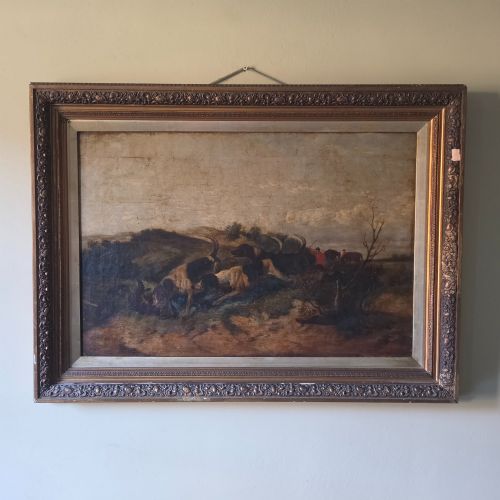
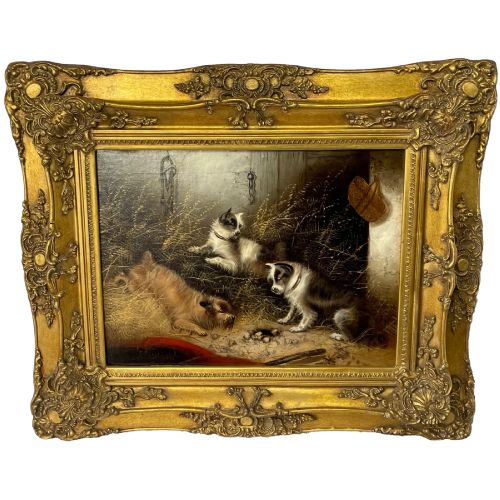
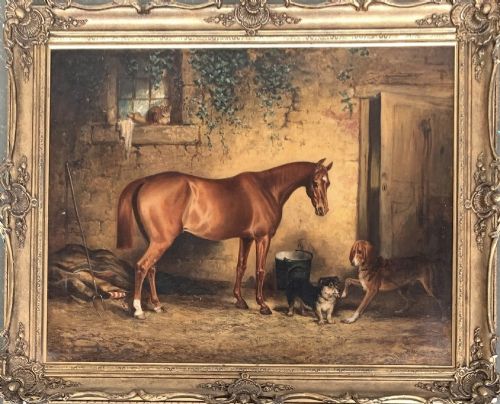
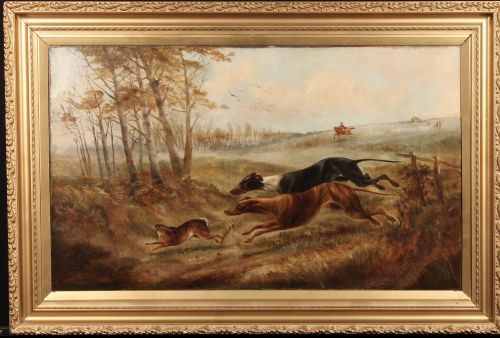
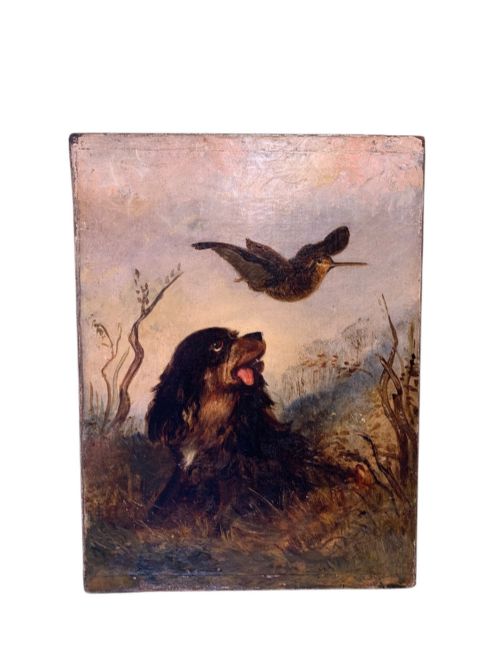
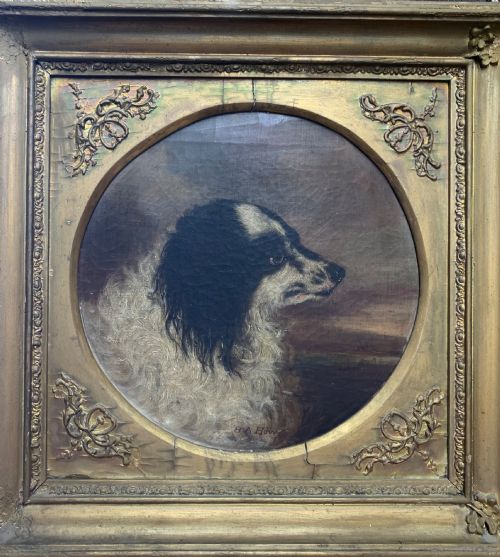
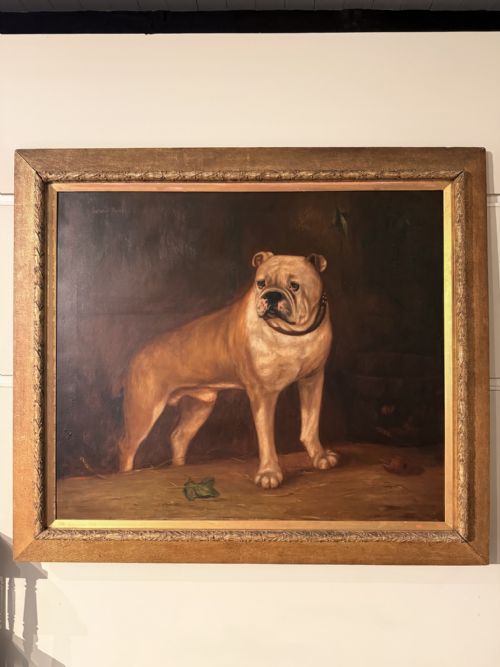
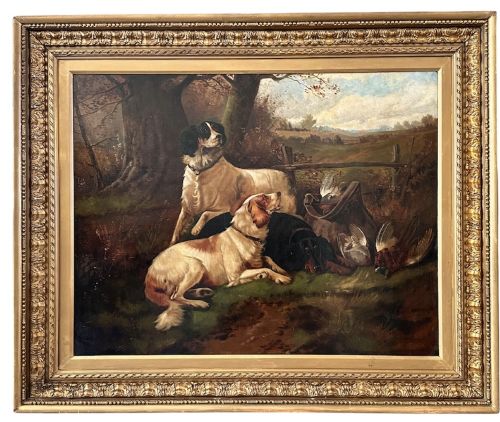
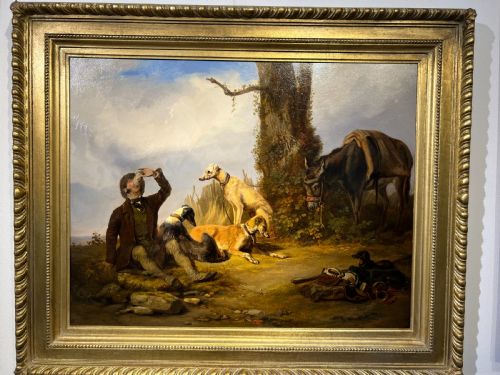
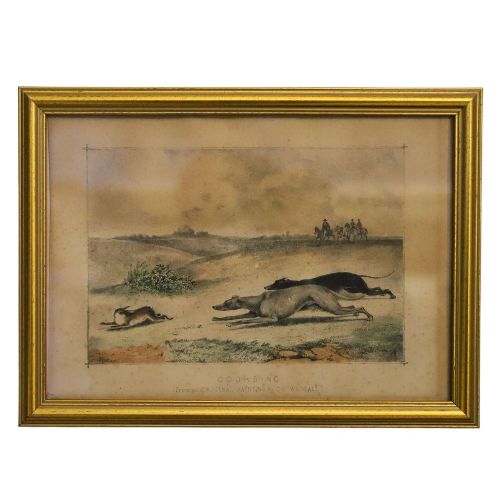
Victorian sporting dog art comprises oil paintings, watercolours, engravings and lithographs depicting hounds, gun dogs, terriers and working dogs in rural landscapes, kennels and interiors. These works record prized hunting champions, gun dogs with the day's bag, and working terriers through the nineteenth century.
The pieces on this page are predominantly oil paintings on canvas or board, alongside framed prints and watercolours from the Victorian era. Canvas works often appear within period giltwood and gesso frames that complement the traditional subjects.
How They Were Made
Artists painted primarily in oil paint on canvas or board, utilising fine brushwork to render animal coats, expression and landscape backgrounds. Canvas supports were stretched over wooden frames and frequently housed within moulded giltwood and gesso frames.
Works on paper include watercolours, engravings and original lithographs produced through traditional printmaking methods of the nineteenth century.
Listings feature oil on canvas, wood, giltwood, gesso and canvas across the nineteenth century.
What Varies in Quality
Quality rests in the anatomical accuracy of the animal, the expressiveness of the portrait and the handling of the surrounding landscape or interior setting. Skilled artists capture muscular structure, coat texture and canine posture with precise observation.
The preservation of the original oil paint, canvas integrity and period framing significantly influence the overall condition and visual presence of each piece.
Henry Barraud·George Armfield·John Sargent Noble·Sir Edwin Henry Landseer·C H Weigall·C R Breytle·John Emms·John Frederick Herring Senior·Arthur Wardle·William Barraud·George E Sharpe·Colin Graeme Roe·Valentine Thomas Garland·John Trivett Nettleship·Fannie Moody·Edwin Frederic Holt·Robert Cleminson·John Charles Tunnard·Alfred Duke·Thomas Blinks·Philip Eustace Stretton
The Victorian Sporting Dog Art Glossary
- Oil on Canvas
- A traditional painting technique where oil paint is applied to a woven canvas stretched across a wooden frame. This medium allowed artists to build rich colour and texture for detailed animal portraits.
- Giltwood
- Wood that has been coated with a thin layer of gold leaf or metallic gilt. It formed the decorative finish for many nineteenth-century picture frames.
- Gesso
- A plaster-like mixture applied to wooden frames as a base before gilding or painting. It enabled craftsmen to carve elaborate Victorian frame ornamentation.
- Lithograph
- A printmaking method based on the non-mixing of oil and water on a flat stone or metal plate. Nineteenth-century sporting prints captured detailed illustrations for collectors.
Victorian Sporting Dog Art: Frequently Asked Questions
What breeds appear most often?
Spaniels, pointers, setters, terriers and various hounds dominate these nineteenth-century canine portraits.
Artists frequently recorded specific working dogs owned by landed gentry alongside prized racing greyhounds and farm terriers.
How do I hang a large oil painting?
Heavy nineteenth-century canvases require secure wall fixings anchored directly into masonry or wall studs.
Position paintings away from direct sunlight and heat sources to protect the oil paint and giltwood frame.
Are watercolours as durable as oils?
Watercolours on paper demand careful framing behind protective glass to prevent fading from light exposure.
Oil paintings on canvas tolerate ambient indoor conditions better than works on paper but still benefit from stable humidity.
How can I tell the period?
Period indicators include canvas stamps, stretcher construction styles, artist signatures and nineteenth-century framing techniques.
Clothing styles in figures or handwritten inscriptions on the reverse of the canvas also help date the artwork.