




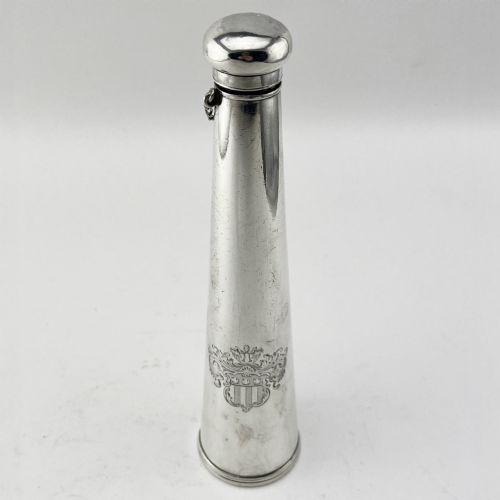
Victorian Spirit Flask
A victorian spirit flask is a portable vessel for liquor, designed to slip into a pocket or travel in a fitted leather case.
Victorian Spirit Flask
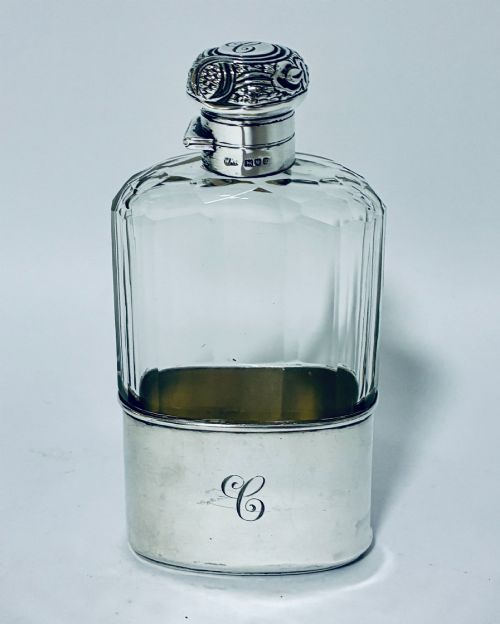
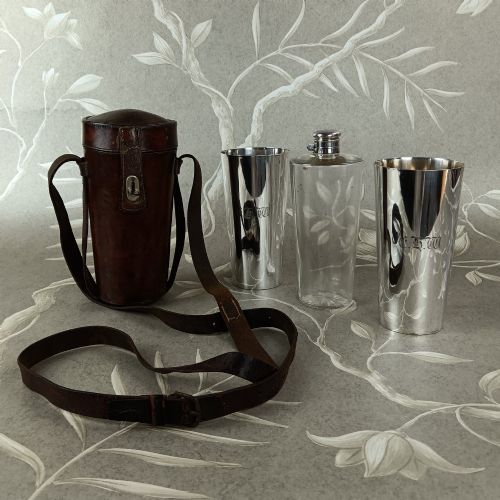
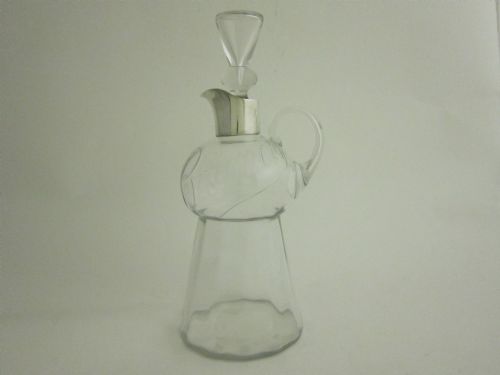
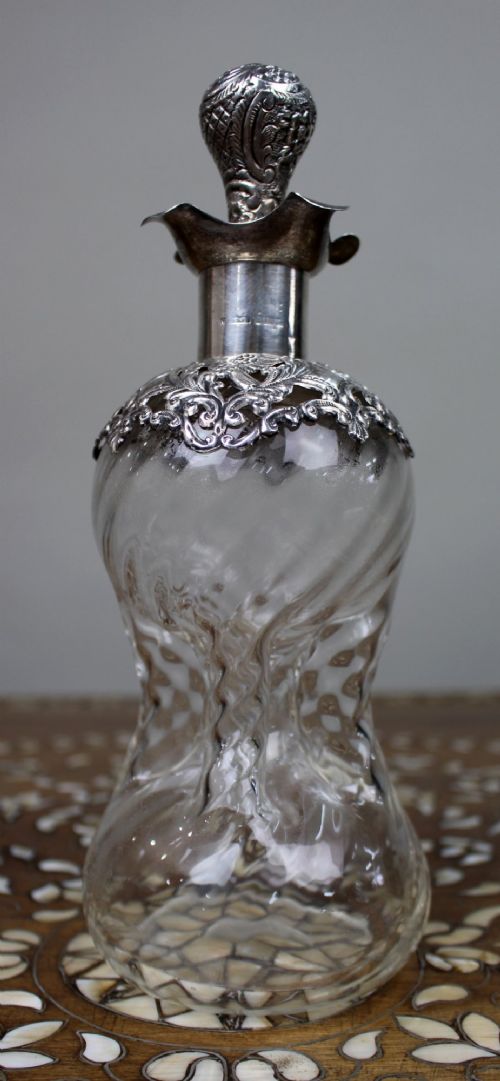
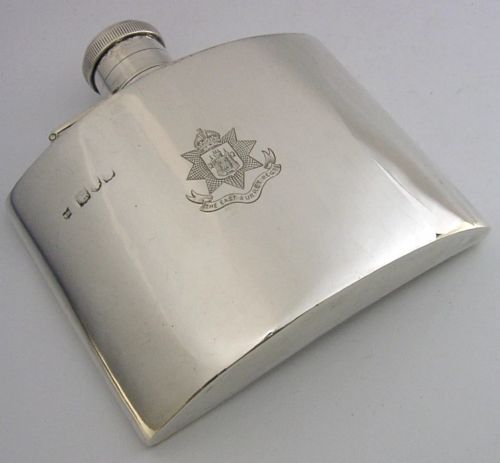
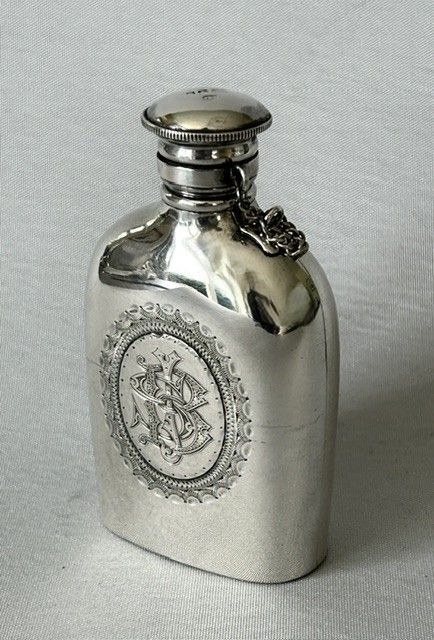
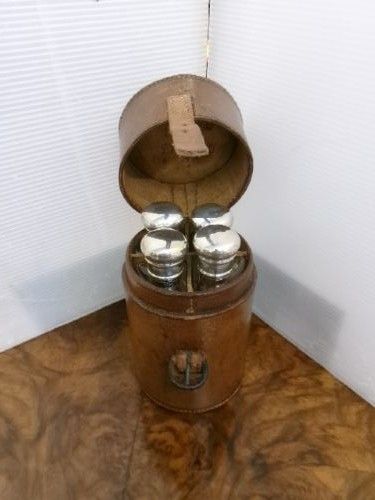
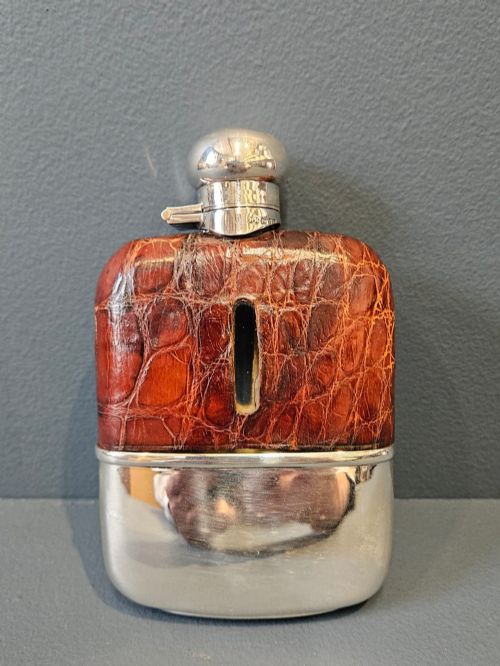
When you search for a victorian spirit flask, you encounter pocket-sized companions intended for shooting, hunting, and military campaigns. The form spans flat curved glass bodies sheathed in sterling silver or leather, alongside companion sets housing multiple bottles in fitted cases.
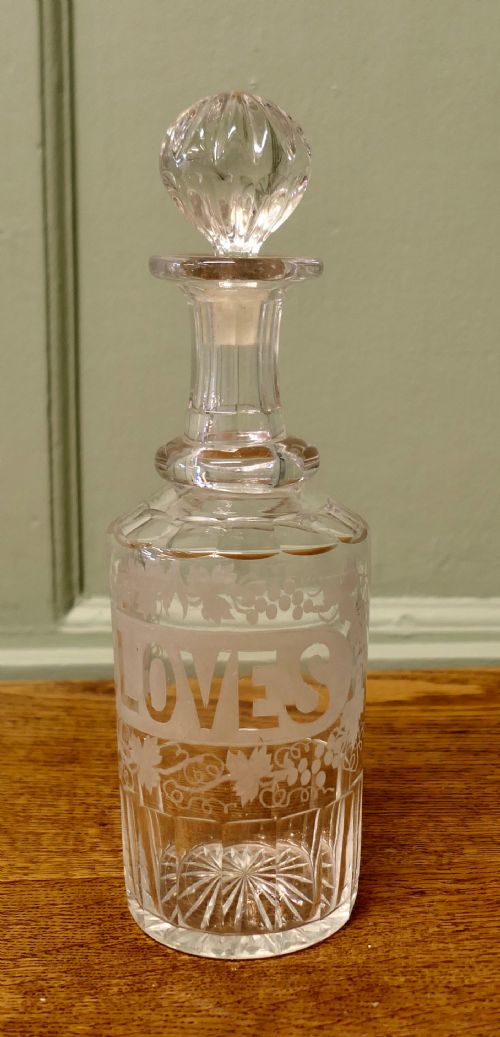
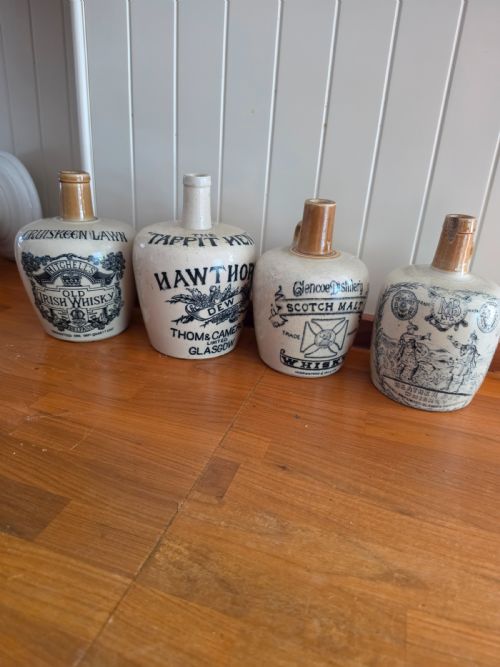
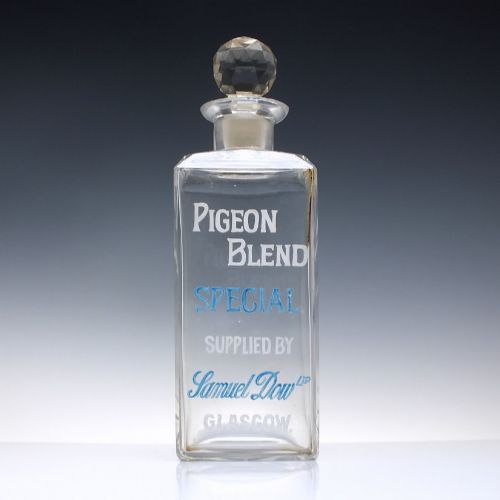
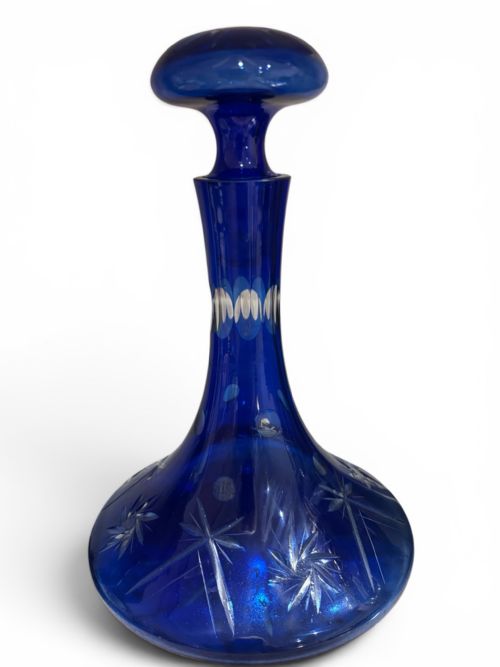
Most examples you meet date from the nineteenth century, particularly the later decades of the period. Alongside pocket flasks, the selection includes related table decanters, campaign sets, and stoneware advertising bottles.
Makers ranged from specialist silversmiths to established retail firms, producing both plain utilitarian items and elaborately engraved pieces bearing family crests or regimental connections.
How they were made
Makers combined cut glass, crystal, and clear glass with sterling silver mounts, silver plate, and leather. Glass bodies were frequently moulded or cut with geometric patterns, then fitted with hinged silver caps and detachable lower cups.
Metal components involved sterling silver or silver plate, sometimes finished with a hammered texture or engraved with floral motifs and crests. Leather cases and wicker bindings provided protection for travel, while specialised closures ensured secure transport of liquor.
Victorian Spirit Flask Retail Price Guide 2026
Typical asking prices for victorian spirit flask among the pieces listed under this phrase on Sellingantiques today, from the lower quarter to the upper quarter. They describe what is for sale here now, not the wider market.
Some nineteenth-century makers fashioned glass spirit decanters into the distinct form of a dog or a pigeon.
What varies in quality
Quality rests upon the weight of the silver mounts and the clarity of the glass or crystal body. Thicker glass resists impact during travel, while substantial silver gauge prevents denting around the hinged cap and removable cup.
Execution of detail separates standard production items from finer workshop pieces. Hand-engraved crests, parcel-gilt interiors, and complete fitted leather cases with matching beakers elevate a piece above a basic utilitarian flask.
James Dixon & Sons·Hukin & Heath·Asprey London·Royal Doulton·S Mordan·Brownett & Rose·Hilliard & Thomason
The Victorian Spirit Flask Glossary
- Sterling silver
- A silver alloy containing 92.5 percent pure silver and 7.5 percent other metals, typically copper, used extensively for caps and mounts.
- Silver plate
- A layer of silver fused to a base metal core, utilised to provide the appearance of solid silver at a lower production cost.
- Campaign set
- A portable collection of spirit flasks and beakers fitted within a leather or wooden case for travel.
- Removable cup
- A metal drinking vessel sliding onto the lower portion of a pocket flask, held in place by friction or a bayonet mount.
- Cut glass
- Glass shaped and patterned by abrasive wheels, creating faceted surfaces that catch the light.
Victorian Spirit Flask: Frequently Asked Questions
How were these flasks used?
Owners carried them during outdoor pursuits such as hunting, shooting, and military campaigns to hold quantities of whisky, brandy, or other spirits.
The detachable lower cup allowed the owner to pour a measure without needing a separate drinking glass while out in the field.
Are the cups always removable?
Many pocket flasks feature a silver cup that slips off the base, though simpler designs consist solely of the glass and metal body with a captive cap.
When a cup is present, it often bears matching hallmarks to the top mount, confirming it belongs to the original vessel.
How do I date a silver flask?
British silver mounts carry hallmarks indicating the assay office, the standard of metal, and a date letter corresponding to the specific year of testing.
Additional clues include the style of engraving, the shape of the screw cap, and any accompanying leather case construction.
Can I still use an antique flask?
While many examples remain structurally sound, modern usage requires careful inspection of the cork or washer inside the silver cap to ensure a proper seal.
Historic metal interiors may also require thorough cleaning before holding any liquid intended for consumption.