

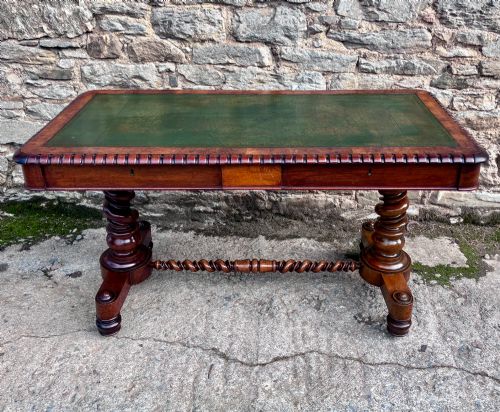
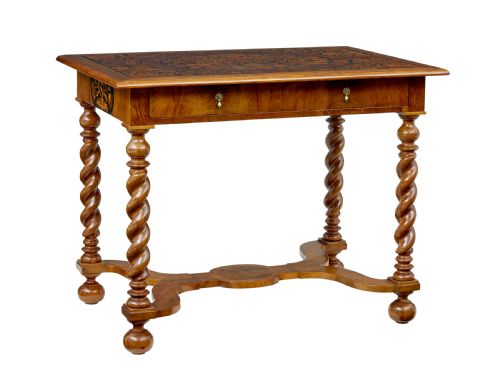

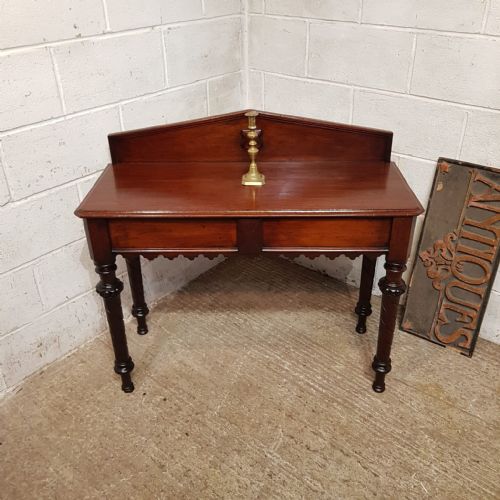


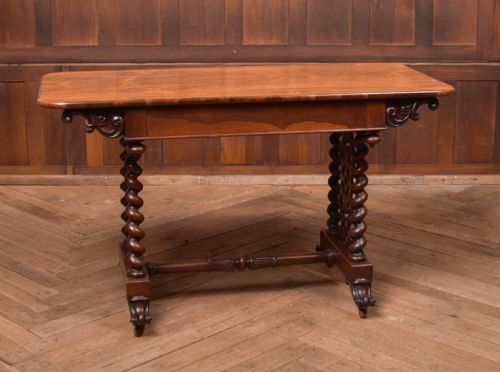




Victorian Spiral Leg Table
These Victorian spiral leg table pieces bring rich timber character and distinctive turned detail to any room.
Victorian Spiral Leg Table
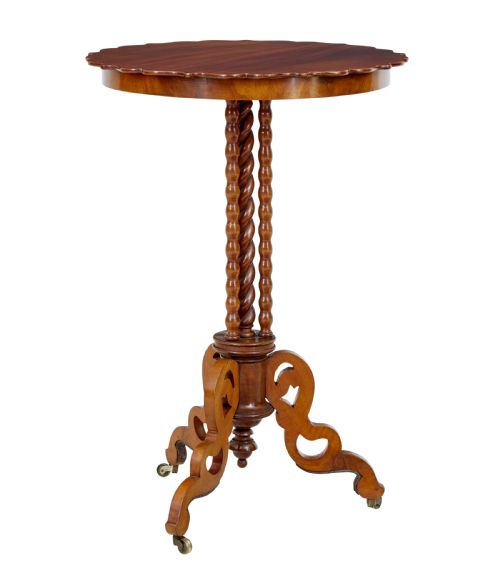
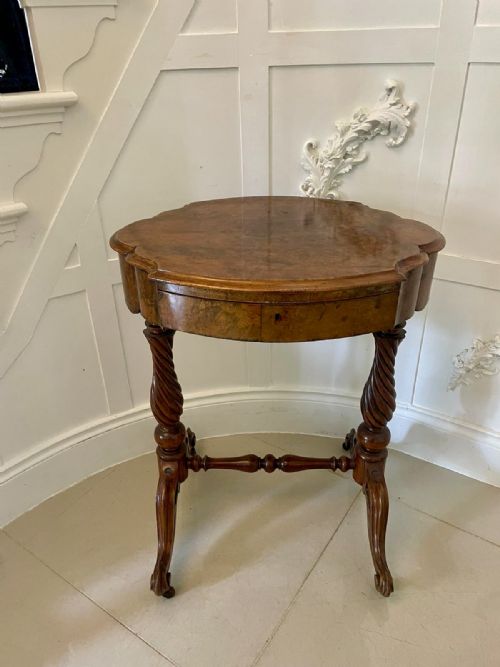
A Victorian spiral leg table draws the eye with its characteristic twisted supports, which appear across various forms from the nineteenth century. These pieces encompass everything from compact occasional tables and library drum tables to side tables and larger hall tables.
Most examples found here date from the nineteenth century, including specific years like eighteen-sixty and eighteen-eighty, alongside broader Victorian and Regency periods. The styles range from standard Victorian to Victorian Gothic Revival, Aesthetic Movement, and William IV.
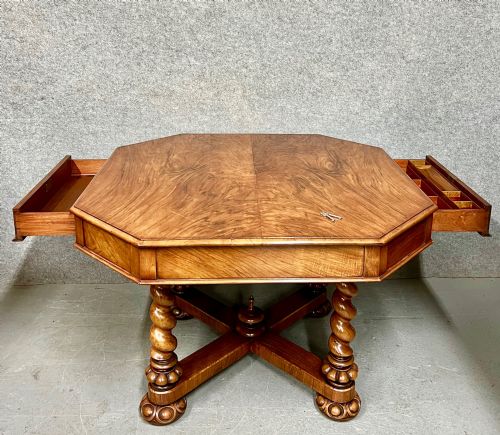
Buyers will encounter diverse formats, including octagonal centre tables, burr walnut work lamp tables, and mahogany console or pembroke tables. Each version offers a distinct footprint suited for different rooms, whether as a focal point or a practical surface.
How they were made
Cabinetmakers utilised dense hardwoods such as mahogany, walnut, rosewood, and oak to construct these pieces, occasionally incorporating boxwood, brass, and leather details. Timbers were selected for their grain pattern and depth of colour, forming sturdy frames capable of supporting turned elements.
The characteristic spiral or bobbin turned legs required precise lathe work by skilled hands, shaping solid timber into uniform twists. Marquetry inlay, marquetry work, and carved details further enriched the surfaces of finer examples from the era.
Victorian Spiral Leg Table Retail Price Guide 2026
Typical asking prices for victorian spiral leg table among the pieces listed under this phrase on Sellingantiques today, from the lower quarter to the upper quarter. They describe what is for sale here now, not the wider market.
Materials recorded across the current inventory include mahogany, walnut, oak, rosewood, boxwood, brass, and leather.
What varies in quality
Quality rests in the crispness of the timber turning and the selection of the primary wood, where burr walnut or figured mahogany elevates a piece above standard stock. The integration of decorative elements like marquetry inlay or brass fittings distinguishes finer workshops.
Structural integrity and the retention of original surfaces govern the standing of each piece. Superior examples maintain unblemished timber patination and precise joinery that withstands daily use.
The Victorian Spiral Leg Table Glossary
- Spiral leg
- A form of furniture leg shaped in a continuous twist or helix, commonly produced on a lathe during the nineteenth century.
- Marquetry
- Decorative veneer work arranged in geometric or pictorial patterns across the surface of a table top.
- Centre table
- A freestanding table designed to be viewed from all sides, frequently placed in the middle of a principal room.
- Pembroke table
- A small table featuring hinged drop leaves on two opposing sides, supported by folding brackets.
- Drum table
- A circular library table with a deep top resembling a drum, often fitted with drawers around the perimeter.
Victorian Spiral Leg Table: Frequently Asked Questions
How do I date a Victorian table?
Dating relies on timber choice, construction methods, and stylistic cues such as Gothic Revival or Aesthetic Movement details.
Makers of the period utilised specific hardwoods and decorative techniques like marquetry inlay that anchor pieces within the nineteenth century.
Where should I place an occasional table?
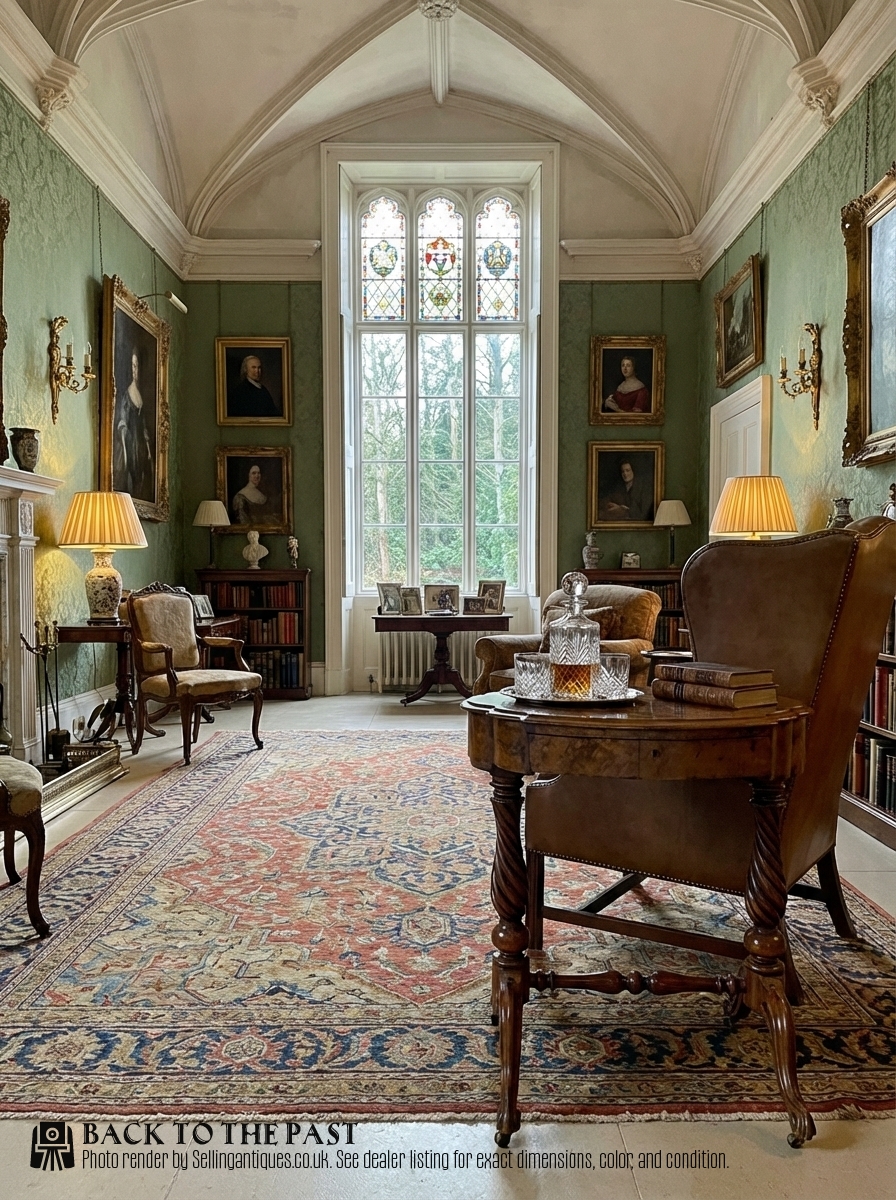
Occasional tables suit living rooms, hallways, and studies where a compact surface is useful for lamps or books.
Their varied footprints allow them to fit beside seating or serve as central display pieces.
What woods were used for these tables?
Cabinetmakers primarily worked with mahogany, walnut, rosewood, and oak to build durable frames and decorative surfaces.
Secondary materials like boxwood, brass, and leather often accented the primary timbers.