

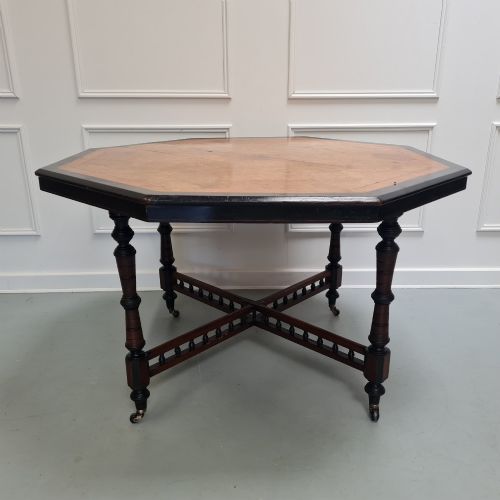
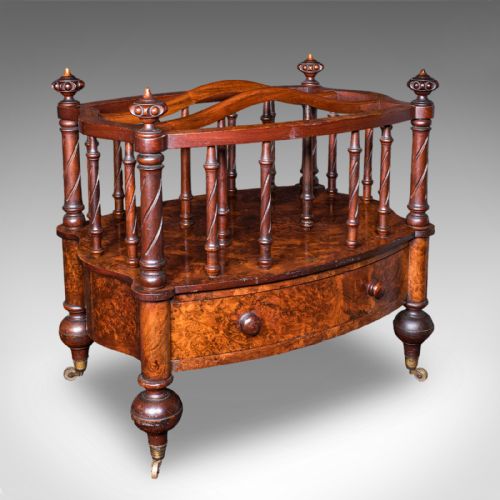

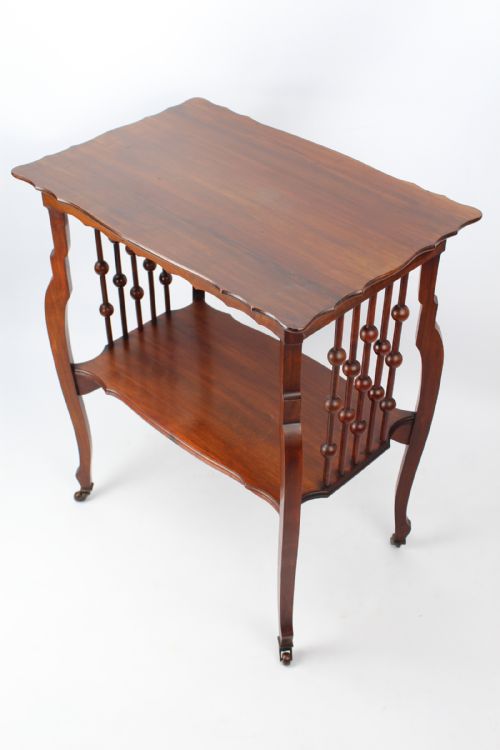


Victorian Spindled Side Table
These Victorian spindled side table pieces bring turned uprights and rich timbers together for domestic service, answering the search for functional nineteenth-century surfaces.
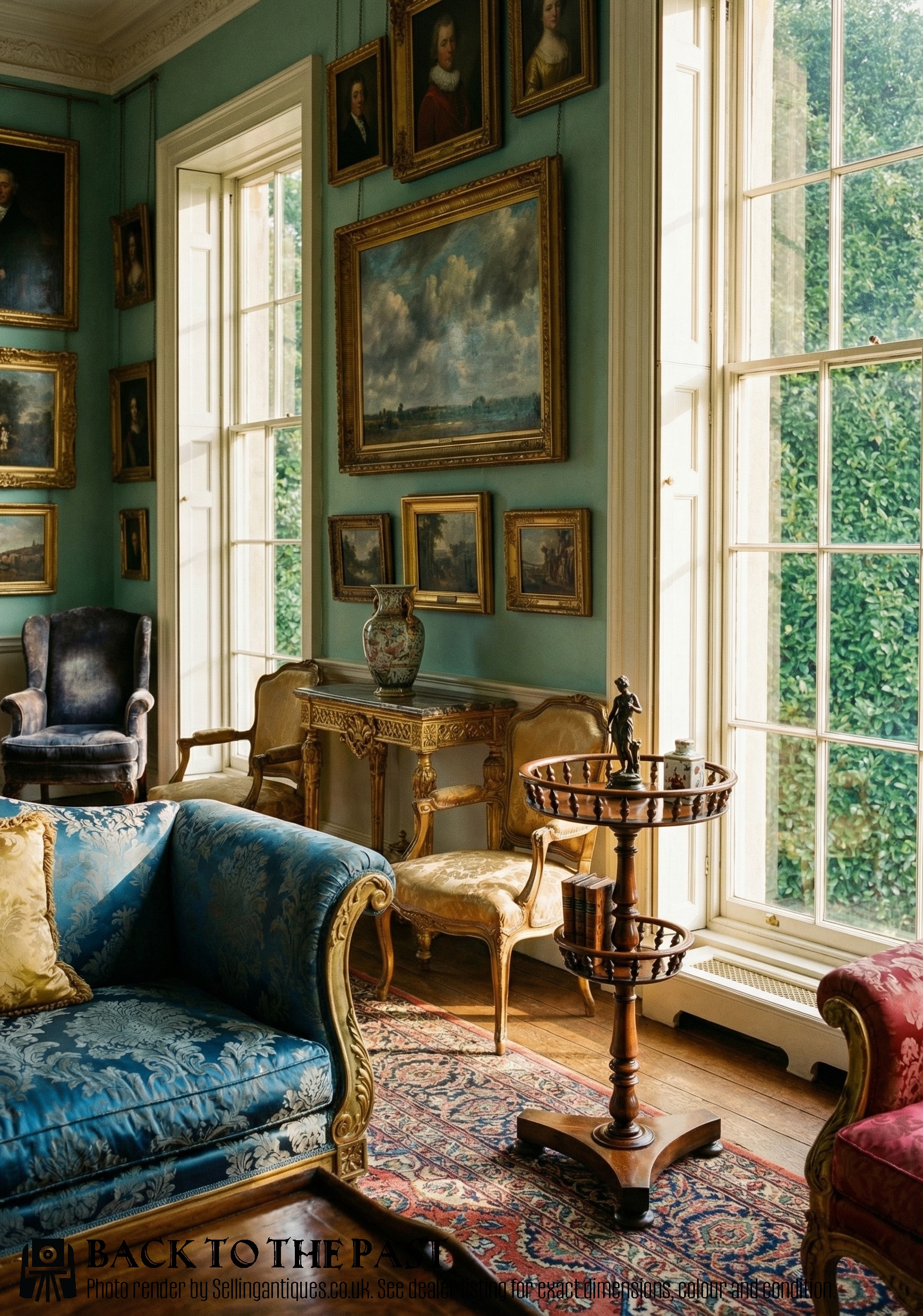
Victorian Spindled Side Table
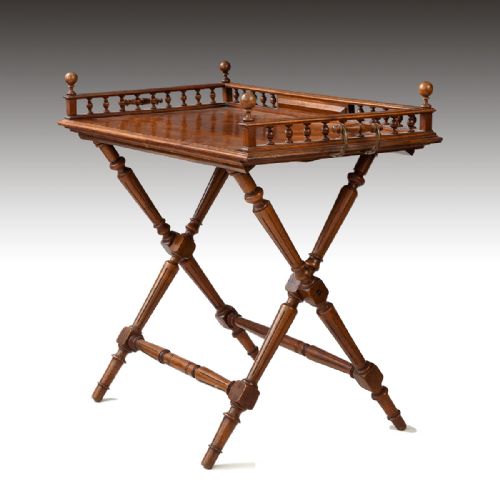
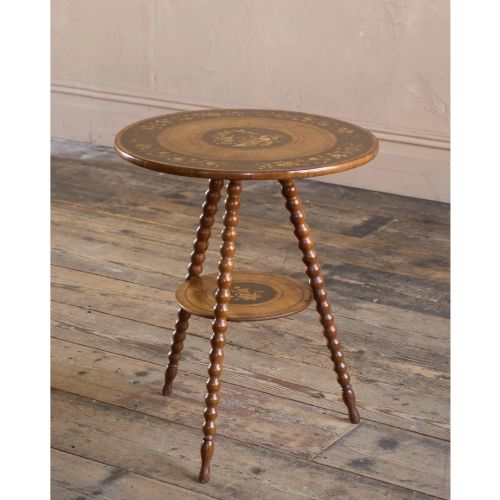
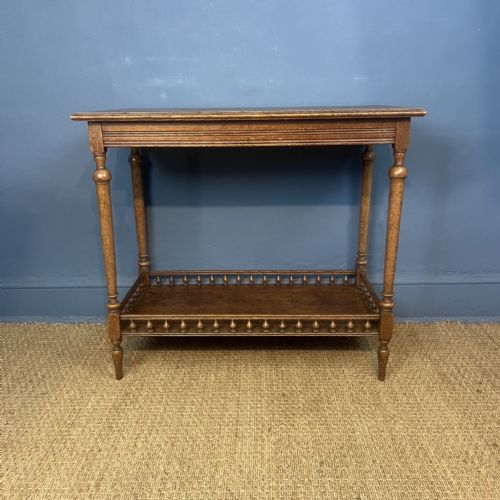
A Victorian spindled side table is a compact surface resting on legs or supports enriched with turned wooden spindles, originating primarily in the nineteenth century and the Edwardian period.
The pieces appearing on this page take various forms, including occasional tables, centre tables, two-tier designs, and lamp tables, shaped by styles such as the Aesthetic Movement, Arts and Crafts, and Anglo-Moorish.
Makers and workshops constructed these tables from timbers like walnut, mahogany, oak, rosewood, and ebonised wood, often incorporating brass details, ceramic elements, or marquetry inlay.
How they were made
Cabinet makers utilised dense hardwoods such as mahogany, walnut, and rosewood, alongside ebonised wood, shaping structural components by hand and on the lathe.
Turned spindles were fitted between tiers or beneath tabletops, while decorative surfaces received marquetry inlay, veneer, or black lacquer finishes.
Listings feature walnut, mahogany, oak, and rosewood alongside ebonised wood across Victorian, Edwardian, and Regency periods.
What varies in quality
Quality rests in the selection of timbers, such as burr walnut or figured mahogany, and the crispness of the turned spindle work rather than mass production.
Sophistication of form, including multi-tiered tables, marquetry, and distinct stylistic influences like the Aesthetic Movement or Anglo-Moorish design, separates standard pieces from finer examples.
The Victorian Spindled Side Table Glossary
- Spindle
- A slender, turned wooden rod used as a decorative structural element beneath tabletops or between tiers. These uprights define the characteristic profile of the furniture.
- Aesthetic Movement
- A late nineteenth-century design style focusing on art for art's sake, often featuring ebonised surfaces and rectilinear forms. Pieces in this taste embrace simplicity and East Asian inspiration.
- Ebonised
- Wood treated to imitate ebony, usually through staining or painting. This dark finish appears frequently on nineteenth-century framework.
- Marquetry
- The art of applying decorative veneer pieces in wood to form geometric or floral patterns. It provides surface ornamentation on tabletops.
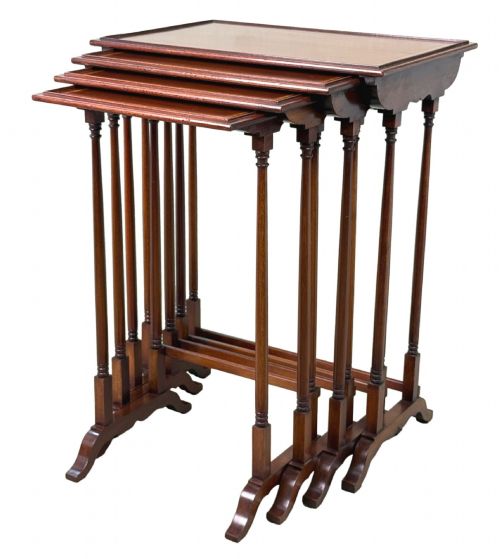
- Quartetto
- A nested set of four tables designed to slide one beneath another. This space-saving form uses turned supports.
Victorian Spindled Side Table: Frequently Asked Questions
What is a spindled side table?
A spindled side table is a nineteenth-century occasional surface supported by turned wooden uprights between the legs or beneath the top.
These pieces served functional roles in period homes as lamp stands, lamp tables, or drawing-room furniture.
Which woods were used?
Cabinet makers utilised walnut, mahogany, oak, rosewood, and ebonised wood for these tables.
Finer examples frequently incorporated burr walnut veneers, brass mounts, or marquetry inlay.
How do I spot an Aesthetic Movement table?
Aesthetic Movement tables usually feature ebonised wood, geometric lines, and sometimes Anglo-Moorish or Liberty style details.
They date from the late nineteenth century and often include multiple tiers or square tops.
Where did these tables sit?
These tables stood beside sofas, against hallway walls, or in the centre of Victorian drawing rooms.
Their compact size allowed them to function as lamp tables, occasional surfaces, or card tables.