

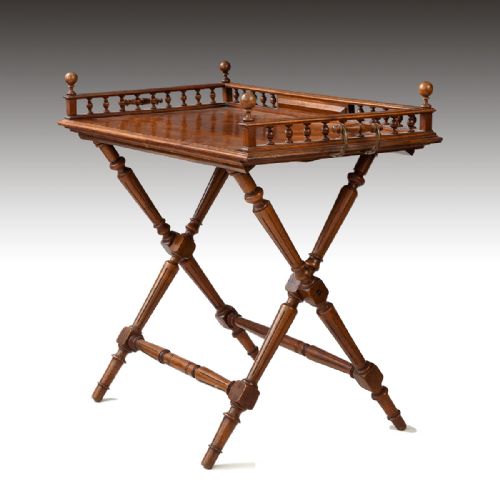
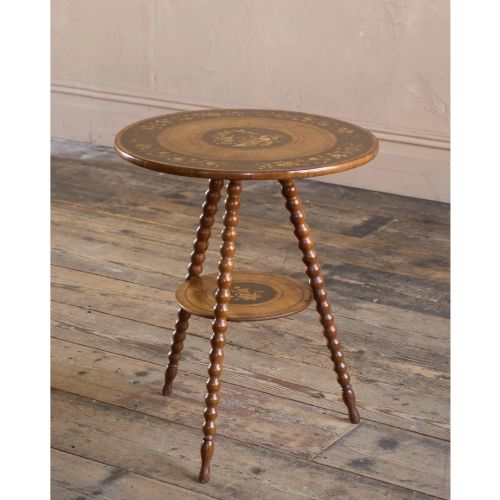
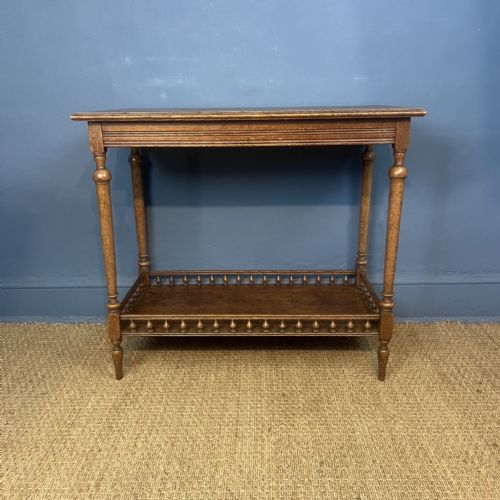
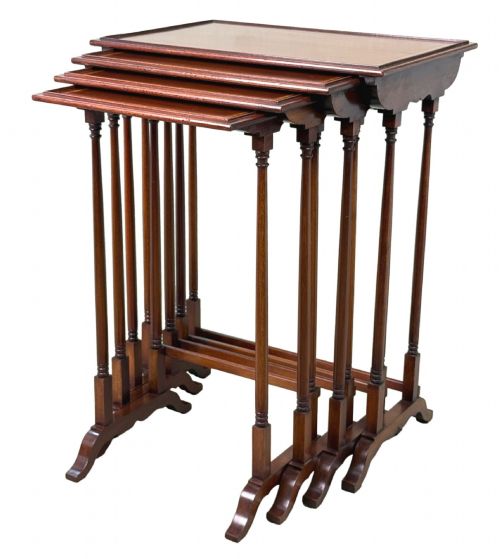



Victorian Spindle Side Table
A victorian spindle side table brings turned uprights and rich woods to a room, offering a functional surface with distinct nineteenth century character.
Victorian Spindle Side Table
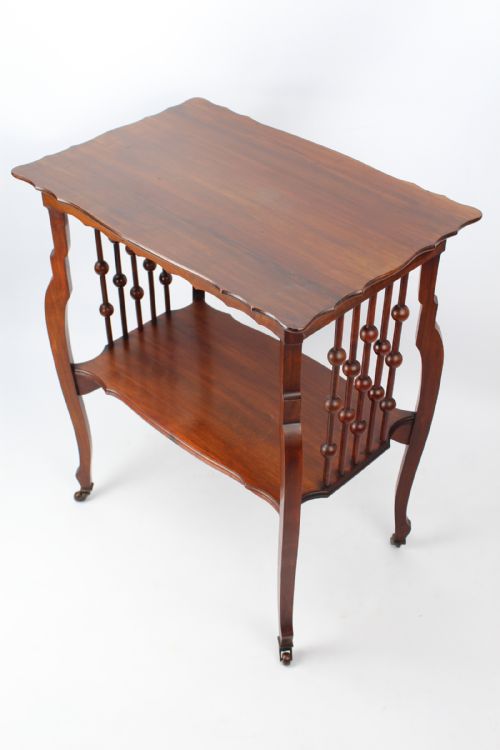
A victorian spindle side table is a compact occasional piece defined by turned uprights, slender legs, or galleries incorporating wooden rods. When you search for a victorian spindle side table, you encounter forms ranging from circular lamp tables to square occasional pieces and two-tier designs.
The selections on this page span the Victorian era, the nineteenth century broadly, and adjacent periods such as Edwardian and Regency. Makers utilised woods including walnut, mahogany, rosewood, oak, and ebonised finishes to create these functional items for the home.
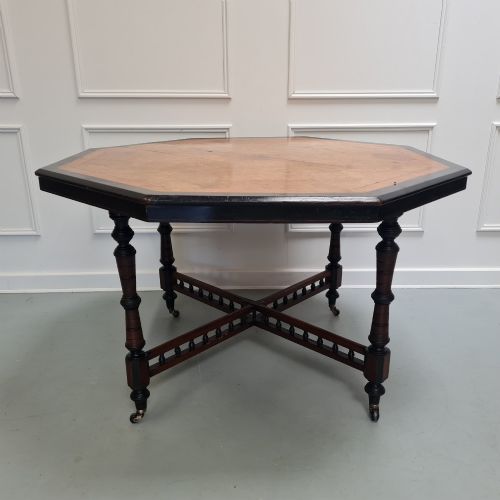
Stylistic influences vary across the listings, taking in the Aesthetic Movement, Anglo-Moorish design, and Arts and Crafts ideals. While many pieces function as side tables, related forms like centre tables, etageres, and occasional stands also appear under this designation.
Materials and construction
Makers constructed these tables using a variety of hardwoods, frequently selecting mahogany, walnut, and rosewood for their grain and durability. Ebonised wood and applied veneers also appear across the selection, providing contrasting dark surfaces and decorative patterned details.
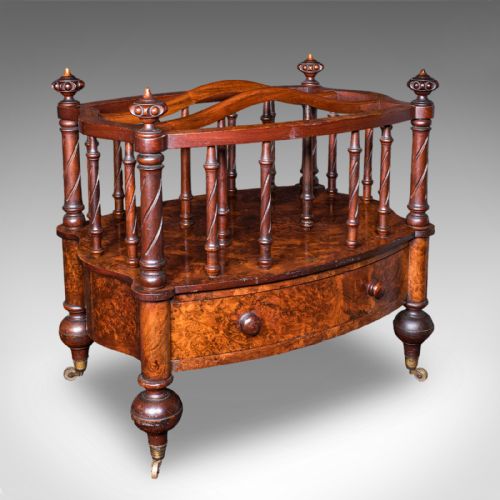
Turned woodwork forms the defining characteristic of the spindle base, requiring precision lathe work to shape slender uprights and legs. Joinery methods connect these turned elements to circular or multi-sided tops, occasionally incorporating lower tiers or galleries.
A coal purdonium hides its fuel duties behind solid walnut and fine turning, proving that even a coal box deserved a decorative spindle.
Assessing quality in turned furniture
Quality rests in the crispness of the wood-turning and the selection of timber figures, such as burr walnut or figured mahogany. Finer examples display balanced proportions where the slender spindle gallery supports the top securely without visual heaviness.
Construction methods also separate standard pieces from superior examples, particularly in the precision of the joinery and the integrity of any applied veneer or marquetry inlay. The choice of secondary woods and the condition of the ebonised or polished finish further distinguish the manufacturing standard.
The Victorian Spindle Side Table Glossary
- Spindle
- A slender, turned piece of wood used as a structural support or decorative element in legs, galleries, and under-tiers. These turned uprights define the visual rhythm of the furniture.
- Ebonised
- Wood treated with a dark finish to imitate ebony, commonly utilised in Aesthetic Movement pieces during the nineteenth century. This technique provides a uniform black surface.
- Aesthetic Movement
- A late nineteenth century design style emphasising visual beauty over narrative content, often featuring ebonised surfaces and geometric forms. Pieces from this movement frequently incorporate Japanese-inspired motifs.
- Etagere
- A set of open shelves for displaying small objects, often taking a diminutive form in walnut or mahogany. These tiered stands provide multiple display surfaces.
- Marquetry
- Decorative woodwork where thin pieces of veneer are fitted together to form geometric or floral patterns on a tabletop. This technique showcases the grain variations of different timbers.
Victorian Spindle Side Table: Frequently Asked Questions
Where should I place a spindle side table?
These compact pieces fit easily beside a sofa, armchair, or bed, functioning as lamp tables or occasional surfaces for drinks and books. Their slender profiles ensure they do not dominate a smaller room.
The lower tiers and galleries found on many examples provide extra storage for magazines or small display items, keeping surfaces clear.
How do I care for a walnut or mahogany table?
Keep wooden surfaces away from direct sunlight and heat sources to prevent the wood or veneer from drying out and cracking. Regular dusting with a soft, dry cloth maintains the polished finish.
Avoid using silicone-based polishes, which can build up over time and attract dust. Occasional applications of traditional beeswax help nourish the timber.
What is the difference between a side table and a centre table?
Side tables are generally designed to sit against a wall or beside seating furniture, with construction focused on the front and sides. Centre tables feature finished detail on all sides because they stand in the middle of a room.
Both forms utilise turned spindle supports, but centre tables tend to have larger octagonal or circular tops intended for central placement.
How do I identify an Aesthetic Movement piece?
Aesthetic Movement tables typically feature ebonised wood finishes, clean geometric lines, and structural simplicity inspired by Japanese design. They often incorporate multiple tiers and delicate spindle galleries.
These pieces date from the late nineteenth century and reflect a shift away from heavily carved Victorian ornamentation towards lighter, more functional forms.