
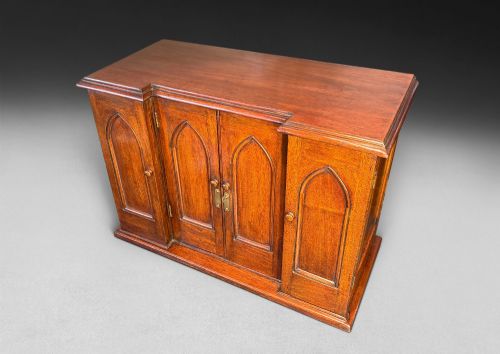
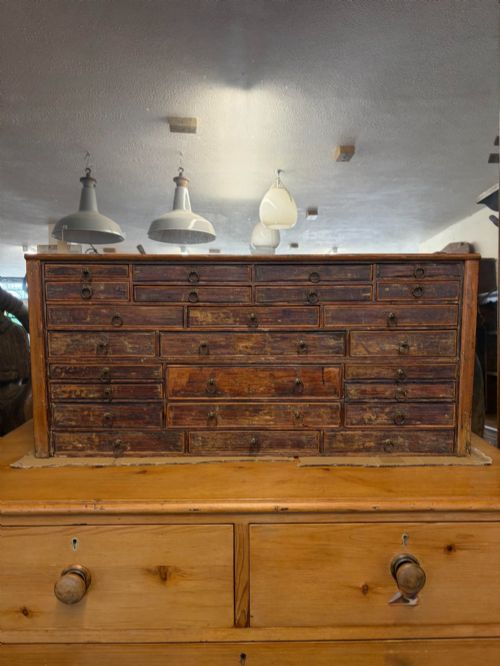
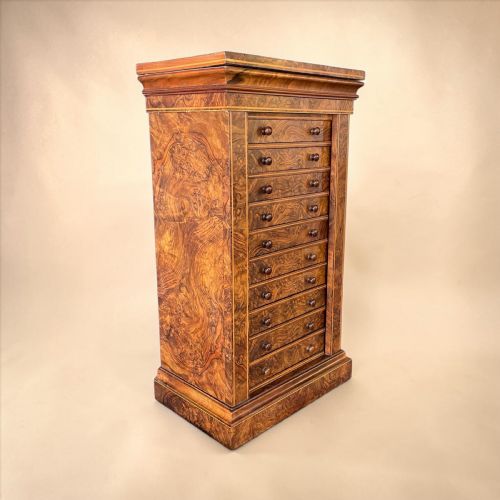
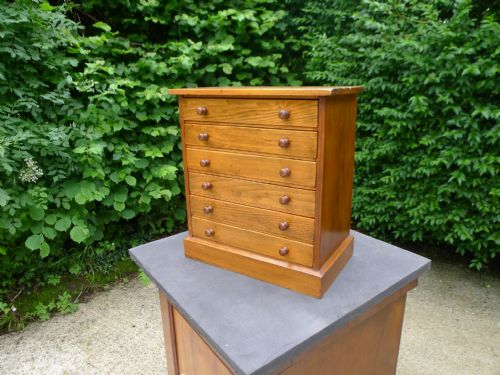
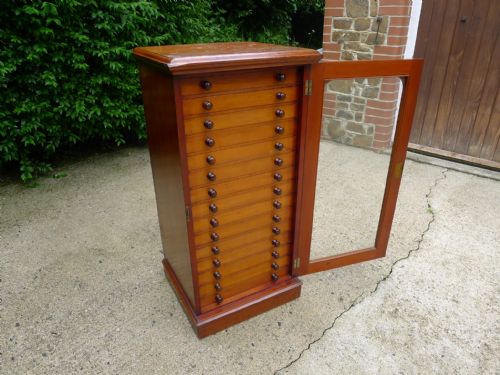
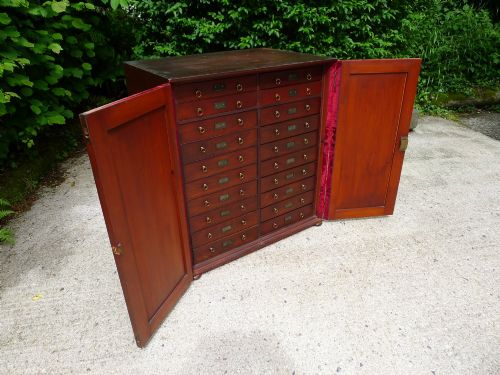
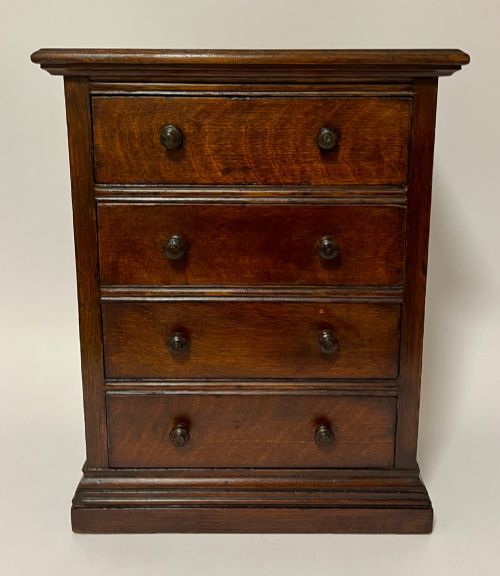
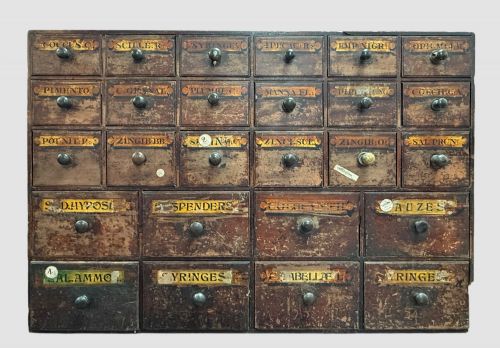
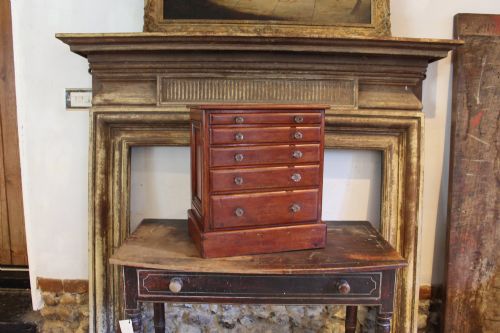
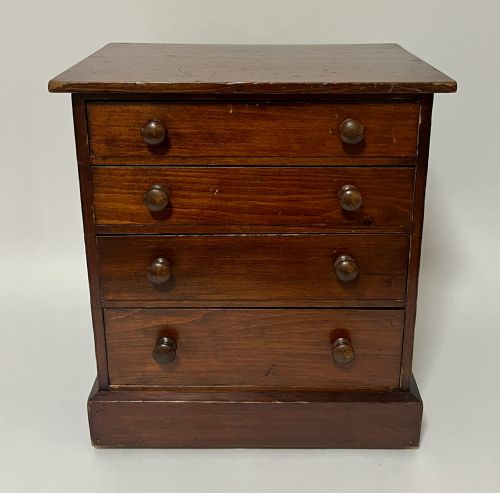
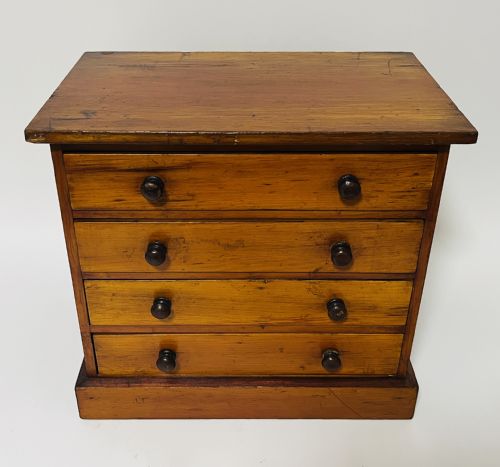
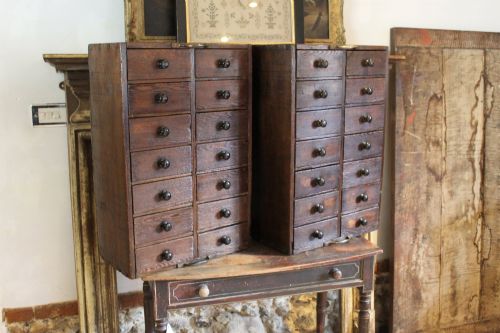
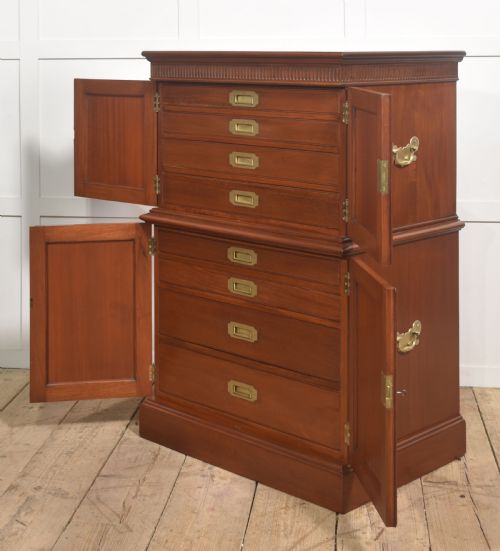
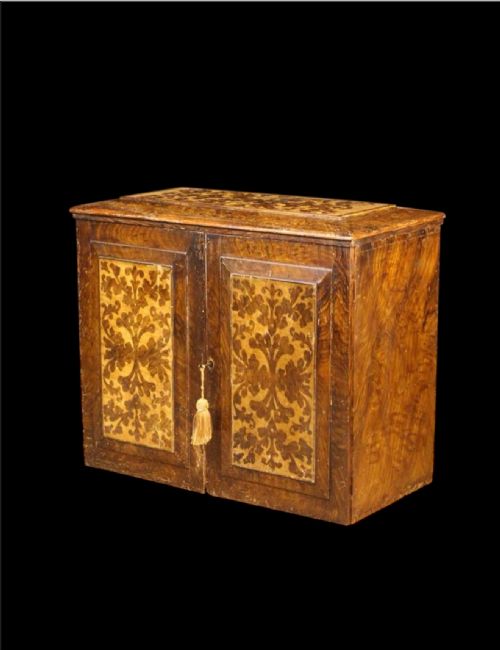


Victorian Specimen Storage Cabinet
These Victorian specimen storage cabinet pieces offer disciplined multi-drawer storage designed for orderly household collections.
Victorian Specimen Storage Cabinet
A victorian specimen storage cabinet typically takes the form of a tabletop chest, a Wellington chest, or a multi-drawer bank designed to hold natural history items, slides, or small valuables. The pieces found here span the nineteenth and early twentieth centuries, encompassing periods from the 1850s through to the 1920s.
Most examples rely on dense banks of shallow drawers enclosed by panelled doors or locking mechanisms. These configurations serve specific sorting functions, appearing in formats ranging from insect and egg repositories to microscope slide holders and dentist chests.
Materials and Construction
Construction relies heavily on hardwoods such as mahogany, walnut, and oak, alongside utilitarian softwoods like deal and pine. Timber selection dictates the structural integrity of the drawer runners, which require precise fitting to function smoothly over time.
Listings include oak, mahogany, walnut, and pine, spanning the Victorian, Edwardian, and Regency periods.
Distinctions in Standard
Quality separates along the precision of drawer construction and the choice of external timber veneers. Higher tier examples employ figured burr walnut, satin birch, or english oak with secondary timbers chosen for stability, whereas utilitarian versions utilise stained deal or plain pine.
Internal organisation also dictates grade, separating basic multi-drawer chests from specialised specimen repositories featuring fitted glass covers, numbered runs, and maker signatures from establishments like Watkins & Doncaster.
Luxmore's of Ilfracombe·Watkins & Doncaster·D Napier & Sons
The Victorian Specimen Storage Cabinet Glossary
- Wellington chest
- A tall, narrow chest of drawers secured by a hinged locking stile on one side that fastens over the drawer edges. This mechanism provides centralized security for all drawers simultaneously.
- Specimen cabinet
- A specialised storage unit containing numerous shallow drawers intended for organising natural history collections, such as insects, eggs, or geological samples. The shallow depth prevents items from shifting or stacking.
- Microscope slide cabinet
- A compact storage chest featuring exceptionally thin drawers lined to hold glass microscopy slides flat. These pieces often incorporate numbered indexing systems.
- Stile
- A vertical framing member of a panelled door or cabinet side. It provides structural rigidity and receives the hinges or locking hardware.
- Deal
- An old trade term for softwood timber, specifically fir or pine. It appears frequently in utilitarian nineteenth-century carcases and drawer linings.
Victorian Specimen Storage Cabinet: Frequently Asked Questions
What were victorian specimen storage cabinet pieces originally used for?
These cabinets housed organised collections of natural history specimens, including insects, eggs, botanical samples, and microscope slides. Naturalists and hobbyists utilised the shallow drawers to keep fragile items separated and catalogued.
Over time, similar multi-drawer formats were adopted for specialised trades, functioning as dentist chests, jeweller repositories, and apothecary banks for small medical components.
How do I identify a period piece?
Authentic nineteenth-century examples display hand-cut dovetail joints on the drawer construction and utilise period secondary timbers like pine or oak inside the carcase. Hardware such as brass drop handles and mortise locks matches nineteenth-century manufacturing methods.
Style indicators like Gothic Revival chamfering or campaign-style brass flush mounts help narrow down the decade of production between the 1850s and the early 1900s.
How should I clean the wood?
Maintenance requires gentle dusting with a dry, soft cloth to prevent abrasive particles from scratching the aged polished surface. Avoid modern silicone polishes that can build up a residue and degrade the original finish.
Occasional application of traditional beeswax feeds dry timber like mahogany and walnut, preserving the patina without stripping historical surface wear.
Are the drawers interchangeable?
Drawers in period cabinets are typically fitted individually to tight tolerances within specific apertures. Swapping them between positions often results in binding or uneven gaps due to historical hand-planing.
Keeping each drawer in its designated slot ensures smooth operation along the original wooden runners and prevents unnecessary wear to the framing.