


Victorian Spaniel Painting
A victorian spaniel painting brings home the earnest gaze and loyal stillness of nineteenth century dogs, rendered in oils or shaped as ceramic comforters.
Victorian Spaniel Painting
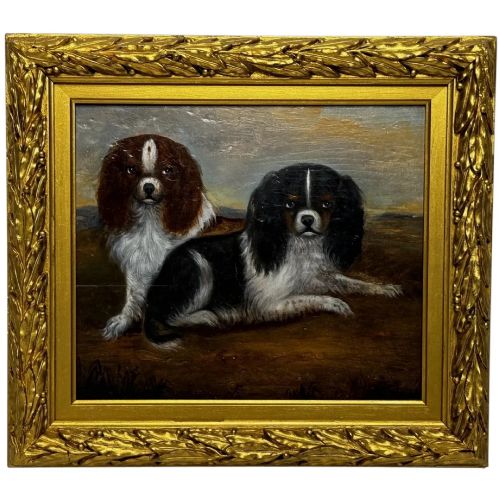
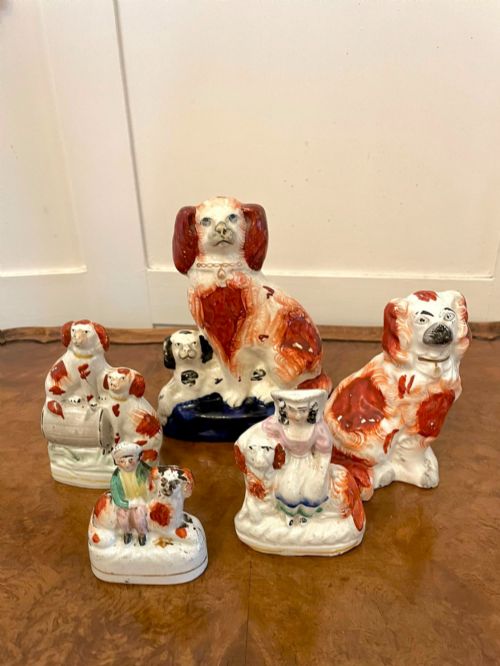
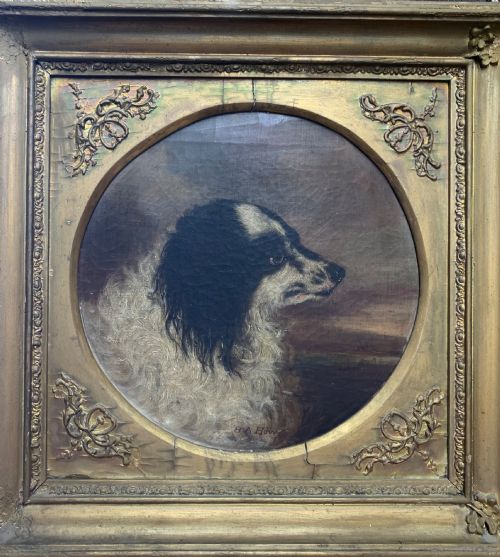
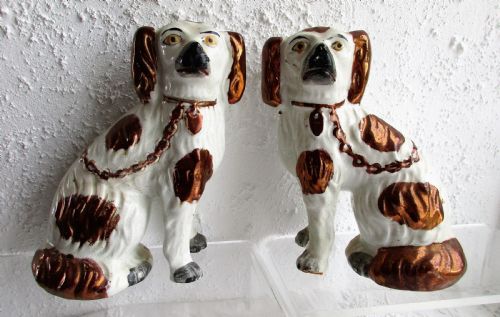
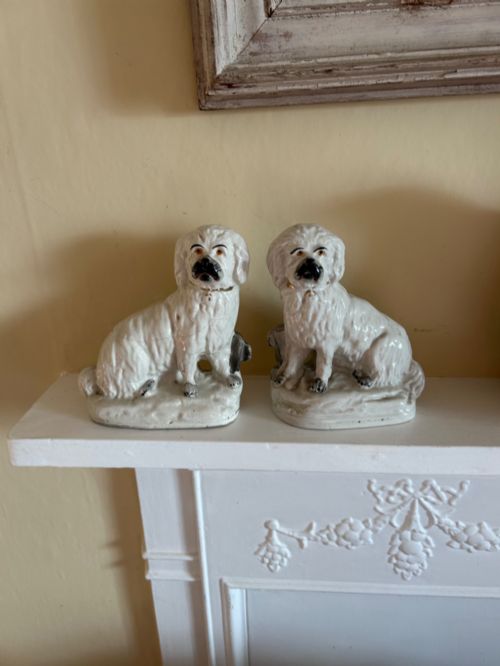
A victorian spaniel painting captures the canine subjects of the nineteenth century through oil on canvas or panel, often depicting seated pets in domestic interiors or country landscapes. These artworks range from intimate portraits of named dogs toペア of Staffordshire pottery figures modelled as loyal hearthside companions.
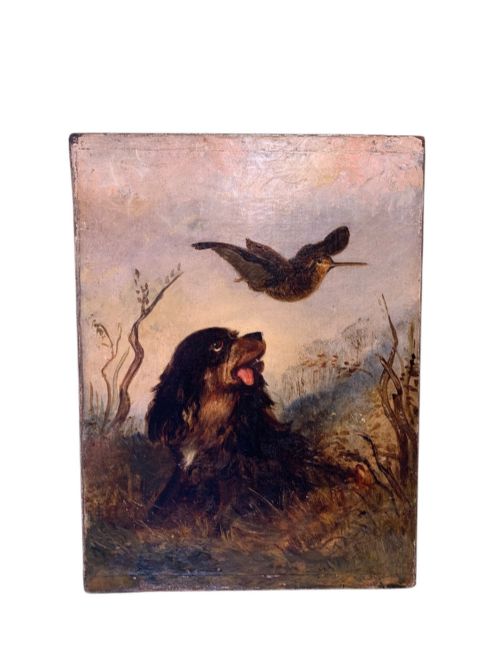
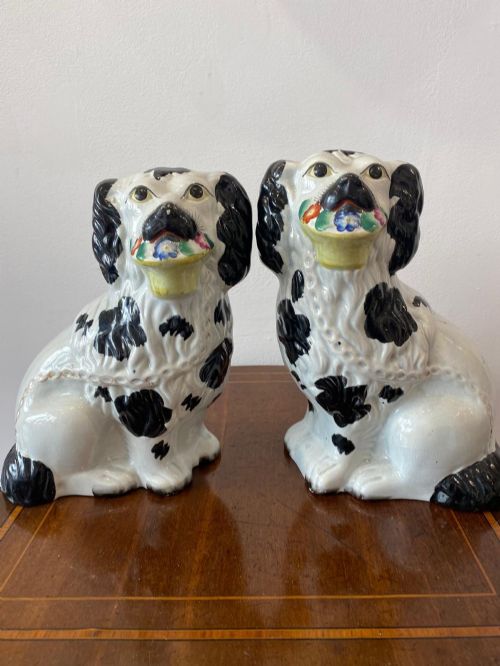
Buyers frequently encounter Staffordshire earthenware figures alongside framed oil paintings bearing dates from the mid nineteenth century onwards. The selection on this page balances ceramic pairs with painted portraits, showing how artists and potters alike recorded the bond between owners and their spaniels.
How they were made
Painters applied oil paint to canvas or panel, building up rich coats and expressive eyes with fine brushwork, sometimes framing the finished works in giltwood. Potters shaped earthenware into hollow figures, applying underglaze enamels and metallic lustre highlights before firing.
Listings feature works spanning the nineteenth and early twentieth centuries, utilising oil paint, canvas, earthenware, and enamel.
What varies in quality
The finesse of the brushwork and the anatomical accuracy of the canine form distinguish superior oil paintings from standard decorative works. In ceramics, the crispness of the mould stamping and the careful application of hand painted enamel details define the better examples.
Expression and character elevate certain pieces above others, with skilled artists capturing a lifelike spark in the spaniel's eye and potters achieving a convincing balance in matched pairs.
B A Howe·William Barraud·Charles Bilger Spalding·Frederick Tayler·Samuel John Carter·William Albert Clark
The Victorian Spaniel Painting Glossary
- Staffordshire pottery
- Earthenware figures produced in the Staffordshire potteries during the nineteenth century. These ceramic dogs were designed as chimney ornaments and fireside companions.
- Comforter spaniel
- A term for the Staffordshire spaniels placed on mantelpieces across Victorian homes. They often appeared facing each other in matched pairs.
- Oil on canvas
- Pigments bound in drying oil applied to a woven canvas support. This medium allowed artists to achieve deep tones and smooth tonal gradations in animal portraits.
- Earthenware
- Porous pottery fired at lower temperatures than stoneware or porcelain. It formed the common body for Staffordshire mantel dogs before being glazed and decorated.
Victorian Spaniel Painting: Frequently Asked Questions
Are Staffordshire spaniels always found in pairs?
Many ceramic spaniels were moulded and painted as matching pairs to sit at either end of a mantelpiece. Collectors still prize these balanced sets for traditional displays.
However, single figures and smaller collections also appear, reflecting losses or original single placements over the decades.
What subjects appear in these paintings?
The canvases show individual pet portraits, sporting dogs in country landscapes, and spaniels resting quietly inside domestic interiors. Some works capture specific named dogs belonging to prominent figures of the period.
Other compositions pair spaniels with game birds or other animals like pugs and terriers, recording the varied roles of dogs in nineteenth century life.
How should I display ceramic spaniels?
These earthenware figures traditionally sat upon fireplace mantels, where they acted as decorative guardians for the family hearth. They also suit bookshelves, sideboards, and occasional tables.
Keep them away from direct sunlight and areas of high foot traffic to protect their delicate painted enamel surfaces and glaze.