

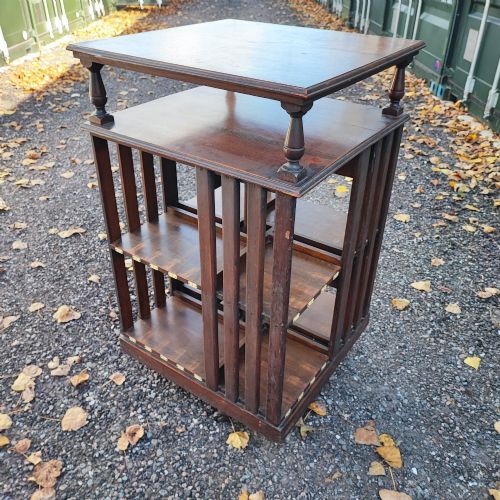
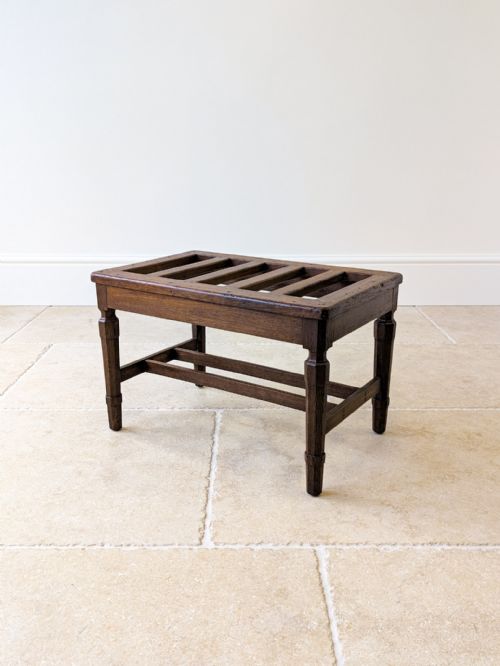
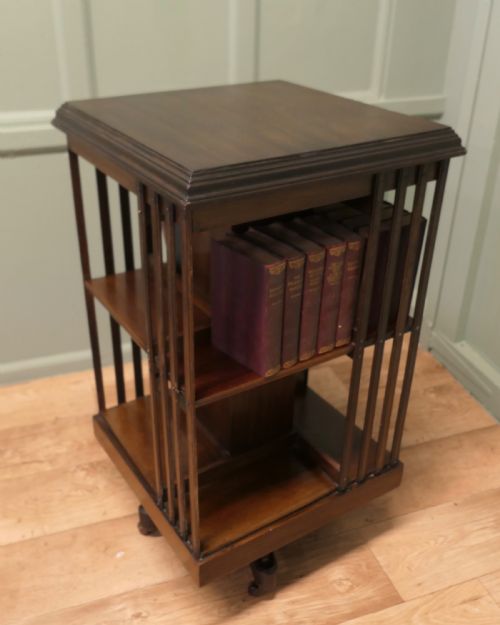


Victorian Slatted Table
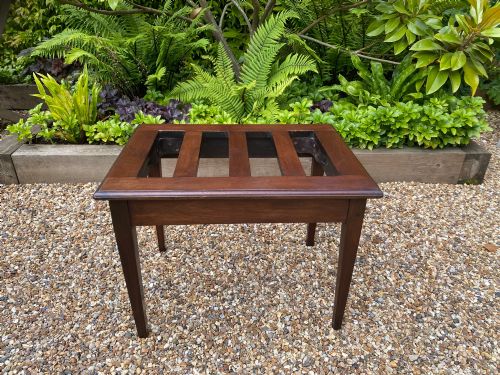
These Victorian slatted table pieces are practical pieces of furniture offering sturdy surfaces and slatted designs for daily use.
Victorian Slatted Table
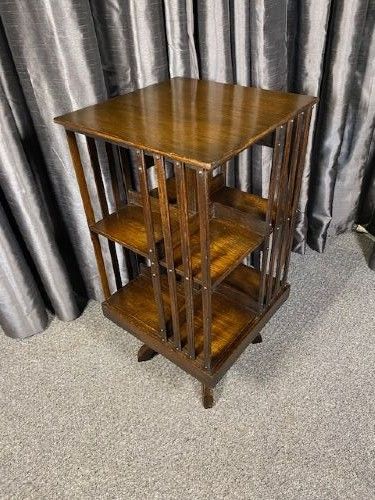
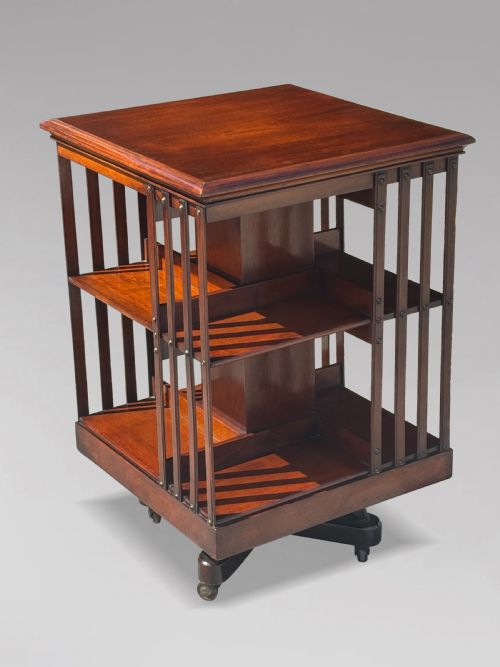
When you search for a Victorian slatted table, you encounter practical furniture forms primarily represented by luggage stands, luggage racks, and work tables rather than conventional dining or side tables. These pieces date across the nineteenth century into the early twentieth century, reflecting the utilitarian needs of domestic and hospitality spaces.
The materials span oak, mahogany, pine, and yew wood, often paired with metal or brass elements, showing the robust construction methods of the period. Forms include folding luggage stands with slatted tops designed to hold heavy travel chests.
You are most likely to meet oak and mahogany luggage stands featuring open slatted surfaces, alongside solid pine work tables and yew wood racks. These items bridge utility and simple decorative appeal, suiting boot rooms, bedrooms, and studies.
How they were made
Makers utilised solid timbers such as mahogany, oak, and yew wood, building frames capable of supporting heavy weight. Joinery was straightforward and robust, designed to withstand the rigours of travel and daily domestic service.
Metal fixtures in brass and cast iron were frequently incorporated into folding luggage stands and racks to provide mechanical strength at the joints. Canvas webbing sometimes supplemented the wooden slats to offer flexible support for trunks and bags.
Victorian Slatted Table Retail Price Guide 2026
Typical asking prices for victorian slatted table among the pieces listed under this phrase on Sellingantiques today, from the lower quarter to the upper quarter. They describe what is for sale here now, not the wider market.
The listings show pieces spanning the nineteenth century, Victorian era, and early twentieth century up to nineteen thirty.
What varies in quality
The choice of timber dictates the distinction between standard utilitarian items and finer pieces, with select cuts of mahogany, oak, and yew wood offering superior grain and durability. Solid pine work tables rely on the thickness of the timber top and the integrity of the underlying frame for their enduring strength.
Engineering touches such as the smoothness of folding mechanisms on luggage stands and the quality of brass hardware separate basic utility items from those built for more affluent domestic interiors.
The Victorian Slatted Table Glossary
- Luggage stand
- A low support table featuring a slatted top designed for holding trunks and travel bags off the floor. These pieces often feature folding legs for easy storage when not in use.
- Slatted top
- A surface constructed from parallel strips of wood with gaps between them. This design reduces weight while maintaining structural strength for holding objects.
- Yew wood
- A dense, resilient timber prized for its rich grain patterns and warm tones. It was utilised for distinctive domestic furnishings.
- Work table
- A functional table used for domestic tasks, typically constructed from solid timber with a robust top. These utility pieces focus on stability and practical workspace.
Victorian Slatted Table: Frequently Asked Questions
What is a Victorian slatted table used for?
These pieces function primarily as luggage stands, racks, or work tables designed for practical storage and surface utility in homes.
In period settings, they held heavy travel trunks or served as sturdy workspace tables in domestic rooms.
How do I identify a nineteenth-century luggage stand?
Look for traditional timber construction using oak, mahogany, or yew wood combined with simple folding frames and slatted tops.
Construction details often include period joinery methods and metal or brass hardware typical of nineteenth-century manufacturing.
Can I use these pieces in modern homes?
Their sturdy construction and compact forms make them well-suited for use as bedside tables, bench ends, or hallway stands.
They bring practical surface space and traditional timber textures into contemporary living areas without dominating a room.
What woods were used for these tables?
Common timbers include mahogany, oak, pine, and yew wood, selected for their strength and ability to bear heavy weights.
Hardwoods provided durable frames and surfaces while pine served well for larger utilitarian work tables.