



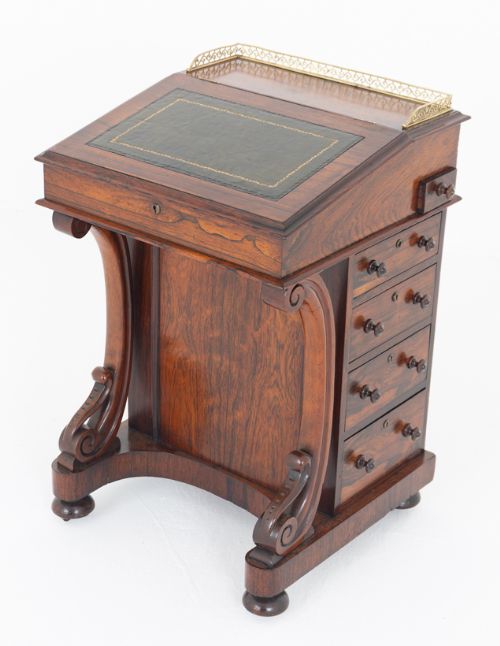

Victorian Slant Top Desk
A victorian slant top desk offers compact writing space with fitted interior drawers, bringing nineteenth-century craftsmanship into a modern study.

Victorian Slant Top Desk
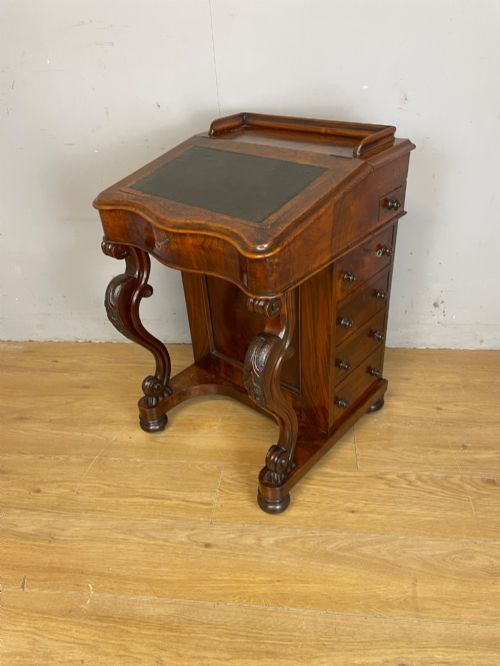
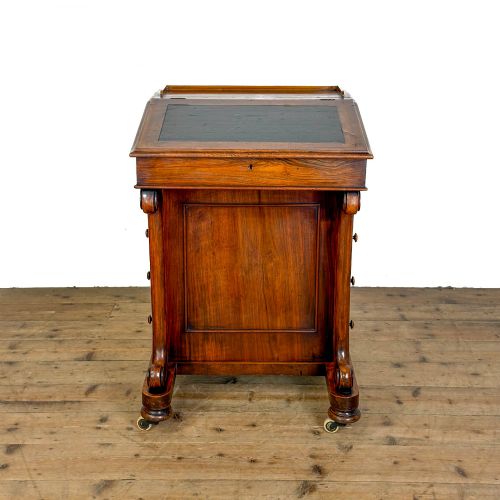
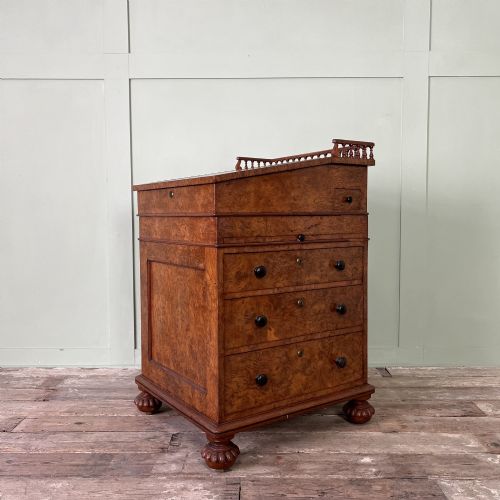
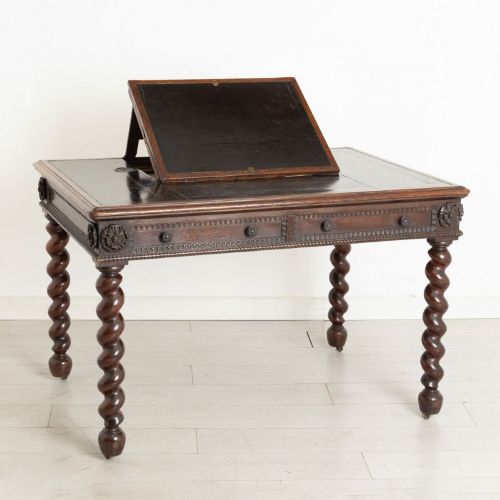
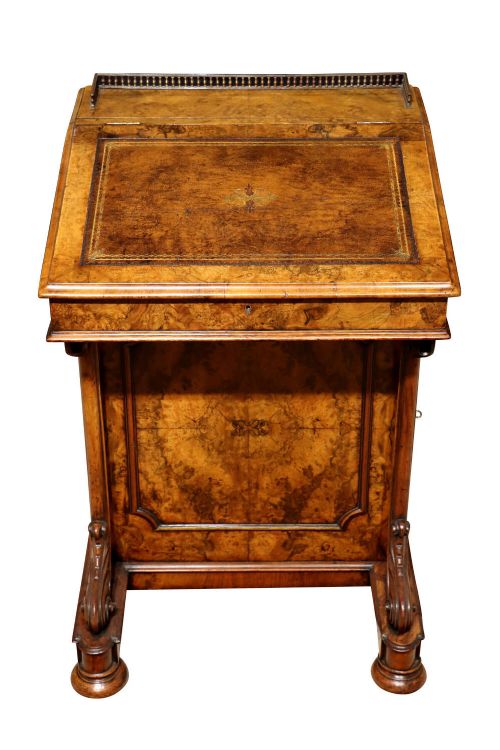
A victorian slant top desk comprises writing furniture featuring a sloping lid that opens to reveal compartments, small drawers and pigeonholes. These pieces emerge in formats such as compact Davenport desks, larger bureau forms and architectural or clerk variants originating across the nineteenth century.
The pieces on this page span the Victorian era alongside related nineteenth-century iterations, incorporating forms like piano top models and stationery cabinets. Walnut, mahogany and oak dominate the selection, often finished with fitted interiors in satinwood or maple.
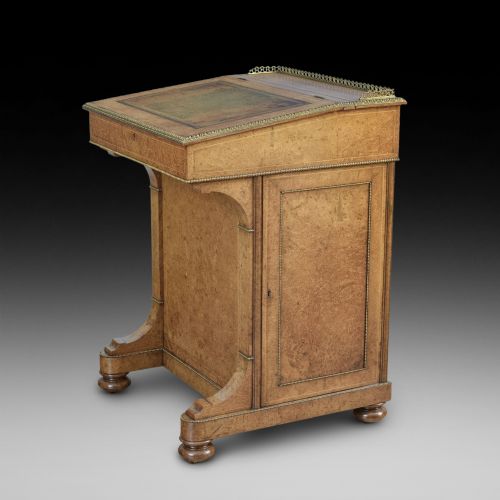
Makers and workshops of the period produced variations ranging from simple pine clerk desks to heavily figured burr walnut and amboyna writing furniture. Buyers encounter compact slope-front writing boxes mounted on pedestals alongside larger twin-pedestal partner tables.
Materials and construction methods
Cabinet makers utilised dense hardwoods including mahogany, walnut and rosewood, frequently applying burr walnut or amboyna veneers to exterior surfaces. Solid oak and pine provide structural framing for larger clerk desks and utilitarian workplace furniture.
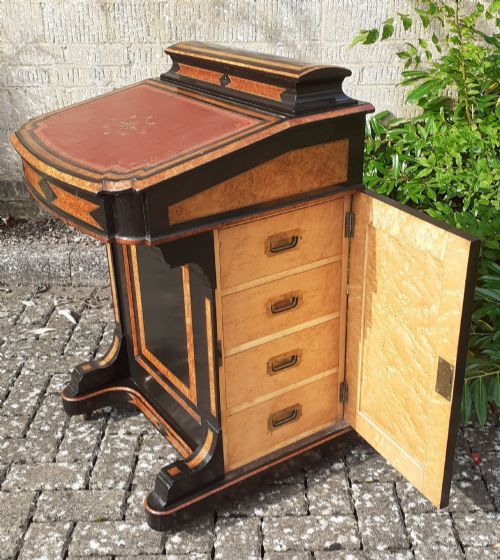
Decorative techniques involve brass mountings, floral marquetry inlay, ebonised detailing and carved motifs such as green man designs. Interiors typically feature contrasting light timbers like satinwood fitted around small concealed compartment drawers.
Listings feature woods spanning walnut, burr walnut, mahogany, rosewood, oak, amboyna, olivewood, pine and ebonised finishes.
Judging quality in nineteenth-century writing furniture
Quality rests upon the selection of timber figures, such as highly figured burr walnut or flame mahogany veneers matched symmetrically across the slope and drawer fronts. Finer workshops employed dense secondary timbers and meticulous dovetail joinery for internal drawers.
The sophistication of the internal fittings distinguishes standard utility pieces from high-status examples by makers such as Gillows or Edwards and Roberts. Superior desks incorporate complex stationery compartments, concealed spring-loaded drawers and original brass hardware.
Gillow and Co·Gillows·Maple and Co·Simpsons of Kendall·Edwards and Roberts
The Victorian Slant Top Desk Glossary
- Davenport desk
- A compact writing desk featuring a sloping top above a pedestal of drawers, originating in the early nineteenth century. Most examples include side drawers and a hinged writing slope lined with leather.
- Bureau
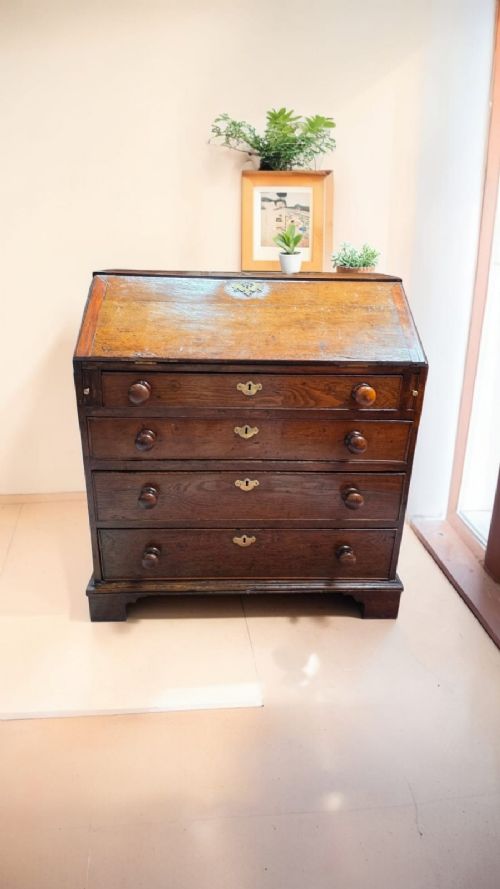
- A desk form featuring a sloping fall-front flap that opens to create a horizontal writing surface over a chest of drawers. The internal arrangement typically contains pigeonholes and small accessory drawers.
- Dickens desk
- A large partner's desk characterised by a bank of small drawers positioned above the main writing surface on either side. These pieces offer extensive tiered storage for stationery and correspondence.
- Marquetry
- The art of applying decorative veneer pieces in wood, ivory or brass to form geometric or floral patterns. Victorian cabinet makers utilised this technique extensively on walnut surfaces.
- Crossbanding
- A decorative border technique where veneer strips are applied across the grain of the main panel. This method frames the writing slope or drawer fronts of better-quality desks.
Victorian Slant Top Desk: Frequently Asked Questions
What is a Davenport desk?
A Davenport is a compact Victorian writing desk with a sloping top lid and a pedestal containing side drawers. It provides an enclosed writing surface while occupying minimal floor space in a room.
Most variants include a small stationery compartment on top and internal drawers concealed beneath the main writing slope.
How were these desks used?
These pieces served for household correspondence, diary writing and managing personal accounts before the widespread adoption of modern stationery. The sloping lid provided an ergonomic angle for handwriting.
Fitted interior compartments kept inkwells, stamps, sealing wax and writing paper organised within easy reach.
How do I care for the leather top?
Leather writing surfaces require occasional treatment with specialist leather balms to maintain flexibility and prevent cracking over time. Avoid placing hot cups or liquids directly onto the hide.
Keep the furniture away from direct sunlight and strong heat sources to protect both the leather insert and the underlying timber veneers.
How do I date a Victorian desk?
Dating relies on stylistic shifts, timber choices, and construction methods recorded across the nineteenth century. Early Victorian pieces often feature solid mahogany, while later decades favour burr walnut and amboyna veneers.
Maker stamps, brass lock signatures and structural joinery details help narrow the period of manufacture between the early and late nineteenth century.