

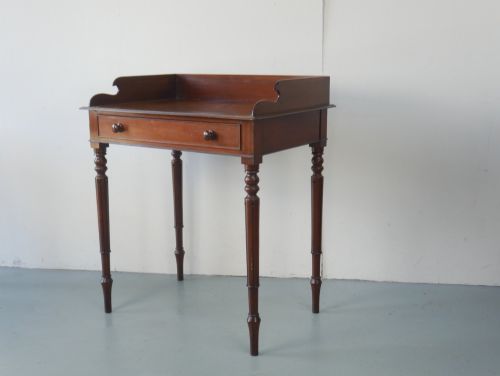
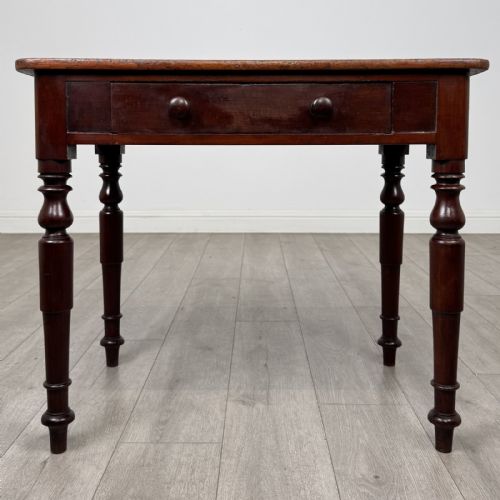
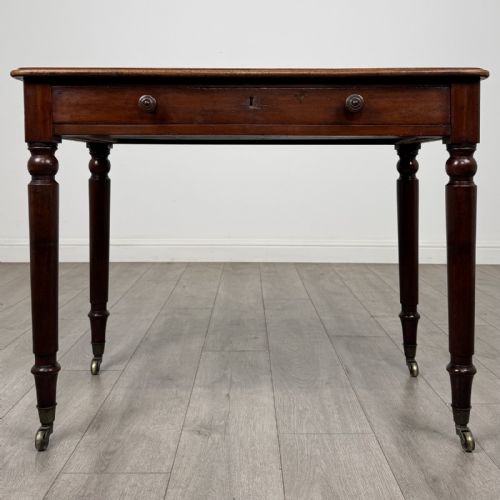
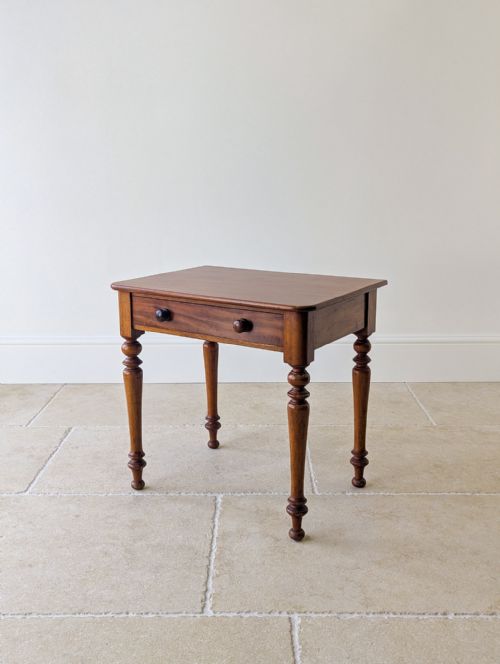
Victorian Single Drawer Table
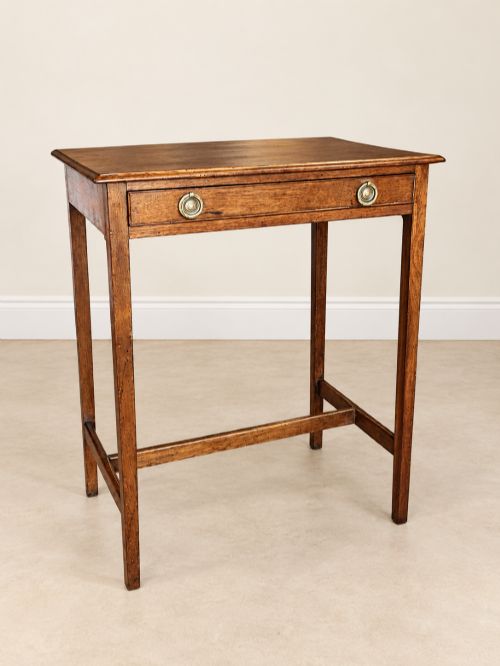
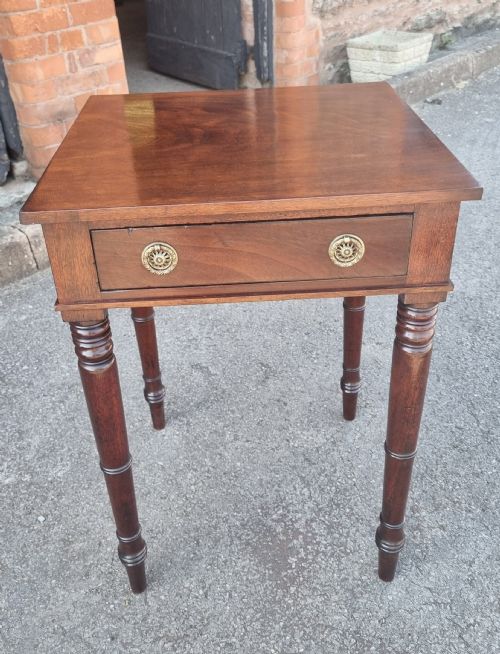
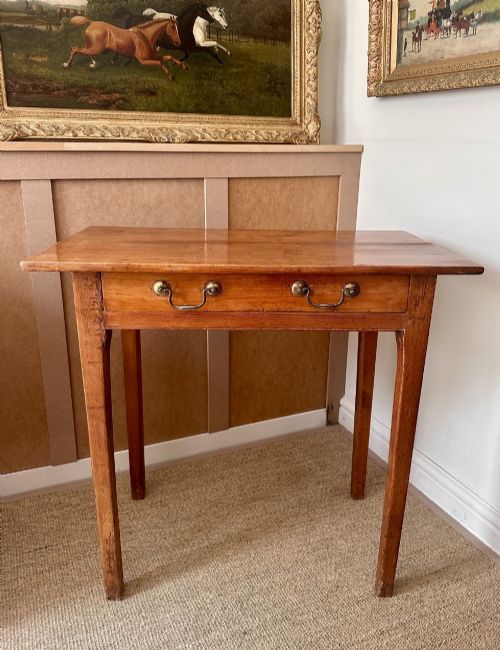
These pieces are a Victorian single drawer table, useful for domestic work or bedside storage.
Victorian Single Drawer Table
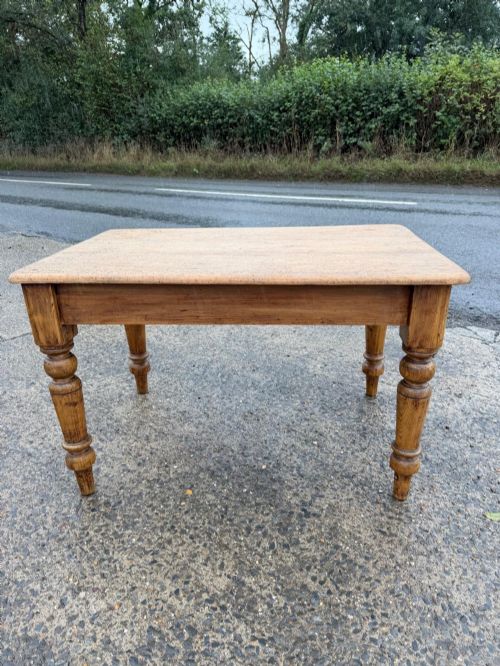
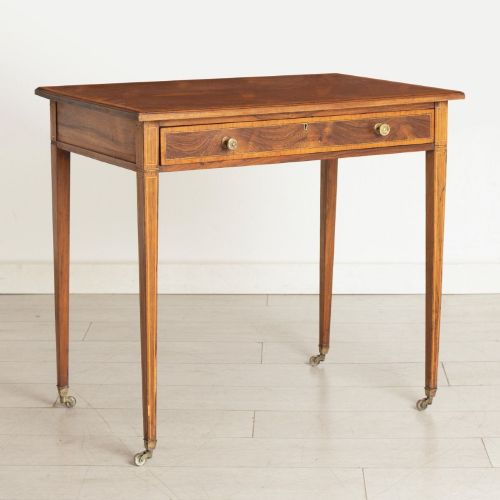
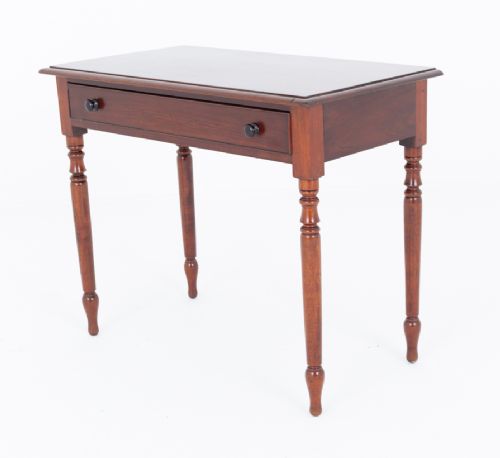
A victorian single drawer table appears across side tables, writing desks, and kitchen surfaces, predominantly from the nineteenth century. The typical example on this page is a mahogany or pine piece designed for a study, bedroom, or hallway.
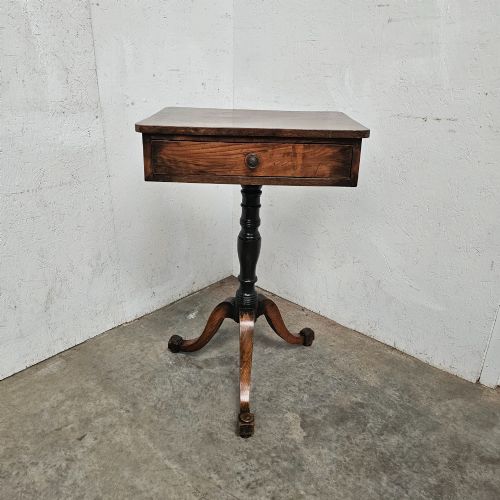
Makers utilised these single drawer formats for correspondence, dressing, or bedside storage, relying on a compact frieze drawer beneath the main timber top. Variations include rustic farmhouse scrub tops, inlaid walnut writing surfaces, and pedestal lamp tables.
Materials and Construction
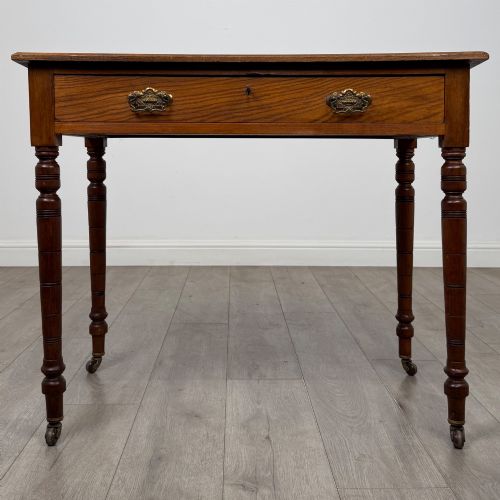
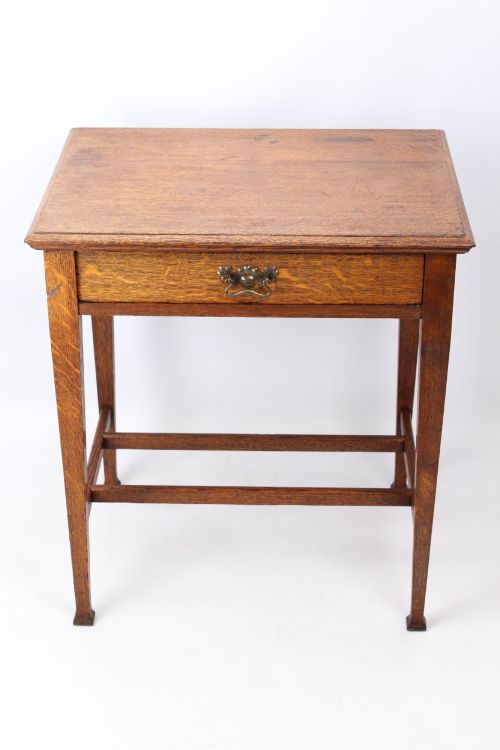
Makers constructed these tables using native and imported timbers such as mahogany, oak, pine, ash, and walnut, frequently pairing solid tops with dovetailed drawer construction. Surfaces often display applied paint, leather inserts, or natural wood finishes set upon turned, tapering, or bobbin legs.
Cabinetmakers integrated brass handles or wooden knobs on the front frieze drawer, while finer models incorporated satin birch veneers, burr walnut, or decorative string inlay.
Victorian Single Drawer Table Retail Price Guide 2026
Typical asking prices for victorian single drawer table among the pieces listed under this phrase on Sellingantiques today, from the lower quarter to the upper quarter. They describe what is for sale here now, not the wider market.
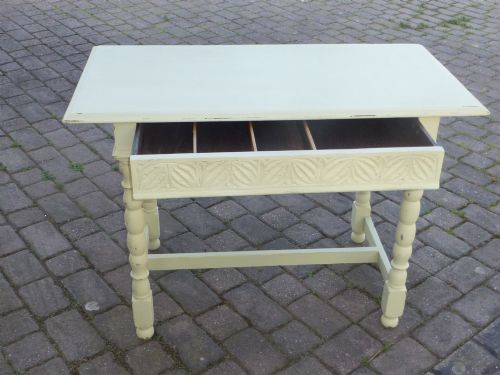
Carved wooden Green Man masks occasionally peer out from beneath the timber tops of nineteenth century oak tables.
Distinctions in Quality
Quality rests in the selection of timber grain, such as figured mahogany or burr walnut, and the precision of the drawer joints. Superior examples exhibit fine inlay, original hardware, and well-proportioned turned supports rather than plain utility construction.
The integration of secondary woods and the condition of the original finish dictate the standing of each piece, distinguishing utilitarian kitchen pine from refined parlour and writing furniture.
Howard & Sons·Holland & Sons·Simpson Halifax
The Victorian Single Drawer Table Glossary
- Frieze drawer
- A drawer fitted into the horizontal band directly beneath the tabletop. This is the defining storage feature across these side and writing tables.
- Scrub top
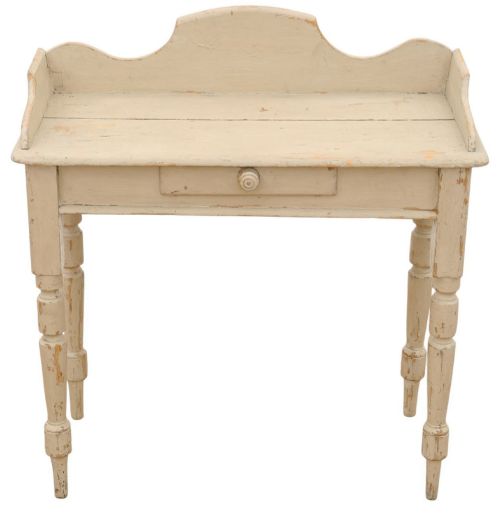
- A plain wooden tabletop designed for rigorous cleaning, commonly found on pine farmhouse and kitchen tables. It shows the bleached grain from frequent washing.
- Aesthetic style
- A late nineteenth century design movement prioritising visual beauty over historical revival, often seen in satin birch and ebonised furniture. Pieces from this tradition reject heavy Victorian ornamentation.
- Pedestal
- A single central column or support resting on feet, frequently utilised on lamp tables and small desks instead of four corner legs. This construction frees up floor space beneath the surface.
Victorian Single Drawer Table: Frequently Asked Questions
What rooms suit a single drawer table?
These tables adapt easily to hallways, bedrooms, and studies where surface space and a small drawer are required.
Their compact proportions allow them to function as writing desks, lamp tables, or bedside storage units without dominating a room.
How do pine and mahogany versions differ?
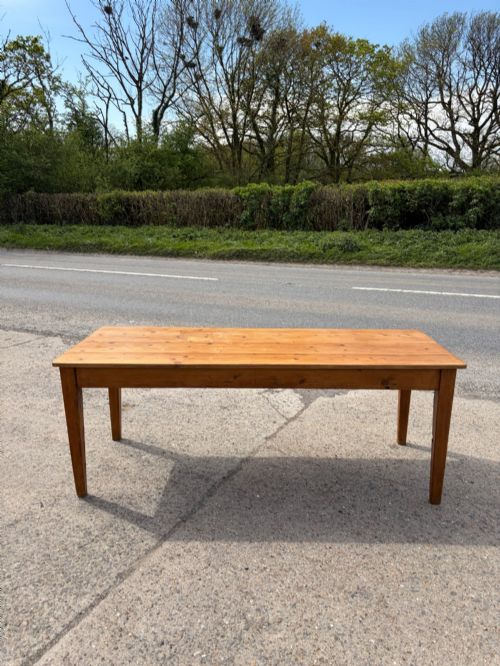
Pine versions generally serve a utilitarian role, often appearing as farmhouse or kitchen tables with scrub tops and painted finishes.
Mahogany and walnut examples tend to belong in parlours or studies, featuring finer grain, polished surfaces, and decorative inlay.
What is a frieze drawer?
A frieze drawer is set into the structural band immediately beneath the top surface of the table.
It provides shallow storage for papers, small utensils, or personal items while maintaining clean exterior lines.
Are these tables suitable for writing?
Many examples are explicitly designed as writing tables or desks, sometimes retaining leather inserts on the top.
Lower clearance and drawer placement require checking dimensions to ensure comfortable seating if used for daily work.