



Victorian Silver Visiting Card Case
A victorian silver visiting card case is a pocket-sized repository for polite social exchange, prized for intricate engraving and tactile silverwork.
Victorian Silver Visiting Card Case
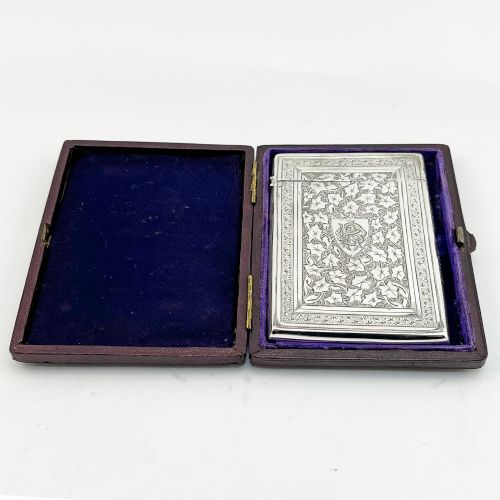
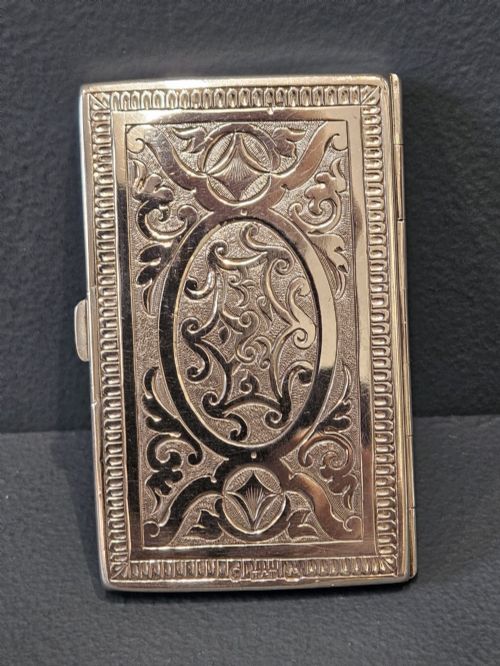
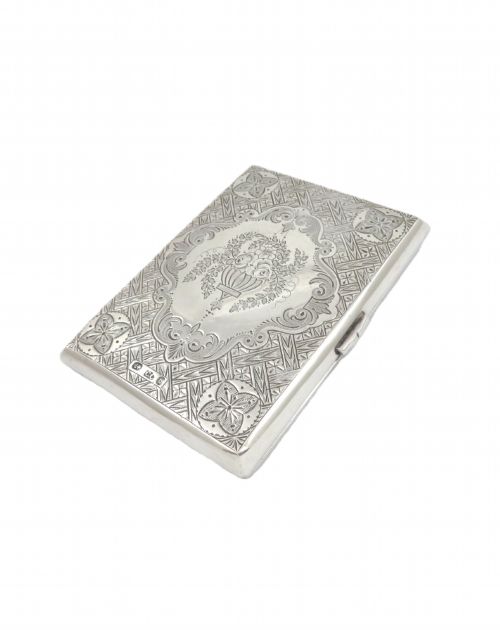
A victorian silver visiting card case is a slim, hinged receptacle designed to carry calling cards during the nineteenth century. These pocket companions appear predominantly in sterling silver, though variants incorporate tortoiseshell, mother of pearl, bone, and Connemara marble.
The objects on this page span the Victorian and Edwardian periods, stretching from mid-nineteenth-century examples bearing crisp Birmingham hallmarks to later Edwardian interpretations. Card cases, calling card cases, and card boxes all fulfil the same nineteenth-century social protocol of leaving a tangible record of a call.
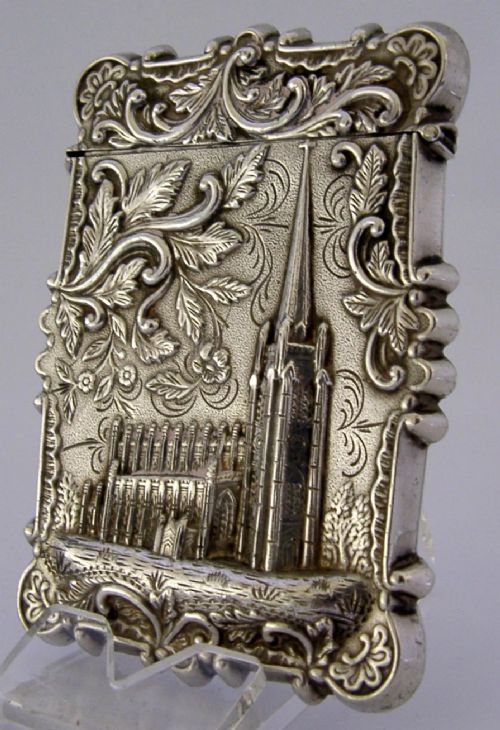
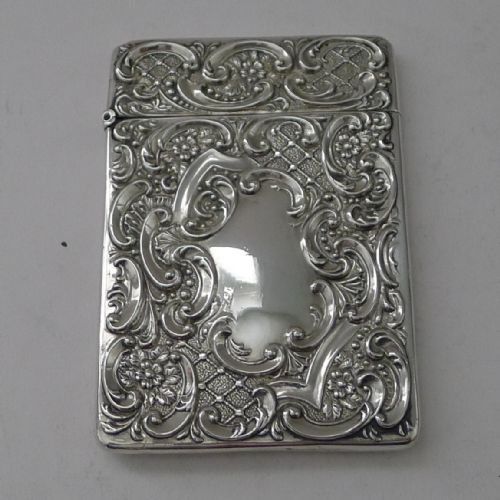
Makers such as Nathaniel Mills and George Unite dominate the finer ends of the selection, producing both standard engraved forms and the highly sought-after castle top designs. Pieces range from simple rectangular receptacles to shaped book forms and elaborate repoussé surfaces decorated with deities.
Materials and construction
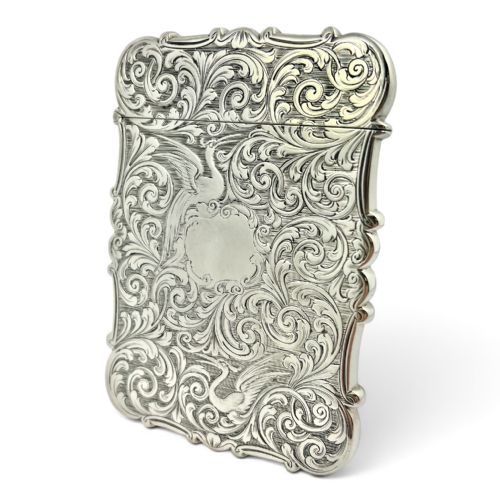
Silversmiths utilised sterling silver sheet, hammering and pressing the metal into rigid rectangular shells hinged along the edge. Repoussé and chased techniques create raised motifs, driving the metal from behind to form detailed architectural scenes or swirling foliage.
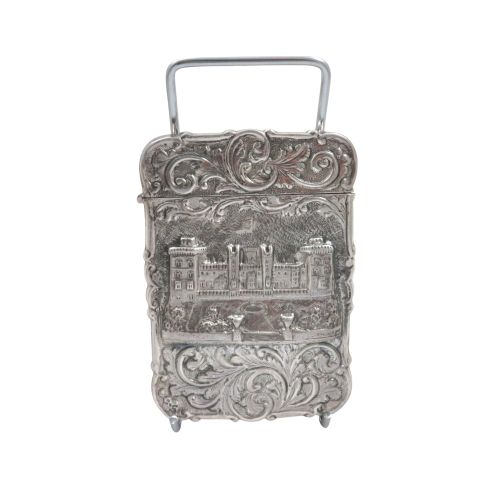
Castle top examples demand exceptional skill, requiring the smith to stamp or chase specific landmarks like Windsor Castle, St Paul's Cathedral, or Trinity Church onto miniature panels. Inlays of mother of pearl, tortoiseshell, and Connemara marble involve precise cutting and fitting into silver frames to create contrasting textures.
Victorian Silver Visiting Card Case Retail Price Guide 2026
Typical asking prices for victorian silver visiting card case among the pieces listed under this phrase on Sellingantiques today, from the lower quarter to the upper quarter. They describe what is for sale here now, not the wider market.
Listings demonstrate materials spanning sterling silver, tortoiseshell, mother of pearl, bone, and Connemara marble across the Victorian and Edwardian eras.
Judging quality and execution
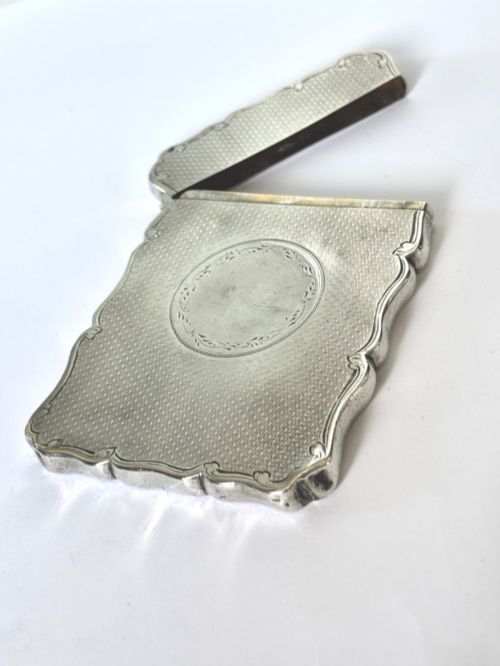
The distinction between standard production and masterwork execution rests upon the depth and clarity of the chasing. Superior examples exhibit crisp architectural detail on castle top panels and tight, uniform engine-turning that catches the light without blurring.
Maker attribution elevates a piece significantly, particularly works by Nathaniel Mills or George Unite whose output maintains exceptional weight and structural integrity. The crispness of the hinge and the flush closure of the lid distinguish superior specimens from routine containers.
Nathaniel Mills·George Unite·Deakin & Nephew·Foxall & Co·Burrell
The Victorian Silver Visiting Card Case Glossary
- Castle top
- A silver card case featuring a detailed repoussé or engraved depiction of a famous building or landmark on the cover. These pieces represent the pinnacle of mid-nineteenth-century silversmithing.
- Repoussé
- A metalworking technique where the smith hammers the silver from the reverse side to form a raised design in relief. Details are then refined from the front using chasing tools.
- Calling card
- A small paper card bearing a visitor's name, left behind during social visits to signal attendance. Silver cases protected these delicate cards from damage in pockets and reticules.
- Aide memoire
- A small notebook or card case fitted with internal writing tablets and a pencil for recording engagements. These dual-purpose objects often feature a hinged mechanism and fitted interior.
- Hallmark
- A set of official marks stamped into silver indicating the standard of purity, the assay office, and the date letter. Birmingham and London marks frequently appear on these nineteenth-century containers.
Victorian Silver Visiting Card Case: Frequently Asked Questions
What are castle top card cases?
Castle top card cases feature miniature sculptural reliefs of famous British and American architectural landmarks on their covers. These detailed scenes depict locations such as Windsor Castle, St Paul's Cathedral, and Trinity Church.
Silversmiths produced these elite pieces primarily during the mid-nineteenth century, employing skilled repoussé and chasing techniques to render intricate masonry in miniature silver panels.
How were calling card cases used?
Victorians used these slim cases to store paper calling cards while making formal social visits. Leaving a card demonstrated adherence to strict etiquette when a host was not at home.
The rigid silver construction protected delicate paper cards from bending or tearing within pockets and handbags during transport.
How do I date a silver card case?
Dating relies heavily upon the assay office hallmarks stamped into the silver interior or rim. These tiny symbols reveal the exact year letter and the city where the metal was tested.
Stylistic clues also help, as mid-nineteenth-century examples favour deep architectural relief and scrolls, while later Edwardian versions often display simpler, lighter surfaces.
Are all card cases made of silver?
While the majority of examples utilise sterling silver, makers incorporated alternative materials to satisfy Victorian tastes for texture and contrast. Surviving pieces incorporate tortoiseshell, mother of pearl, bone, and green Connemara marble.
These non-silver materials are typically mounted within silver frames or paired with silver hinges and decorative borders.