


Victorian Silver Taper Sticks
Victorian silver taper sticks are small, elegant domestic lighting pieces that collectors seek for their refined craftsmanship and period charm.
Victorian Silver Taper Sticks
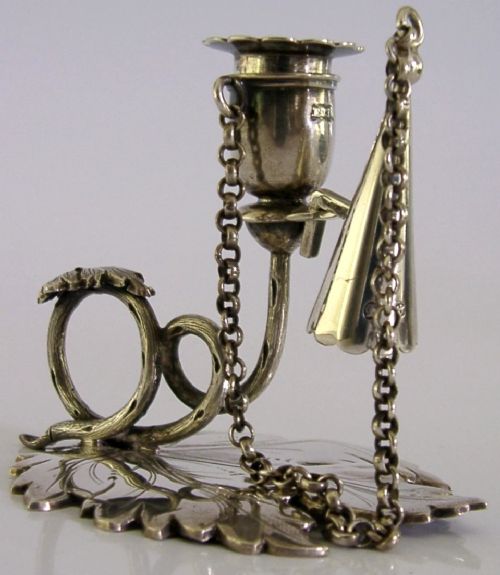
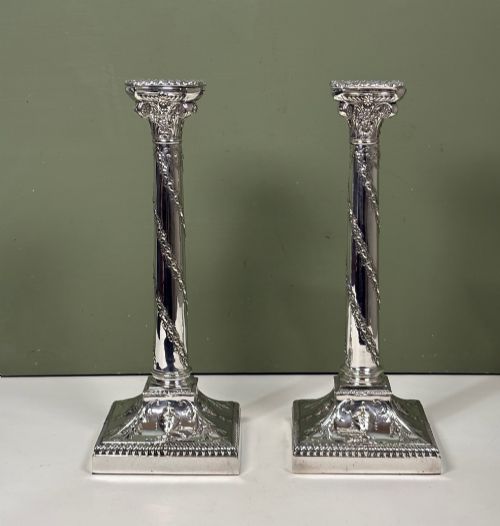
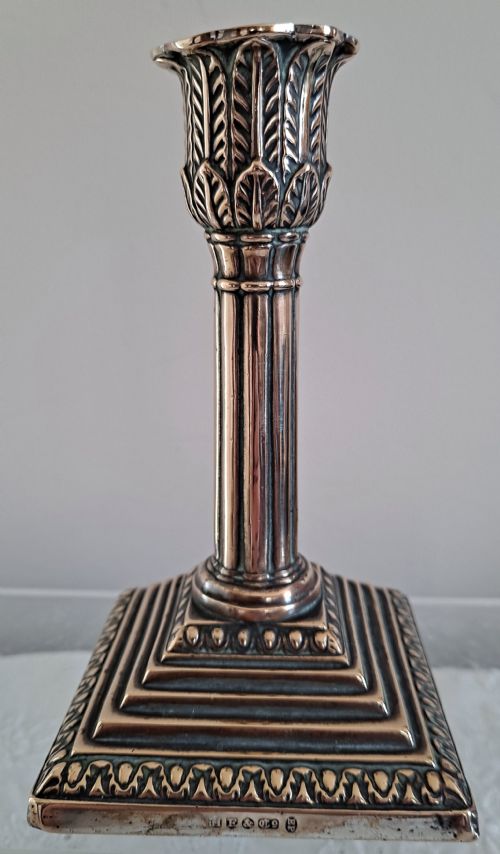
When you search for Victorian silver taper sticks, you encounter diminutive lighting pieces designed for melting sealing wax or lighting candles in a study or boudoir. The pieces found on this page span the 19th century, featuring various forms including chambersticks, desk candlesticks, and mantlepiece candlesticks.
Most examples date from the Victorian era and 19th century, reflecting the prevailing domestic habits of the period. Forms range from simple miniature candlesticks to pairs executed in silver plate, sterling silver, and silver gilt.
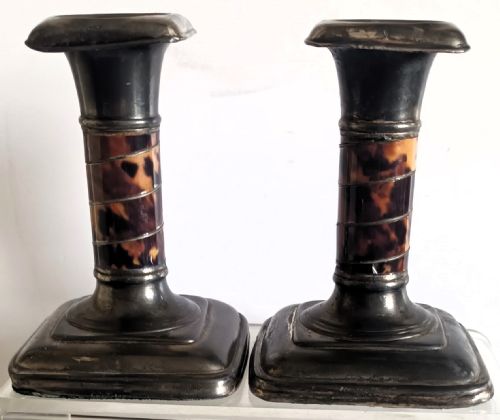
Makers and craftsmen of the period also utilised alternative materials such as pewter, brass, copper, and tortoiseshell alongside plated and solid silver. Styles vary across the inventory, touching upon Neoclassical and Rococo Revival designs typical of early and mid-Victorian production.
How they were made
The construction of these lighting pieces relies upon traditional metalworking methods applied to sterling silver, silver plate, and base metals such as brass and copper. Silversmiths formed the sockets, stems, and drip pans through casting, spinning, and soldering, frequently incorporating gilt finishes for a decorative appearance.
Makers combined silver and plate with organic elements like tortoiseshell in specialised desk and mantlepiece items. Surface decoration reflects Neoclassical and Rococo Revival tastes, achieved through chasing, embossing, and applied mounts.
Current listings span the Victorian period and the wider 19th century, incorporating sterling silver, silver plate, pewter, and tortoiseshell.
What varies in quality
The distinction between standard domestic items and finer pieces lies in the crispness of the casting and the depth of the metalwork. Superior examples display sharply defined Rococo Revival scrolls or Neoclassical details that remain clear rather than softened through excessive polishing.
Material choice and structural integrity also separate the grades, with solid sterling silver and heavy silver gilt specimens holding greater inherent substance than lighter plated or mixed-material items. The presence of matching pairs rather than single examples adds significantly to the cohesive quality of a set.
The Victorian Silver Taper Sticks Glossary
- Chamberstick
- A low candlestick fitted with a saucer base and a handle, designed for carrying from room to room in a darkened house. These pieces often include a small conical snuffer resting in the tray.
- Silver Plate
- A manufacturing technique where a thin layer of silver is fused to a base metal such as copper or a white metal alloy. This method provided the visual appeal of solid silver at a lower cost.
- Silver Gilt
- Sterling silver or silver-plated metal that has been coated with a thin layer of gold. This treatment imparts a rich, warm tone and protects the underlying silver from tarnishing.
- Rococo Revival
- A 19th-century design style drawing on 18th-century French motifs, characterised by asymmetrical curves, scrollwork, and naturalistic shell forms. It appears frequently on mid-Victorian decorative metalwork.
- Neoclassical
- A decorative style inspired by classical Greek and Roman architecture and art, featuring symmetrical lines, urn motifs, and restrained ornamentation. It provides a stark contrast to the exuberant curves of the Rococo style.
Victorian Silver Taper Sticks: Frequently Asked Questions
What are Victorian silver taper sticks?
They are small candlesticks produced during the 19th century, specifically designed for desktop use or lighting sealing wax rather than illuminating a large room.
These pieces typically measure smaller than standard dining table candlesticks and frequently incorporate a small tray or handle for convenience.
How were chambersticks used?
Chambersticks served as portable lighting devices that individuals carried down dark hallways or up staircases before the widespread adoption of domestic gas and electric lighting.
The wide saucer base caught dripping wax, while the attached handle allowed the user to carry the flame safely without burning their fingers.
How do I identify the style?
Styles on this page reflect broader Victorian aesthetic movements, notably Neoclassical and Rococo Revival. Neoclassical pieces feature formal symmetry and classical motifs.
In contrast, Rococo Revival items display fluid, organic scrollwork and asymmetrical detailing typical of mid-19th-century manufacturing.