





Victorian Silver Smoking
Victorian silver smoking accessories are tactile nineteenth-century metalwork objects designed for tobacco use, offering collectors ingenious pocket mechanisms and elaborate desk pieces.

Victorian Silver Smoking
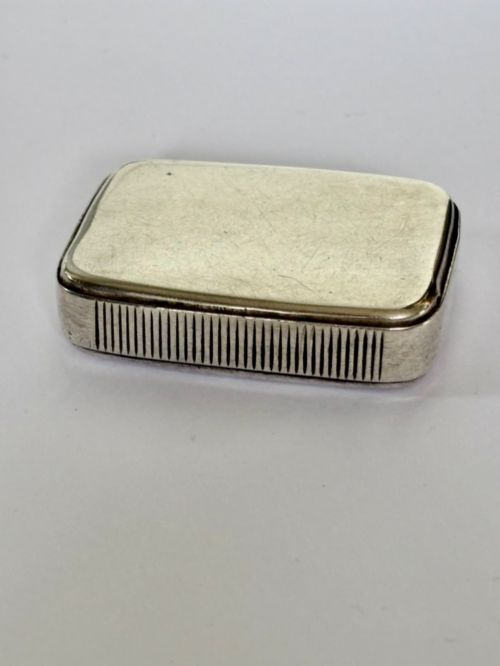
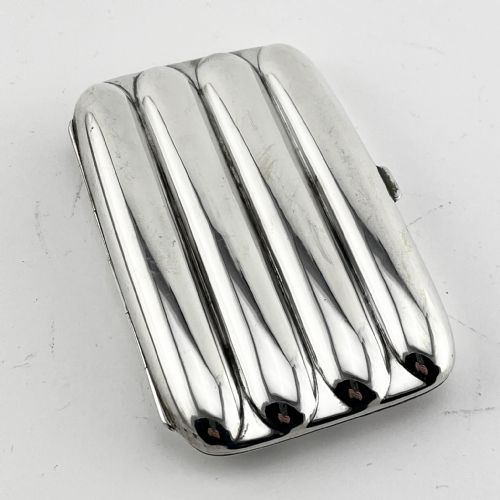
When you search for Victorian silver smoking items, you encounter a specialised range of nineteenth-century pocket and tabletop equipment designed for cigars, cigarettes, and pipes. These pieces span everyday carry items like vesta cases and cigar holders alongside substantial table lighters and desktop compendiums.
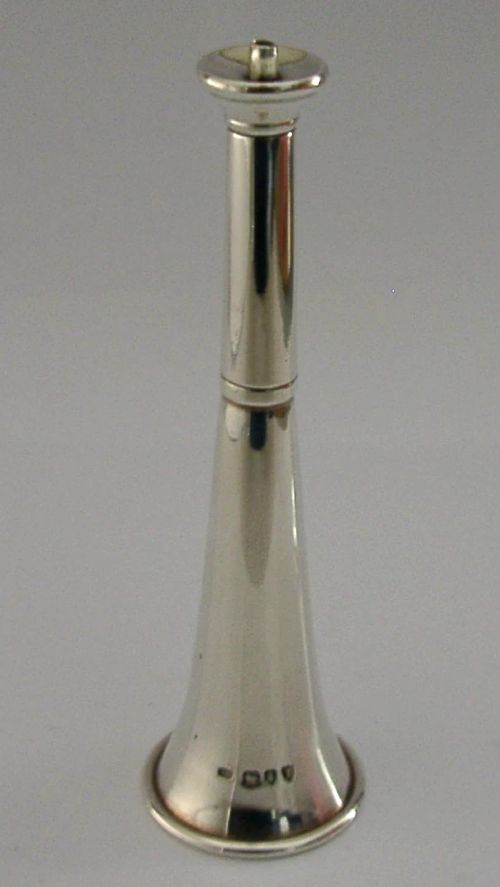
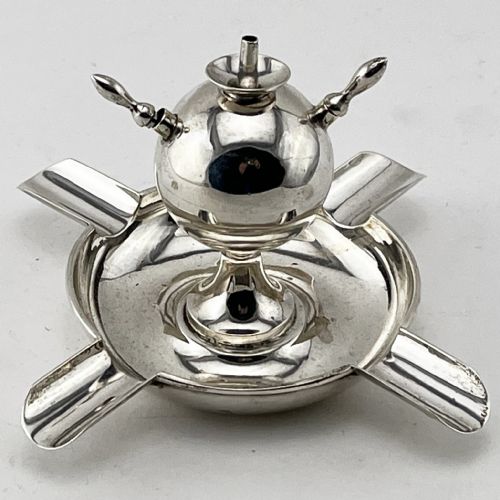
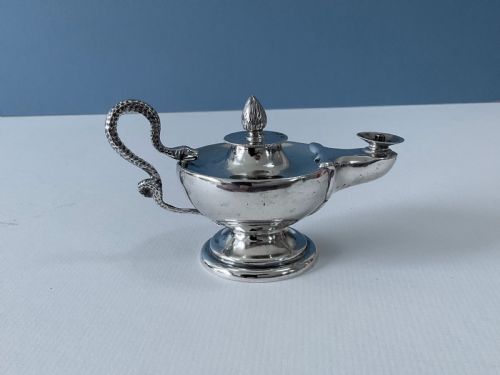
The selections on this page concentrate heavily on Victorian and late Victorian examples, stretching from mid-century gilt cigar cases to turn-of-the-century novelty matchsafes. You find both plain sterling silver pocket forms and ornate figural table lighters modelled as hunting horns, lamps, and fire carriages.
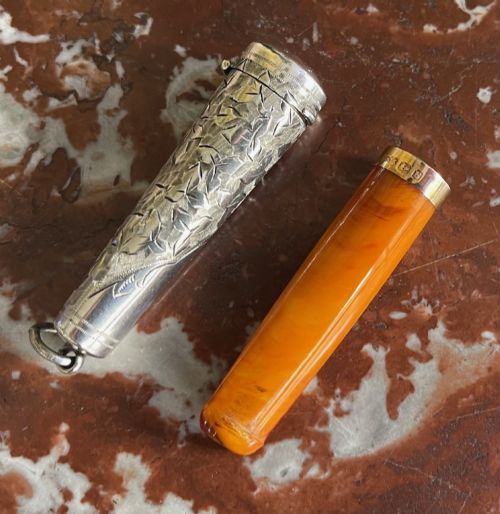
Beyond standard cases, the inventory captures specialist tools including pipe tampers, tinder tubes, and cheroot holders mounted in amber and gold. Each object reflects the formal social rituals of nineteenth-century tobacco consumption through robust metalwork and clever engineering.
Materials and construction methods
The pieces rely primarily on sterling silver, silver gilt, and silver plate, often combined with auxiliary materials such as amber, 9ct gold, steel, glass, crocodile skin, and meerschaum. Silversmiths shaped the metal through hand-beating, casting, and repoussé work, applying crisp leaf and scroll engraving to surfaces.
Internal mechanisms require precision engineering, seen in spring-loaded lids on vesta cases, sliding cigar compartments, and complex tinder tubes. Table lighters and novelties incorporate cast sculptural elements, utilising hinged components and secure locking catches to contain matches and fuel safely.
Listings feature sterling silver, silver gilt, and silver plate alongside organic materials like amber, meerschaum, and crocodile skin.
Distinctions in craftsmanship and design
Quality separates ordinary utilitarian containers from exceptional artistic commissions by the clarity of the maker's punch, the sharpness of surface engraving, and the structural integrity of hinged joints. Superior examples maintain crisp definition in cast novelty shapes, such as animal forms or hunting horns, without losing functional precision.
The sophistication of the opening mechanism dictates the desirability of pocket pieces, where smooth operation and tight closure distinguish high-end production. Maker attribution also elevates a piece, with recognised silversmith workshops delivering heavier gauge silver and more inventive mechanical layouts than anonymous factory output.
A & J Zimmerman·Sampson Mordan·Wright & Davies·Goldsmith & Silversmith·Braham
The Victorian Silver Smoking Glossary
- Vesta case
- A small pocket container specifically manufactured to hold wax matches, commonly featuring a serrated strike base on the exterior. These cases often display elaborate engraving or novelty figural shapes.
- Silver gilt
- Sterling silver that has been coated with a thin layer of gold on its surface, creating a rich warm interior or exterior finish. This technique is frequently observed on nineteenth-century cigar and cheroot cases.
- Compendium
- A multi-functional desktop container or stand housing several smoking requisites together in one coordinated display. Examples include table units mounted on wheels or shaped as miniature carriages.
- Cheroot holder
- A small tubular mouthpiece designed to grip a truncated cigar, often fitted with amber stems and mounted in engraved silver cases. They protected the smoker's fingers and teeth from direct tobacco contact.
- Hallmark
- An official stamp applied by an assay office indicating the purity of the silver, the city of testing, and the year of manufacture. These marks provide definitive chronological evidence for antique pieces.
Victorian Silver Smoking: Frequently Asked Questions
What is a vesta case?
A vesta case is a small pocket box designed to keep matches dry and ready for use. They feature a textured striking area on the bottom for igniting the matches.
Victorian examples come in plain silver or highly ornate novelty shapes ranging from animals to geometric forms, reflecting personal style during the period.
How were table lighters used?
Table lighters sat in smoking rooms, libraries, or dining tables to provide a ready flame for guests enjoying cigars or cigarettes. Guests gathered around these central desk ornaments to light their tobacco.
They often took sculptural forms, such as hunting horns or oil lamps, combining practical fuel reservoirs with decorative artistic presence.
What are novelty smoking pieces?
Novelty smoking items are functional accessories shaped to resemble animals, everyday objects, or whimsical scenes. Makers used humour and clever design to transform ordinary matchsafes or vesta cases into conversational pocket pieces.
These items concealed their practical purpose within detailed miniature sculptures, showcasing the high skill of Victorian metalworkers.
How do I care for silver smoking items?
Silver smoking items require gentle cleaning with a soft cloth to preserve delicate surface engraving and original hallmarks. Avoid harsh chemical dips that strip away desirable patination accumulated over generations of handling.
Store pieces in dry environments away from direct moisture to protect internal steel components and organic auxiliary materials like amber or leather.