




Victorian Silver Calling Holder
These Victorian silver calling holder pieces are pocket-sized receptacles for visiting cards, prized for intricate engraving and tactile metalwork.

Victorian Silver Calling Holder
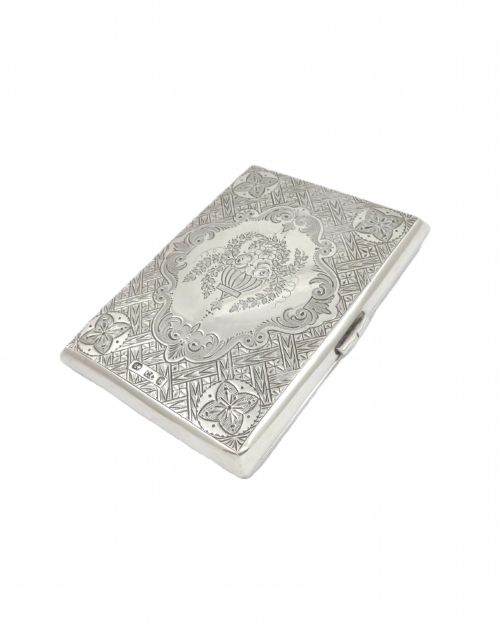
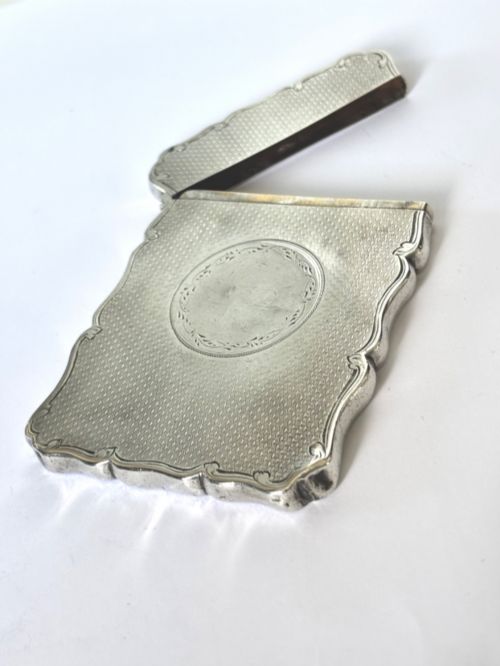
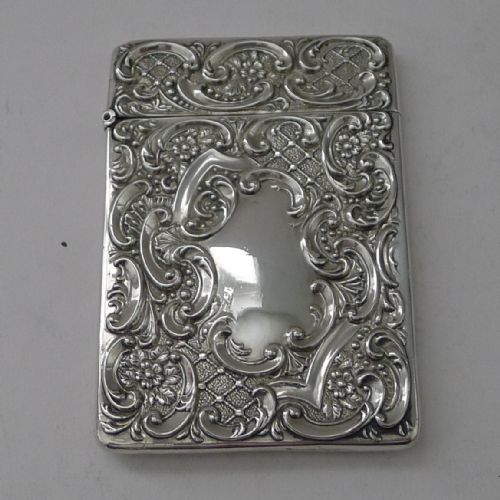
A victorian silver calling holder is primarily encountered as a small, rigid case designed to hold visiting cards during the nineteenth and early twentieth centuries. The selection on this page spans the Victorian and Edwardian eras, encompassing both plain and heavily decorated forms.
Most examples function as visiting card cases or aide-memoires, while related forms include card boxes and cigarette cases. The surviving objects reflect the social customs of polite society, where callers left engraved cards upon visiting acquaintances.
Originating predominantly from British workshops, the inventory also includes Anglo-Indian silver work alongside pieces utilising organic materials such as tortoiseshell and mother of pearl.
Materials and Construction
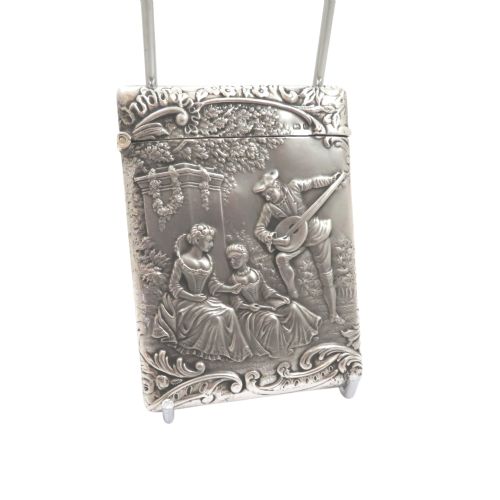
Silversmiths constructed these cases using sterling silver and solid silver, frequently shaping the metal through stamping, piercing, and repoussé techniques. Repoussé work allowed artisans to hammer detailed figures of gods, deities, or architectural scenes into high relief from the reverse side.
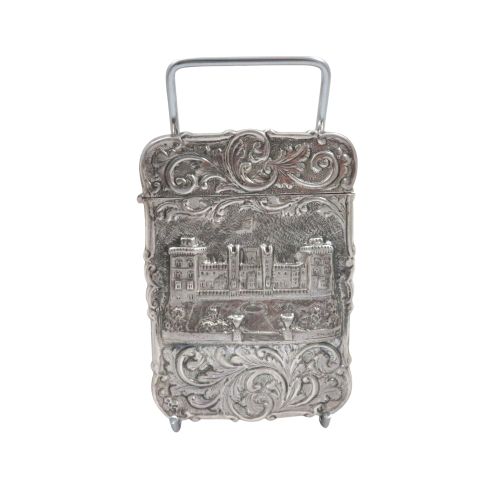
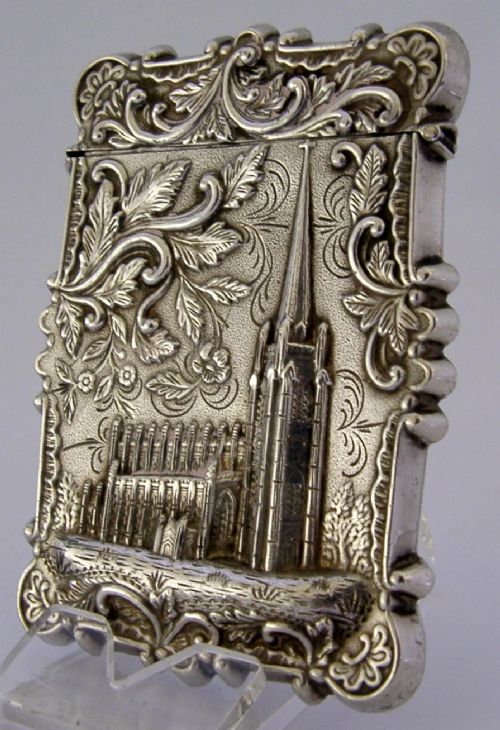
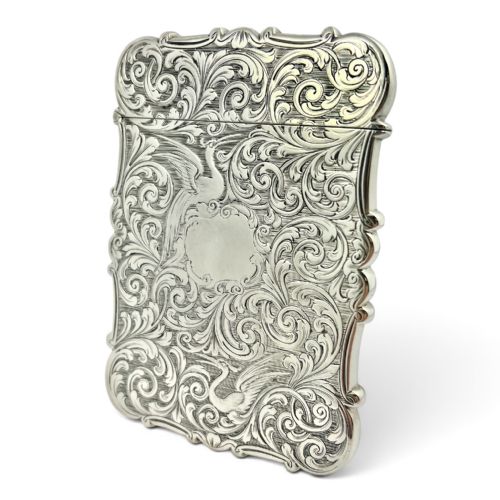
Surface decoration relies heavily on crisp hand engraving, depicting subjects ranging from architectural views like Windsor Castle and St Paul's Cathedral to pastoral motifs such as dogs and stags. Some pieces combine silver frames with inlaid panels of mother of pearl, tortoiseshell, enamel, bone, or Connemara marble.
Some Victorian callers entrusted their social ambitions entirely to a miniature metal depiction of Windsor Castle tucked into a waistcoat pocket.
Judging Quality
The distinction between standard production and top-tier work rests on the crispness of the chasing and the depth of the metal relief. Architectural castle top examples require exceptional skill to render complex building facades accurately in miniature.
Heavier gauge silver and complex opening mechanisms, such as those found on aide-memoires or unusual boxes, indicate higher workshop ambition. The integration of contrasting materials like enamel or carved tortoiseshell further elevates a piece.
Nathaniel Mills·George Unite·Foxall and Co
The Victorian Silver Calling Holder Glossary
- Castle top
- A style of card case featuring a detailed architectural engraving of a famous building or landmark on the cover. These scenes were often executed by specialist makers in Birmingham.
- Repoussé
- A metalworking technique where the artisan hammers the design from the reverse side to create a raised relief on the front. This method gives Indian silver card cases their dimensional surface decoration.
- Aide-memoire
- A small book or case fitted with internal leaves or tablets for making brief written notes. They frequently share the slim pocket format of visiting card cases.
- Sterling silver
- An alloy consisting of silver and other metals, usually copper, formulated to increase durability while maintaining a bright lustre. Most British pieces in this category carry hallmarks denoting this standard.
- Connemara marble
- A distinctive green ornamental stone quarried in Ireland, sometimes inlaid into the surface of Edwardian card cases. It provides a smooth, variegated contrast to the polished silver frame.
Victorian Silver Calling Holder: Frequently Asked Questions
What is a silver calling card case?
A slim, pocket-sized container fashioned from silver to protect paper visiting cards from bending or soiling while being carried. They were essential accessories for callers navigating 19th-century social protocols.
Victorian examples often feature hinged lids and elaborate exterior engraving that signalled the owner's taste and standing.
How do I identify a castle top case?
Look for a prominent, finely detailed engraving of a specific British or international landmark, such as Windsor Castle or St Paul's Cathedral, occupying the main panel of the lid. These topographical scenes are typically rendered in high relief.
Master silversmiths like Nathaniel Mills specialised in this demanding pictorial format.
Were these cases only made of silver?
While sterling silver forms the basis of most examples, many incorporate contrasting materials into their design. Tortoiseshell, mother of pearl, enamel, bone, and Connemara marble appear frequently across the period.
Combinations of silver with organic shell materials created striking visual textures popular during the Victorian era.
How can I tell the date of a piece?
Dating relies primarily on official hallmarks stamped into the silver, which record the assay office, date letter, and maker's mark. Stylistic clues such as Gothic Revival motifs or Edwardian proportions also help narrow the period.
Items lacking hallmarks can be attributed generally through decorative conventions and construction methods.
How should I display or store them?
These compact cases sit well inside shallow display cabinets or on dedicated stands that allow both sides to be viewed. Keep them away from direct sunlight if they incorporate sensitive organic inlays like tortoiseshell.
Occasional gentle dusting with a soft cloth keeps the silver surface stable without stripping historic patina.