



Victorian Silver Plated Platter
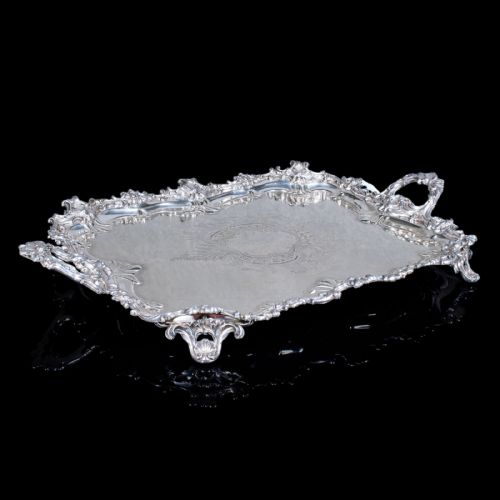
A victorian silver plated platter brings heavy nineteenth-century metalwork to the table, offering a solid base for serving drinks, meats, or tea.
Victorian Silver Plated Platter
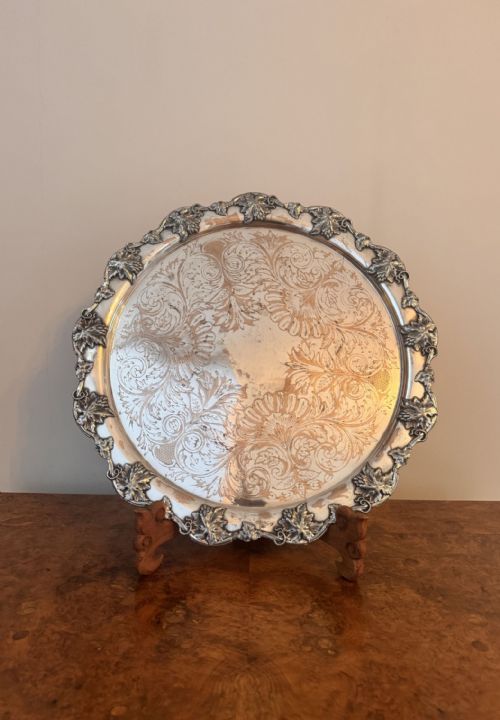
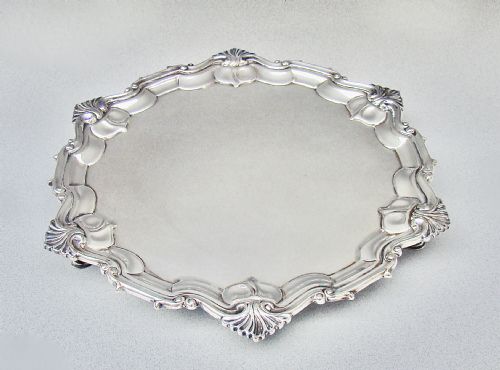
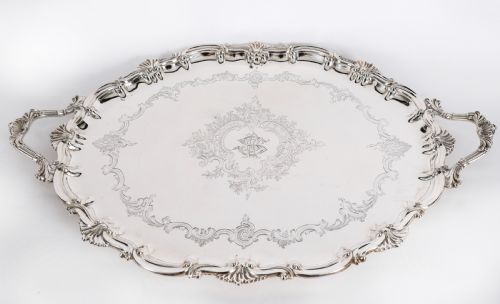
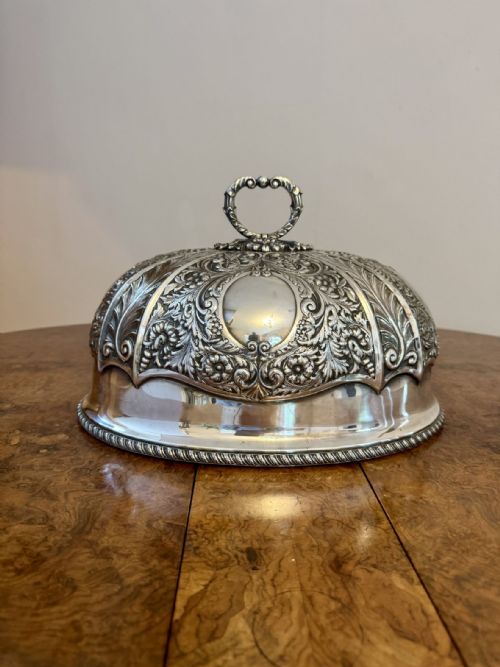
A victorian silver plated platter encompasses circular trays, oval serving dishes, large meat covers, and deep chargers originating across the nineteenth century. Most examples found here date from the Victorian decades, featuring traditional handles, raised rims, and engraved surfaces.
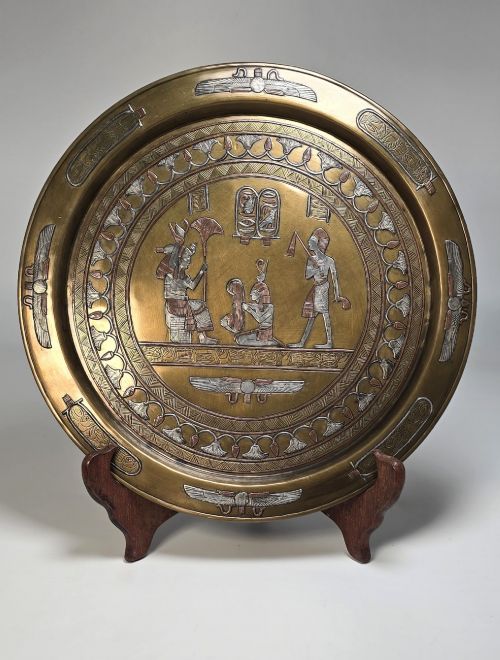
Forms vary from flat presentation trays and tea service bases to heavy domed meat covers and pierced serving dishes. Makers produced these pieces in various regional styles, ranging from plain English salvers to elaborate Egyptian and Indian revival designs.
How they were made
Makers built these pieces upon base metals like copper, nickel silver, or bronze, applying a layer of silver via electroplating or older Sheffield plating methods. Electroplated nickel silver and electrotype techniques allowed workshops to deposit metal evenly over complex shapes and figures.
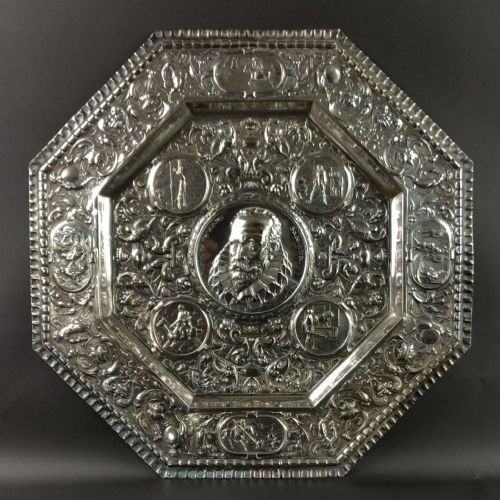
Surface decoration relied on repoussé work, hand engraving, and silver inlay, shaping floral motifs, figural scenes, and geometric borders into the metal. Raised rims and detailed handles were often cast separately and soldered or riveted to the main body.
Miguel De Cervantes makes a silent cameo appearance cast in metal on a nineteenth-century charger.
What varies in quality
Quality rests in the thickness of the applied silver and the crispness of the hand-chased or repoussé ornament. Heavy gauge copper or nickel silver cores provide structural rigidity that prevents warping under weight, distinguishing robust pieces from thinner items.
The precision of the engraving, the weight of cast handles, and the integration of decorative borders indicate workshop standards. Finer pieces maintain deep relief work and intact plating across complex surface details.
William Hutton & Sons·Thomas Bradbury & Sons·John Harrison·Walker & Hall·Padley Parkin·Hamilton & Inches·Elkington & Co·Walker Knowles·J Dixon & Sons·Fenton Russel
The Victorian Silver Plated Platter Glossary
- EPNS
- Electroplated Nickel Silver. This designates a base metal alloy of copper, nickel, and zinc coated with a layer of silver through electrolysis.
- Repoussé
- Metalworking technique where the artisan hammers the design from the reverse side to form raised relief patterns on the front.
- Charger
- A large ornamental plate or platter used traditionally for ceremonial display or as a base plate during formal dining.
- Mazarine
- A pierced insert or draining tray designed to sit inside a serving dish to keep meat elevated from juices.
- Old Sheffield Plate
- A fused composite material made by melting a sheet of silver onto a thicker copper block before rolling them together into sheets.
Victorian Silver Plated Platter: Frequently Asked Questions
Can I use these platters for food service?
Many of these pieces were built originally for serving tea, drinks, or roasted meats during the nineteenth century and remain functional for modern dining.
Check the surface condition for any exposed base metal or deep wear before serving acidic foods directly on the plate.
How do I tell Old Sheffield Plate from electroplate?
Old Sheffield Plate often reveals a thin line of red copper visible along cut edges or worn spots where the fused silver sheet has thinned.
Electroplated items usually show a dull grey base metal beneath the silver layer rather than the distinct warm tone of copper.
What is the difference between a salver and a platter?
A salver is typically a footed tray used for serving drinks or presenting cards and small items.
A platter or charger is generally a larger, flat or slightly dished vessel designed for holding meat, fruit, or serving dishes.