
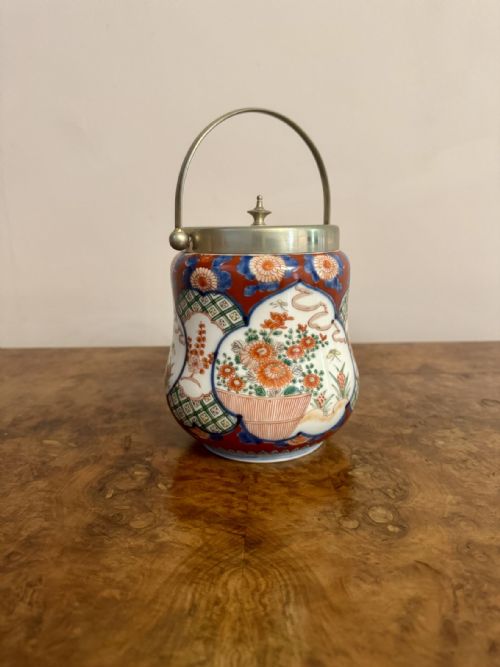


Victorian Silver Plated Jar
A victorian silver plated jar brings a touch of formal hospitality to a room, serving biscuits or preserves with heavy metal mounts.
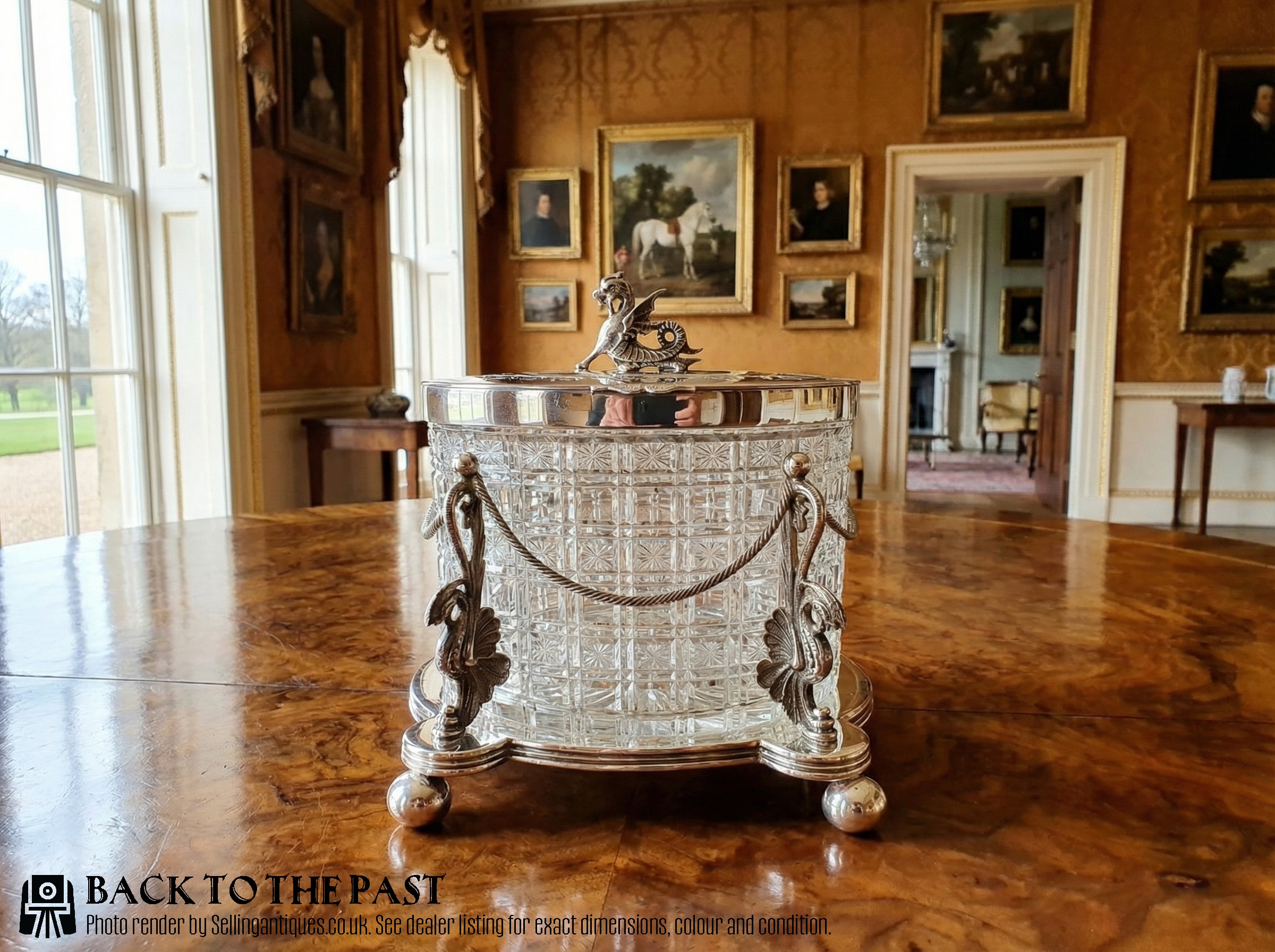
Victorian Silver Plated Jar
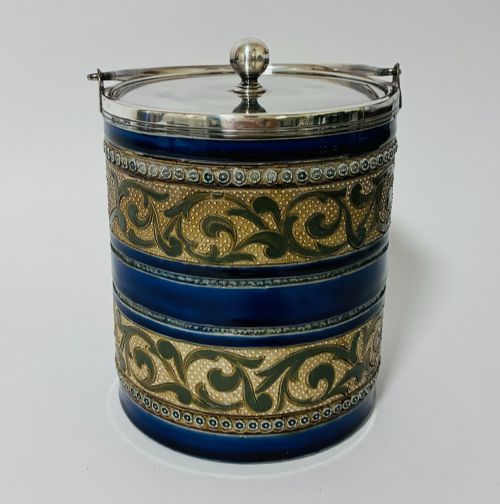
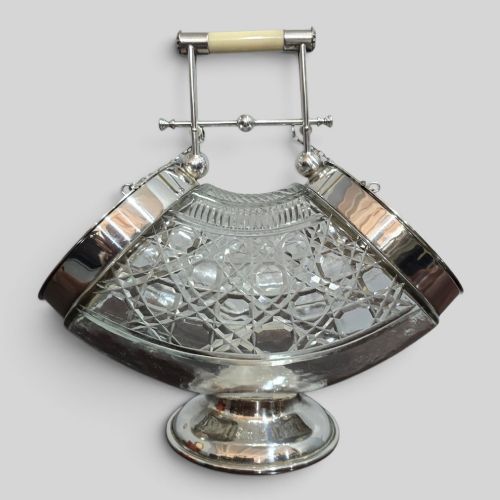
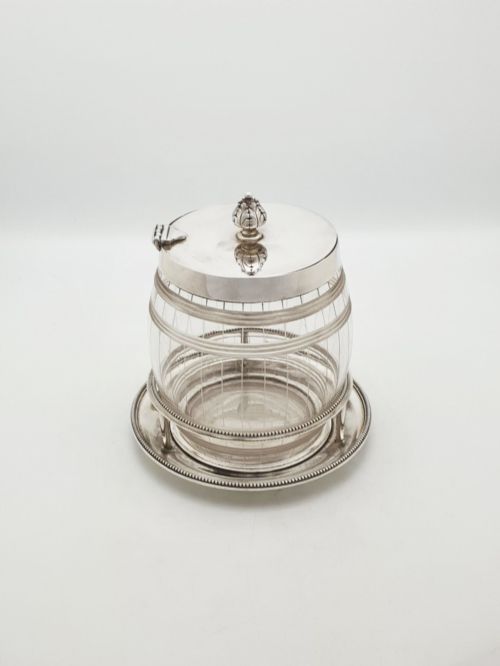
When you search for a victorian silver plated jar, you encounter primarily biscuit barrels, biscuit boxes, and preserve dishes produced during the nineteenth and early twentieth centuries. These vessels combine ceramic or glass bodies with metal lids, rims, and swinging handles designed for the dining table.
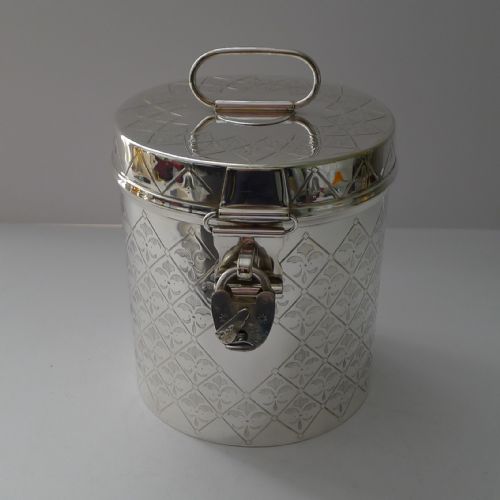
The selections on this page span the Victorian and Edwardian eras, incorporating forms such as cylindrical drums, tapering buckets, and novelty shapes like stacked weights. Alongside standard ceramic jars, you find rich cranberry glass and stoneware bodies mounted in electroplated nickel silver or Old Sheffield Plate.
How they were made
The fabrication relies on a base of cut glass, moulded ceramic, or carved oak fitted with electroplated mounts, hinged lids, and cast finials. Techniques such as hobnail cutting and pottery moulding create textured bodies that contrast with the smooth, reflective metal surfaces of the collars and handles.
Makers utilised electroplating to coat base white metal with a layer of silver, producing durable domestic wares that imitated solid silver at a lower cost. Stoneware and Jasperware components came from established potteries, then received custom metal hardware designed to lock or swing open.
A few clever makers turned heavy metal weights into biscuit boxes to trick guests at the dining table.
What varies in quality
Quality rests in the weight of the metal mounts, the crispness of the glass cutting, and the depth of the ceramic relief work. Heavier gauge silver plate and substantial glass bodies indicate higher production standards from prominent silversmiths.
Detailing on the hardware, such as cast heraldic finials or complex locking mechanisms, distinguishes standard domestic containers from exceptional table wares. The integration between the ceramic or glass vessel and its metal frame should feel secure and precise.
Mappin and Webb·Elkington and Co·Thomas Bradbury·Robert and Belk·Walker and Hall·William Hutton·John Grinsell and Sons·Doulton Lambeth·Wedgwood·Carlton Ware
The Victorian Silver Plated Jar Glossary
- Silver Plate
- A thin layer of silver bonded to a base metal substrate, usually copper or nickel brass, through electroplating or mechanical fusion. This process allowed nineteenth-century manufacturers to create affordable domestic items with the appearance of solid silver.
- Jasperware
- A type of fine stoneware developed by Wedgwood, characterised by a matte, unglazed surface and contrasting coloured relief ornaments in white. The technique is frequently seen on nineteenth-century biscuit barrels featuring classical or mythological scenes.
- Cranberry Glass
- A rich pink or red transparent glass created by adding gold chloride to the molten batch. It gained popularity during the Victorian period for tableware and decorative jars.
- Biscuit Barrel
- A covered ceramic or glass container designed for storing dry biscuits on the dining table or sideboard. These vessels are typically fitted with a silver-plated metal rim, lid, and swinging handle.
Victorian Silver Plated Jar: Frequently Asked Questions
What were biscuit barrels used for?
These lidded vessels held dry biscuits or sweet treats on the Victorian dining table, keeping the contents fresh during afternoon tea or after-dinner hospitality.
The swinging handle allowed guests or hosts to pass the container around the table with ease.
How do I tell Victorian from Edwardian pieces?
Victorian pieces often feature heavy ornamentation, classical motifs, and rich cranberry glass or dark oak bodies reflecting mid-to-late nineteenth-century tastes.
What materials make up these jars?
The bodies combine cut glass, cranberry glass, stoneware, Jasperware, or oak with electroplated nickel silver mounts and hardware.
Are novelty jars common?
Makers occasionally produced whimsical forms, such as containers shaped like weights or stacked boxes, to amuse guests at the table.