




Victorian Silver Plated Cutlery
Victorian silver plated cutlery brings nineteenth-century dining tables to life with durable silver plate, antler handles, and mother-of-pearl details.

Victorian Silver Plated Cutlery
Victorian silver plated cutlery encompasses everything from large fish serving sets and carving sets to individual fruit knives, lobster crackers, and knife rests. These implements span the nineteenth century and into the Edwardian period, reflecting the elaborate dining habits of the era.
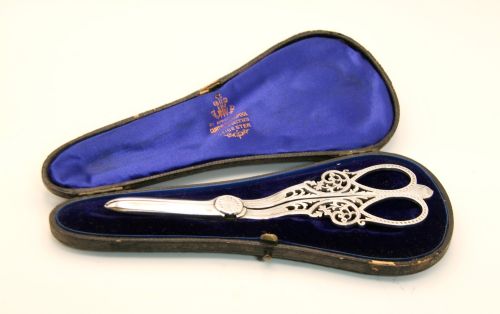
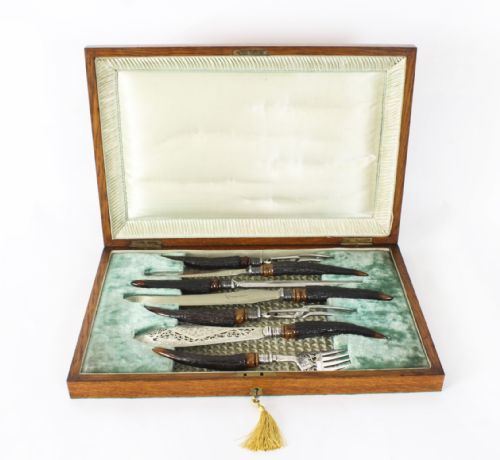
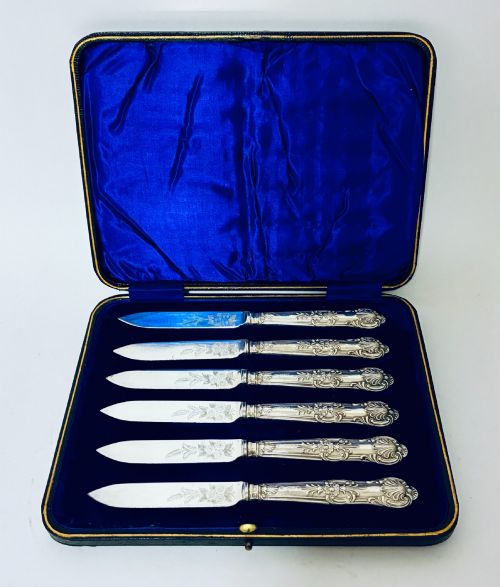
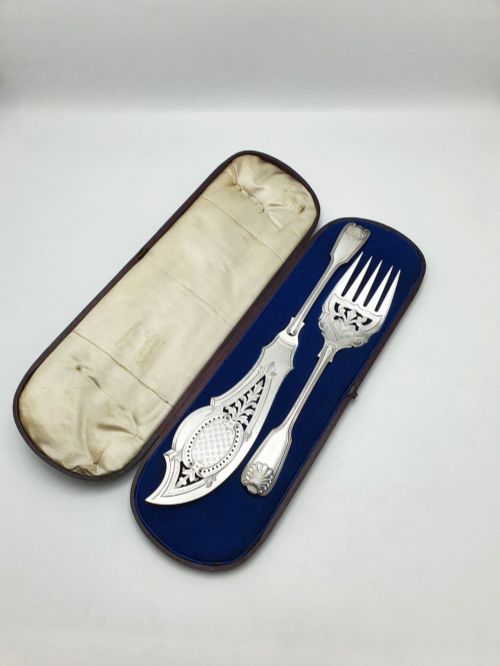
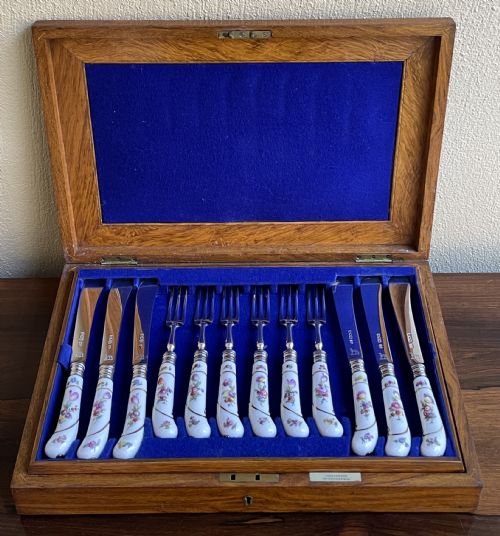
Cased sets for fruit, fish, and dessert frequently appear, often housed in fitted wooden boxes lined with velvet or silk. Individual serving pieces such as grape scissors, Stilton scoops, and spoon rests also form part of this diverse category.
The objects combine silver plate with organic materials like mother-of-pearl, antler horn, and oak. They represent the practical domestic metalwork produced during the Victorian and Edwardian reigns.
Materials and methods of construction
Makers applied silver plating over base metal substrates, utilising techniques developed during the nineteenth century to achieve a durable metallic finish. Handles were frequently shaped from natural materials including mother-of-pearl, bone, antler horn, and porcelain.
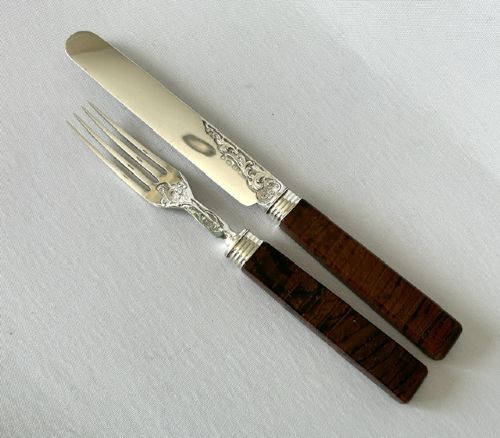
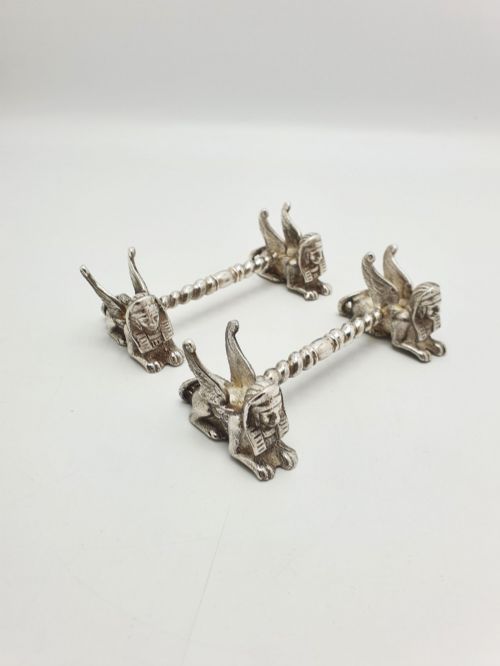
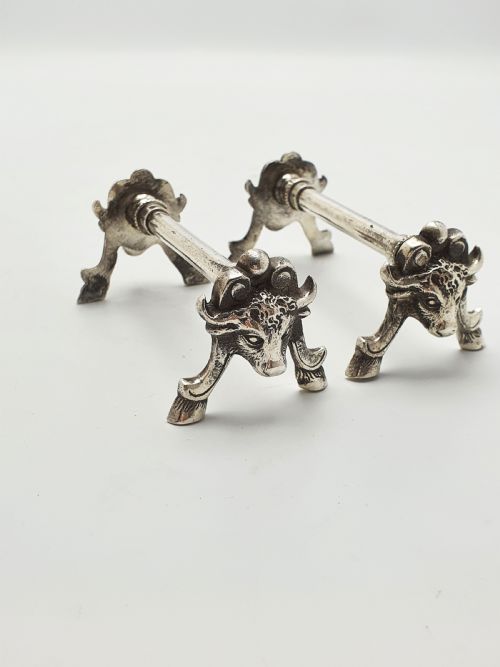
Items often featured detailed hand engraving, particularly upon the blades of fish servers and fruit knives, alongside cast embellishments such as sphinxes, bull heads, and rampant lions on knife rests.
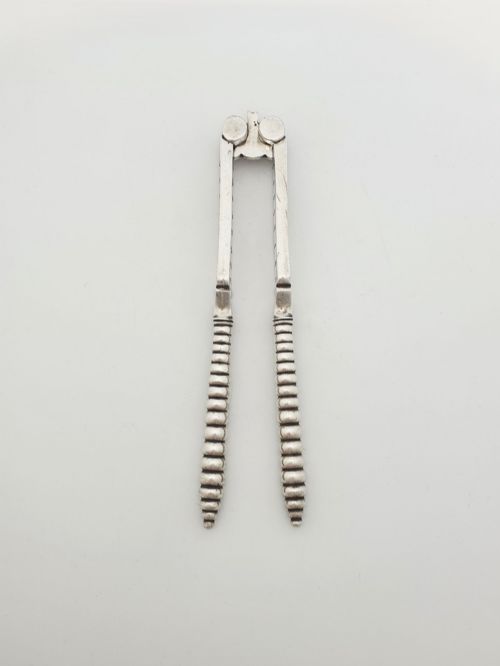
Victorian diners required specialised tools for everything, ensuring even a humble lobster faced an engraved silver plated cracking apparatus.
Distinctions in grade and execution
Quality depends upon the heaviness of the metal gauge and the precision of the engraved decoration. Heavier silver plate and deeply chased or engraved patterns indicate superior workshop output.
The choice of handle material influences grade, with well-matched mother-of-pearl or natural antler sections demonstrating higher production standards than plain substitutes.
Carrington·Walker Knowles·Hukin and Heath·Mappin and Webb·Thomas Harwood and Co
The Victorian Silver Plated Cutlery Glossary
- Silver Plate
- A thin layer of silver bonded to a base metal core. This technique allowed nineteenth-century manufacturers to produce decorative tableware at a lower cost than solid silver.
- Mother-of-Pearl
- The iridescent inner layer of mollusc shells used frequently for knife and fork handles. It provided a pale, shimmering surface that contrasted with polished metal blades.
- Knife Rest
- A small support used to keep carving or dining cutlery elevated above the tablecloth between courses. They often took ornamental forms such as animals or architectural motifs.
- Stilton Scoop
- A specialised utensil designed for serving crumbly cheeses like Stilton. The half-cylinder blade dug neatly into the cheese block.
- Carving Set
- A matched pairing of a large knife and fork used at the table for jointing meat. They frequently featured substantial antler or horn handles for a secure grip.
Victorian Silver Plated Cutlery: Frequently Asked Questions
What is included in a fish serving set?
Fish serving sets typically comprise a large knife with a broad, pierced blade and a matching fork. These implements were designed specifically for dividing delicate fish at the dinner table.
Decoration often included engraved aquatic or hunting scenes upon the silver plated surfaces, accompanied by handles made from antler horn or mother-of-pearl.
How were fruit sets used?
Fruit sets were utilised for dessert courses at the conclusion of formal meals. They included specialised knives and forks, sometimes paired with nutcrackers and grape scissors.
These smaller implements prevented staining the silver by avoiding direct contact with acidic fruit juices, utilising plated blades alongside decorative handles.
What are knife rests used for?
Knife rests kept used cutlery off the linen tablecloth between courses. Diners placed their resting knives and forks across the small stands.
They were cast in various shapes, including sphinxes, lions, and bull heads, reflecting the eclectic design tastes of the Victorian period.
Are these items suitable for daily use?
Many people continue to use nineteenth-century tableware for special dining occasions. Hand washing protects the delicate organic handle materials like mother-of-pearl and horn.
Proper storage in lined boxes or canteens helps preserve the silver plate and prevents unnecessary surface scratching over time.