
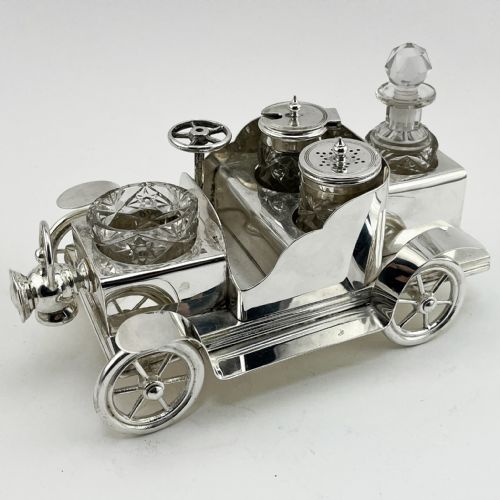


Victorian Silver Plated Cruet
When you want a victorian silver plated cruet, you are looking at functional table centrepieces that bring organised charm to dining through fitted glass bottles and metal stands.
Victorian Silver Plated Cruet
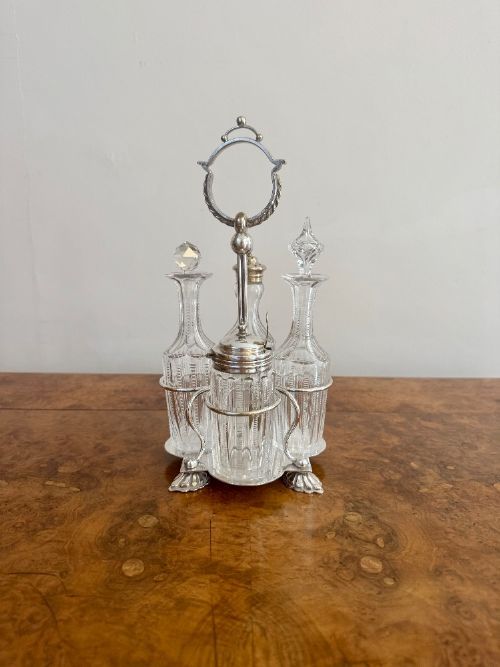
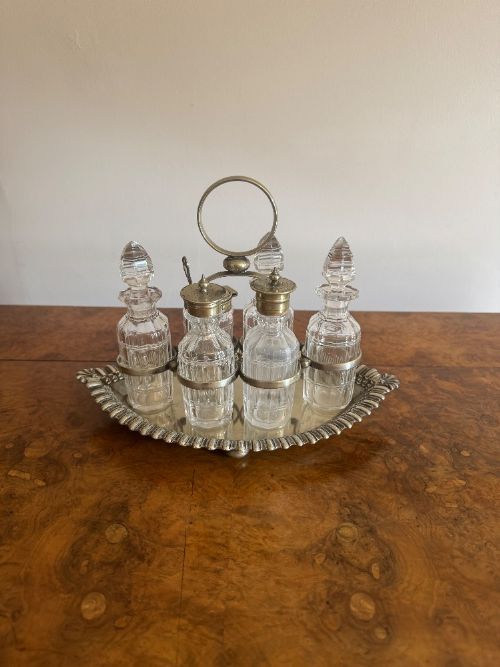
A victorian silver plated cruet is a structured tabletop stand designed to hold condiments, bottles or egg cups for family dining and formal meals. The pieces listed here span the Victorian and Edwardian eras, reaching from modest bachelor sets to large multicultured frames holding six or more bottles.
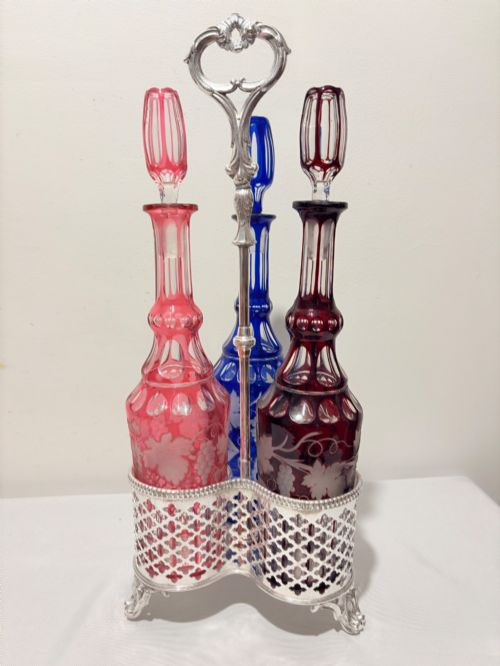
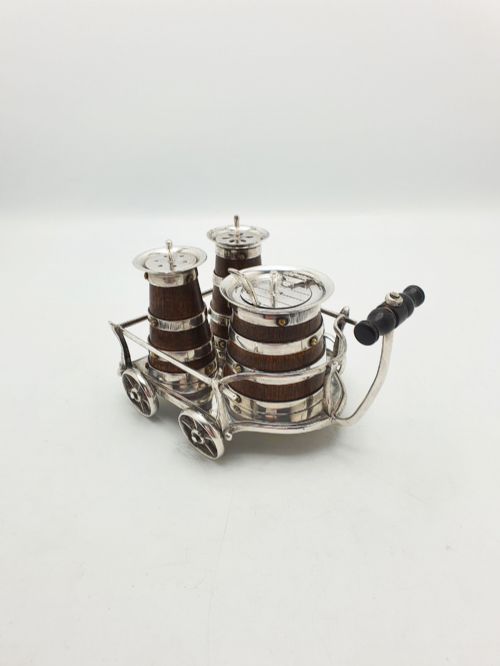
Beyond standard condiment and decanter stands, many examples take imaginative forms such as barrels, butler's trays, carts, and figural animal novelties including camels, donkeys, and birds. These diverse formats reflect the Victorian appetite for playful dining accessories alongside practical vessels for vinegar, oil, mustard, and pepper.
The objects combine metalwork frames with fitted glassware, often appearing alongside wooden elements like oak bases or handles. While standard six-bottle and four-bottle condiment frames dominate, specialised pieces like egg cruets with built-in toast racks also feature prominently in the selection.
How they were made
Makers built these pieces using a base metal foundation coated in a layer of silver via electroplating, a technique that gained widespread use during the nineteenth century. This method allowed intricate frames, loop handles, and cast figural decorations to be produced with a bright silver finish without the weight and cost of solid silver.
The metalwork was frequently paired with blown and cut glass bottles, decanters, and jars, sometimes featuring coloured elements such as cobalt blue glass. Selected items incorporate secondary materials like oak or other woods, particularly in barrel-shaped condiment holders, butler's tray bases, and structured egg cruets.
Listings span from the Georgian period through the Victorian and Edwardian eras, capturing changing dining habits in silver plate, cut glass, and oak.
What varies in quality
The distinction between standard utility items and finer examples lies in the ambition of the design and the crispness of the casting. Elaborate figural novelties, detailed botanical motifs like lily pads, and heavy loop handles indicate a higher grade of production than plain wirework frames.
The integration of materials also defines the tier of a piece, where thick cut glass bottles matching the exact contours of an ornate, substantial silver plated frame represent superior workshop output compared to simpler mass-produced sets.
Mappin Brothers·Walker And Hall·Wade Wingfield Wilkins·John Grinsell And Son·Henry Wilkinson
The Victorian Silver Plated Cruet Glossary
- Cruet set
- A fitted stand holding multiple glass bottles or jars for condiments such as oil, vinegar, mustard, and pepper. These sets formed an essential part of nineteenth-century dining table service.
- Egg cruet
- A specialised tabletop frame designed specifically to hold boiled eggs alongside matching spoons and sometimes an integrated toast rack. They frequently appear in smaller formats for breakfast dining.
- Bachelor cruet
- A reduced-scale condiment or cruet set intended for smaller households or individual dining use. These compact pieces typically hold two to four bottles.
- Silver plate
- A manufacturing method where a thin layer of silver is bonded to a base metal substrate using electrolysis. This process democratized the ownership of bright metallic tableware during the Victorian period.
- Novelty cruet
- A cruet set fashioned into an imaginative pictorial shape, such as a farmyard animal, vehicle, or musical instrument. Makers produced these to amuse diners during formal meals.
Victorian Silver Plated Cruet: Frequently Asked Questions
What is a victorian silver plated cruet used for?
These pieces served as organised table holders for condiments, sauces, and seasonings during family meals and formal dinners. They kept vinegar, oil, mustard, and pepper accessible in matching glass bottles.
Certain variations were built for specific courses, such as breakfast egg cruets that held boiled eggs, salt, and toast. Others functioned as decanter stands to present wine and spirits at the sideboard.
How do I date a cruet set?
Dating relies on stylistic shifts, manufacturing marks, and the types of materials combined in the frame. Pieces from the mid-nineteenth century often display heavier cast figural elements and ornate Victorian ornamentation.
Later Edwardian examples tend to feature lighter frames and simpler geometric wirework. Maker stamps and registry numbers stamped into the metal provide the most exact chronological markers.
Are all the glass bottles original?
Many surviving sets retain their matched cut glass bottles, which were blown and cut to fit the specific apertures of the metal frame. Because glass is fragile, replacement bottles frequently occur in historical tableware.
Matching the exact collar size, cut pattern, and stopper style helps determine if the glassware belongs to the original manufacturing period of the stand.
How do I care for silver plate?
Silver plate requires gentle cleaning with a soft cloth and a specialised non-abrasive silver polish to maintain the finish without wearing through the thin metal layer. Harsh scrubbing agents will damage the underlying base metal.
Storing pieces in dry environments away from direct sunlight and dampness prevents accelerated tarnishing of the silver surface.