
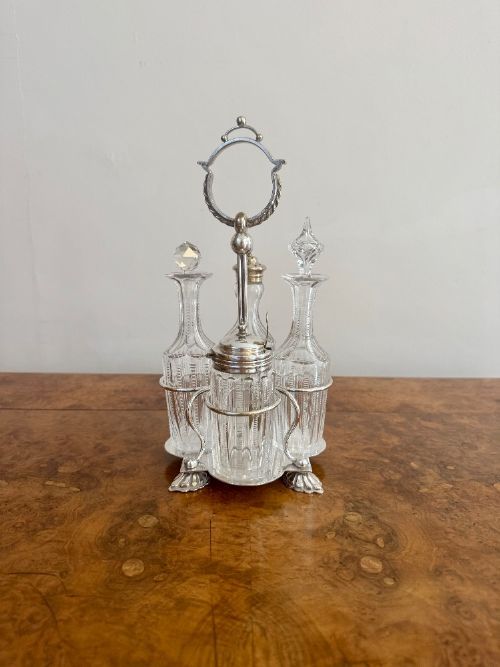
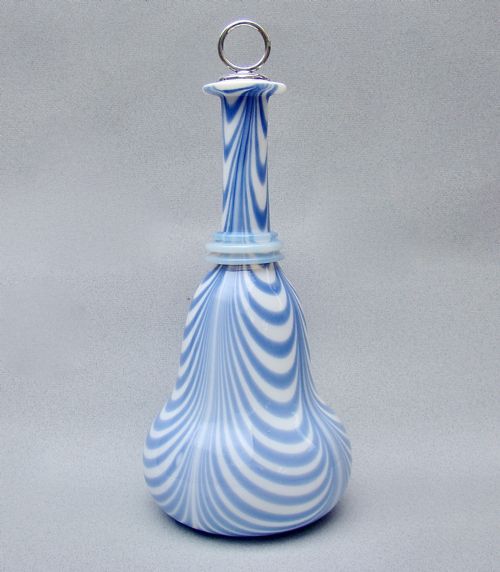
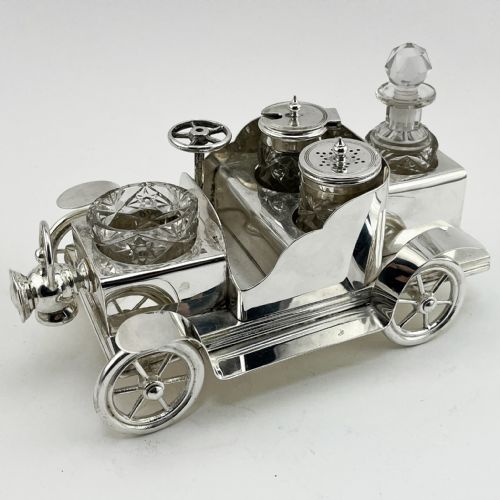


Victorian Silver Plate Decanter
A victorian silver plate decanter brings nineteenth-century hospitality to the table, combining heavy cut glass with ornate metal mounts.
Victorian Silver Plate Decanter
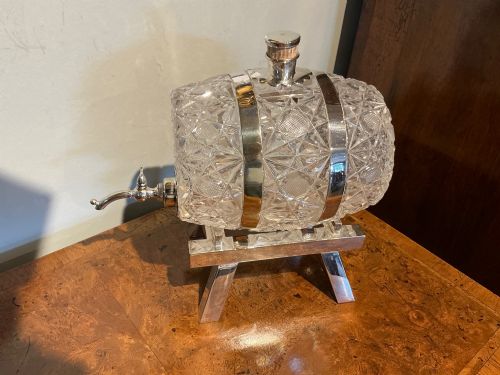
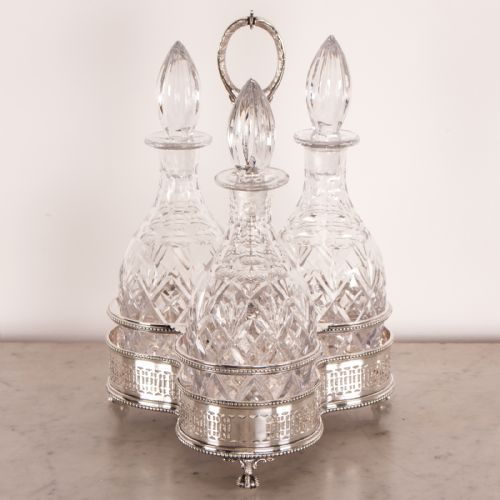
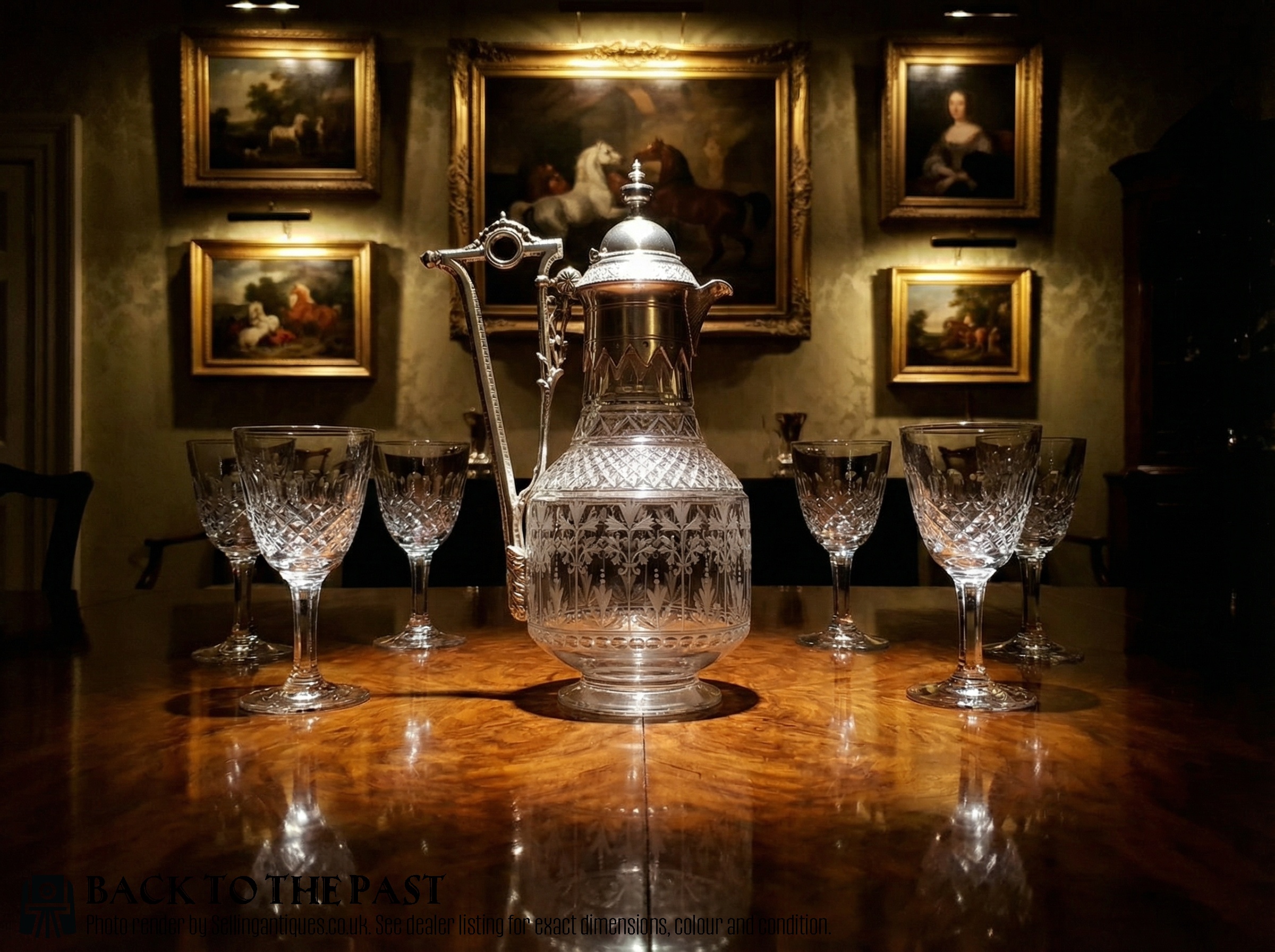
A victorian silver plate decanter combines heavy glass bodies with durable plated mounts, serving wine, claret or spirits on the dining table.
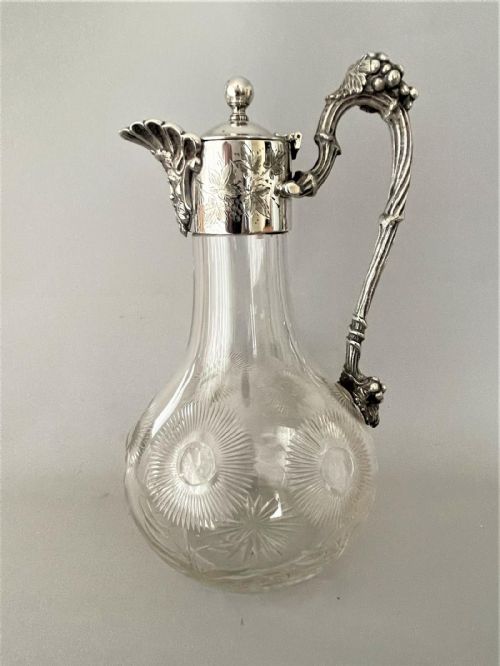
The most common examples on this page are tall claret jugs featuring cut glass or crystal bowls fitted with hinged silver-plated lids and handles.
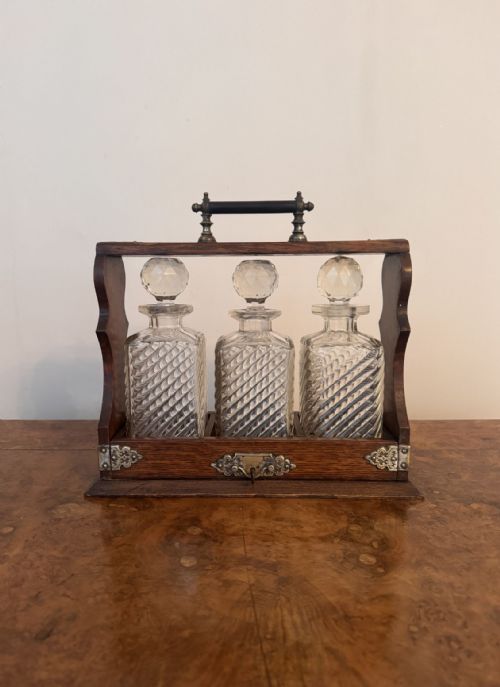
Makers also produced secure tantalus frames and multi-bottle stands designed to hold drinks securely for the Victorian household.
How They Were Made
Craftsmen shaped the vessels from lead crystal, cut glass or coloured glass blown into moulds, sometimes adding etched decoration to the surface.
Base metal frames and mounts received a layer of silver via electroplating, a technique that became widespread during the nineteenth century.
Victorian Silver Plate Decanter Retail Price Guide 2026
Typical asking prices for victorian silver plate decanter among the pieces listed under this phrase on Sellingantiques today, from the lower quarter to the upper quarter. They describe what is for sale here now, not the wider market.
Listings feature Victorian and Edwardian periods, utilising cut glass, crystal, and silver plate.
What Varies in Quality
The weight and clarity of the glass vessel set the baseline, alongside the depth of hand-cut facets or engraved patterns.
Thick silver plating that resists wear over the underlying base metal marks the distinction between standard production and higher-end execution.
Walker & Hall·Mappin & Webb·Elkington·Hukin & Heath·Henry Wilkinson & Co
The Victorian Silver Plate Decanter Glossary
- Tantalus
- A locking wooden or metal stand holding decanters securely to prevent unauthorized access to the contents.
- Claret jug
- A specialised pouring vessel designed specifically for serving red wine, usually fitted with a handle and hinged lid.
- Cruet set
- A collection of small glass bottles mounted in a shared stand for holding condiments or oils at the table.
- Electroplate
- A method of depositing a thin layer of silver onto a base metal using electrical current, introduced commercially in the nineteenth century.
Victorian Silver Plate Decanter: Frequently Asked Questions
What is a tantalus?
A tantalus is a locking frame designed to hold decanters securely so guests could not pour drinks without a key.
These locking stands usually accommodated two or three glass bottles fitted with silver-plated mounts.
How do you clean silver plate?
Silver plate requires gentle cleaning with a specialised cloth or mild polish to preserve the thin metal layer over the base metal.
Harsh abrasives or prolonged soaking should be avoided to protect both the plating and any cut glass components.
What is a claret jug used for?
A claret jug served red wine at the Victorian dinner table, allowing the beverage to breathe before pouring into glasses.
The hinged lid kept the contents covered while the handle provided a secure grip during service.
How do I date a decanter?
Dating relies on stylistic clues like the depth of glass cutting, the shape of the silver mounts, and maker marks stamped on the metal.
Victorian pieces often feature registration numbers or maker hallmarks that help narrow down the decade of production.