


Victorian Silver Pepper Mustard
These Victorian silver pepper mustard sets bring heavy cast metal and clear glass to the dining table.
Victorian Silver Pepper Mustard
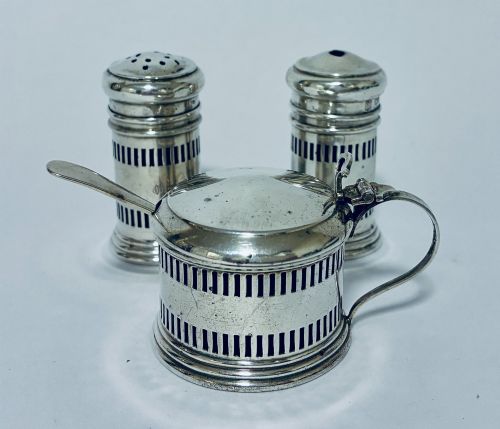
Victorian silver pepper mustard pieces comprise matching cruet sets, condiment sets, and standalone mustard pots intended for formal dining. You will frequently encounter silver plated frames alongside sterling silver examples and fitted glass inserts.
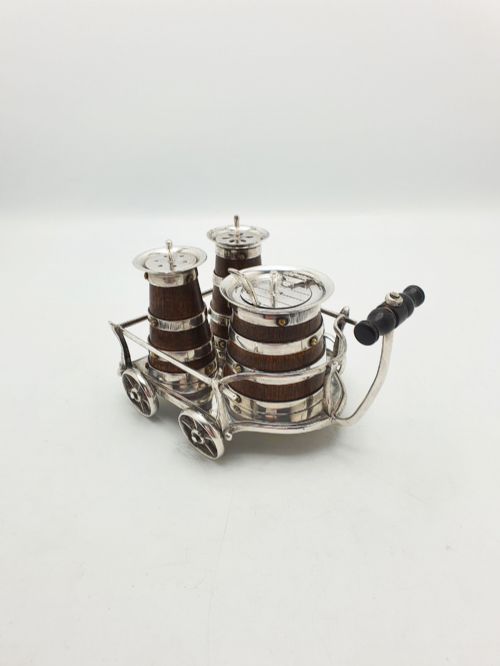
The selections span standard three-piece condiment sets and larger multi-bottle frames paired with oak bases or novelty designs. Most examples date from the late nineteenth century, reflecting the Victorian and Edwardian periods of domestic dining organisation.
How they were made
Silversmiths utilised sterling silver and silver plate over base metals to construct frames, mounts, and spoons, often employing gilding for internal bowl surfaces. Cut glass and cobalt blue glass provided durable, decorative liners for mustard pots and pepper shakers.
Makers integrated natural materials such as oak for barrels and trays, combining turned woodwork with cast and pierced metal components. Glass cutting and silver punching techniques created detailed patterns across cruet bottles and condiment spoons.
Listings feature items utilising sterling silver, silver plate, oak, and cobalt blue glass across the Victorian and Edwardian periods.
What varies in quality
The weight of the silver and the crispness of chased or pierced ornamentation set finer condiment sets apart from standard production pieces. Substantial gauge metalwork and well-balanced frames indicate superior manufacturing standards.
The presence of original, undamaged cut or coloured glass liners heavily influences the integrity of a set. Novelty forms with intricate mechanical details or specialised figural themes demonstrate higher levels of silversmithing skill.
Mappin Brothers·Charles Stuart Harris·George Adams·Barnard & Sons
The Victorian Silver Pepper Mustard Glossary
- Cruet set
- A matched collection of bottles, jars, or castors held in a stand for condiments. These sets typically served vinegar, oil, pepper, and mustard at the dining table.
- Silver gilt
- Silver covered with a thin layer of gold on the surface. This technique protected the interior of mustard pots from the corrosive effects of mustard.
- Condiment spoon
- A small spoon designed specifically for portioning salt, pepper, or mustard from a pot. Examples often feature specialised bowls and decorative handles.
- Silver plate
- A base metal coated with a layer of sterling silver. This method offered the appearance of solid silver at a lower cost during the Victorian period.
- Cobalt blue glass
- Deep blue glass frequently utilised for mustard pot liners. The rich colour provided a strong visual contrast against pierced silver frames.
Victorian Silver Pepper Mustard: Frequently Asked Questions
What is a Victorian cruet set?
A Victorian cruet set is a framed collection of glass bottles and jars designed to hold table condiments like pepper and mustard.
These sets sat centrally on the dining table for guests to season their food during meals.
How do I use a mustard pot?
A mustard pot holds prepared mustard, usually accompanied by a small spoon for serving.
The glass liner inside the silver frame protects the metal from vinegar corrosion.
What are novelty cruet sets?
Novelty cruet sets are condiment holders shaped like animals, vehicles, or everyday objects such as carriages or farmyards.
Silversmiths created these playful designs to amuse diners at formal Victorian meals.
How do I clean silver condiment sets?
Clean silver condiment sets gently with a soft cloth and specialised silver polish to preserve the metal surface.
Remove glass liners before cleaning to avoid damaging the antique frames.
Are silver plated sets antique?
Silver plated sets produced during the nineteenth century are considered genuine antiques.
Manufacturers used electroplating widely after the mid-nineteenth century to create durable tableware.