
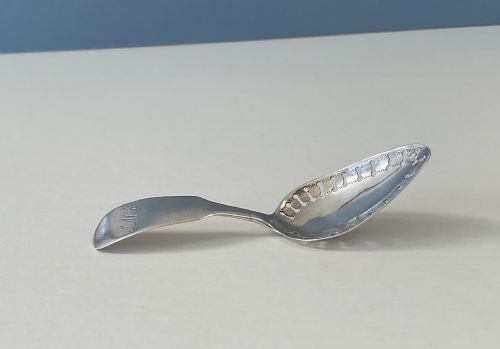


Victorian Silver Ladle
When you search for a victorian silver ladle, you are looking at nineteenth-century serveware designed to portion soup, sauce, cream, or sugar.
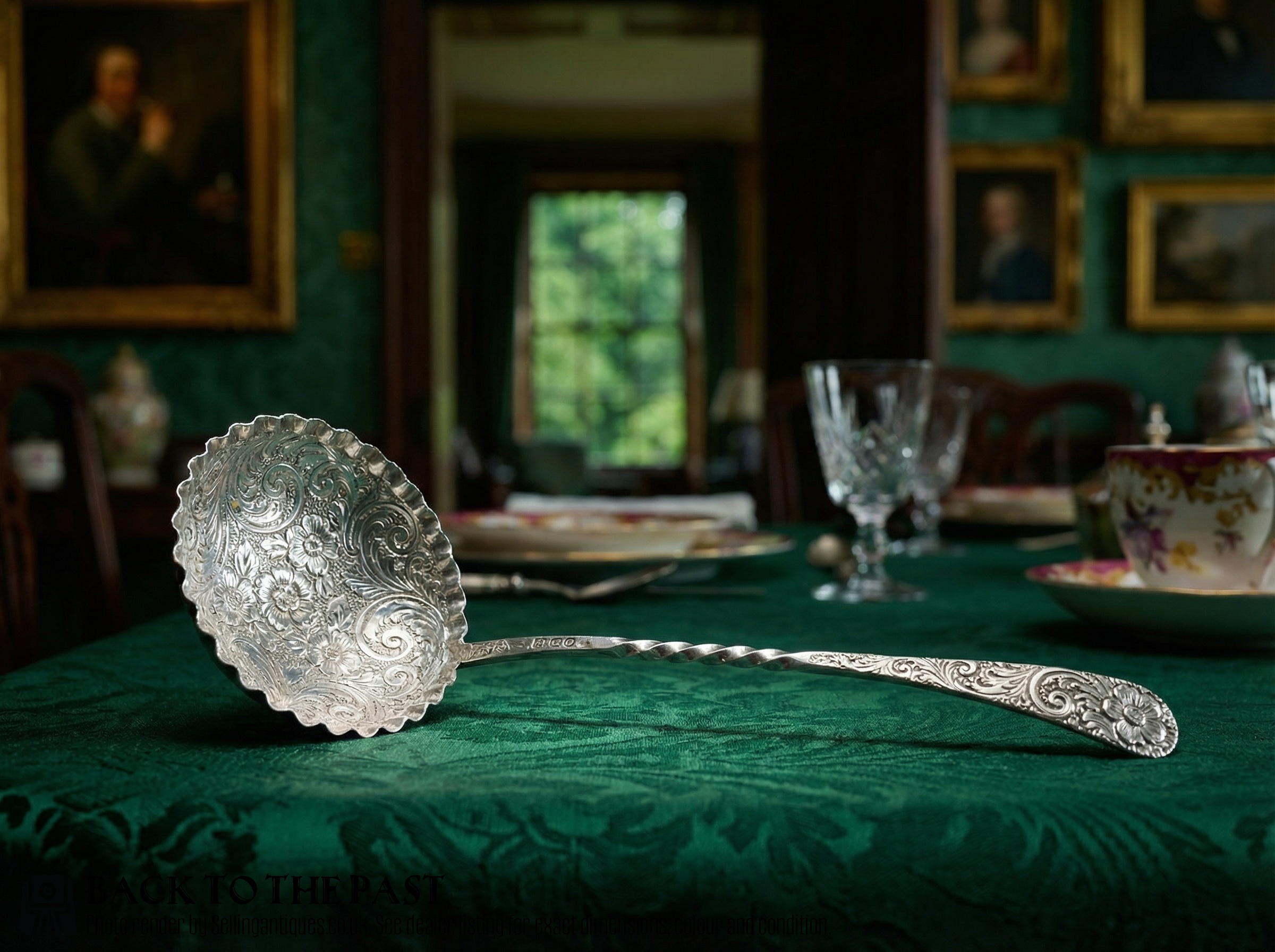
Victorian Silver Ladle
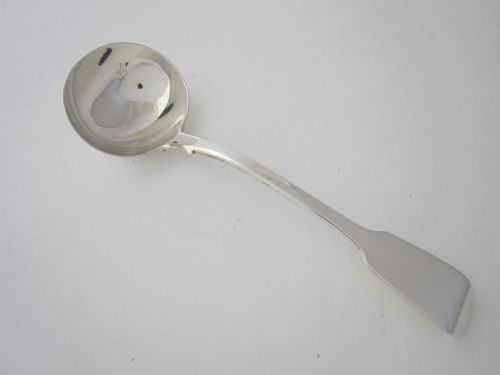
A victorian silver ladle is a piece of flatware or serveware created during the nineteenth century, encompassing sauce ladles, soup ladles, gravy spoons, and sugar sifters. The pieces seen most frequently on this page are solid sterling silver sauce ladles and soup ladles, alongside occasional plated or provincial examples.
Makers and provincial assay offices across England, Scotland, Ireland, and the Continent produced these utensils in distinct regional patterns. Alongside standard domestic sauce ladles, the records include specialised forms such as toddy ladles, cream ladles, and sugar sifting spoons.
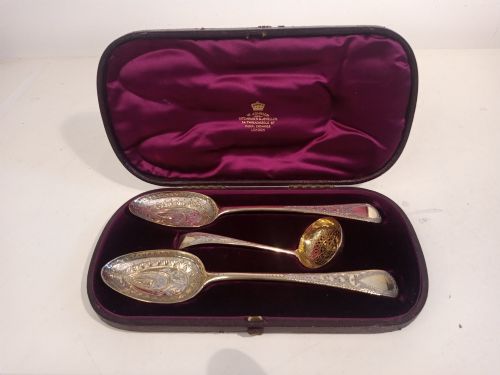
The objects span the entire nineteenth century, with specific pieces carrying hallmarks from London, Exeter, Glasgow, Edinburgh, Dublin, and Birmingham. They appear individually, in matched pairs, or as part of larger dining services and canteens of cutlery.
Materials and Techniques
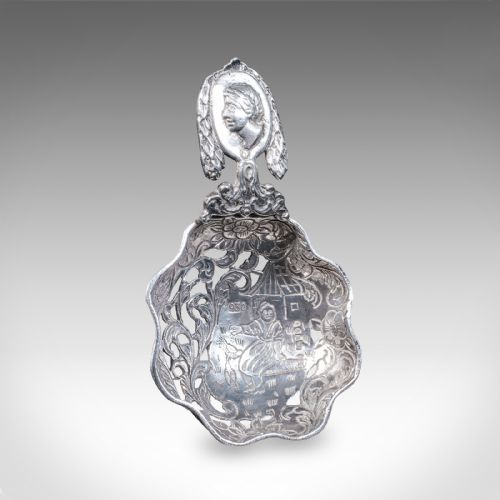
The primary material is sterling silver, worked into solid bowls and handles, though silver plate and silver-gilt versions also appear in the records. Metalworking techniques involved hammering, casting, and piercing, particularly for sugar sifter bowls and ornate scrollwork.
Silversmiths utilised traditional forging and shaping methods, finishing handles with stamped or cast decorative patterns such as Fiddle, Fiddle and Thread, King's, Queen's, and shell motifs. Hallmarks stamped directly into the metal record the assay office, the date letter, and the silversmith's mark.
Victorian Silver Ladle Retail Price Guide 2026
Typical asking prices for victorian silver ladle among the pieces listed under this phrase on Sellingantiques today, from the lower quarter to the upper quarter. They describe what is for sale here now, not the wider market.
Some nineteenth-century silver sugar ladles feature bowls shaped entirely like tiny scallop shells, ready to rain sweetness over your strawberries.
Quality and Craftsmanship
Quality rests upon the weight of the metal and the crispness of the handle decoration, distinguishing substantial cast pieces from lighter stamped equivalents. Substantial gauge silver maintains its rigidity in large soup and punch ladles, whereas thinner metal flexes under use.
The clarity of the hallmarks and the reputation of the silversmith or firm, such as Chawner & Co or George Adams, elevate a piece. Finer examples display sharp detailing in applied scrollwork and cast shell bowls without wear to the underlying metal.
John Yates·Mary Chawner·Daniel and Arter·John Round And Son Ltd·Charles Lias·George Adams·J And A Savory·Chawner And Co·William Eaton
The Victorian Silver Ladle Glossary
- Hallmark
- A series of official marks stamped on precious metals to indicate the standard of purity, the assay office, the maker, and the year of manufacture. These stamps provide the primary evidence for dating nineteenth-century silver.
- Fiddle Pattern
- A popular nineteenth-century flatware handle design featuring a distinctive narrow stem that broadens symmetrically near the terminal into a shape resembling a fiddle. It frequently appeared alongside thread and shell variations.
- Sauce Ladle
- A small spoon with a deep bowl used for serving gravy, sauces, or custard from a boat or tureen. They often measure shorter than soup ladles and frequently occur in matched pairs.
- Sugar Sifter
- A ladle or spoon with a pierced or perforated bowl designed to sprinkle granulated or powdered sugar over fruit and desserts. Many examples date from the Victorian period and feature ornate pierced scrollwork.
- Silver-Gilt
- Silver that has been coated with a thin layer of gold on its surface, sometimes referred to as vermeil. This technique was used on sifting ladles and presentation pieces to provide a rich golden tone.
Victorian Silver Ladle: Frequently Asked Questions
What is the difference between a sauce ladle and a soup ladle?
A sauce ladle is smaller in scale, designed to fit into a gravy boat or small sauce tureen for table service. Its bowl holds a modest portion suitable for dressings and condiments.
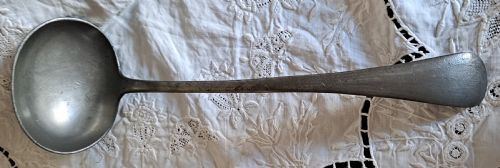
Soup ladles are substantially larger utensils with deep, wide bowls and long handles intended for serving portions from a large tureen or punch bowl directly into individual plates.
How do I identify the date of a silver ladle?
Dating relies upon the stamped hallmarks, which include a specific letter code corresponding to the year the piece was tested at an assay office. Additional duty marks showing the reigning monarch's head help narrow the period.
Stylistic indicators such as handle patterns and bowl shapes also assist in confirming whether an item originates from the early, mid, or late nineteenth century.
Were these ladles used individually or in sets?
They were produced both as individual serving pieces and as part of larger dining services or canteens of cutlery. Sauce ladles frequently survive as matched pairs intended to sit at opposite ends of a long dining table.
Soup and punch ladles were generally single items accompanying a matching tureen, while condiment and toddy ladles often formed part of specialised tea and dessert sets.
How should I care for antique silver ladles?
Regular gentle washing in warm water with mild soap, followed by immediate drying with a soft cloth, removes residues and prevents tarnishing. Avoid harsh abrasive cleaners that can wear away fine hallmarking and delicate surface detail.
Store pieces in tarnish-resistant cloth or dry environments away from direct sunlight to preserve the silver surface over time.