

Victorian Silver Fob
When you search for a Victorian silver fob, you discover small suspended ornaments, seals, and medallions once worn alongside pocket watches to display identity or club membership.
Victorian Silver Fob
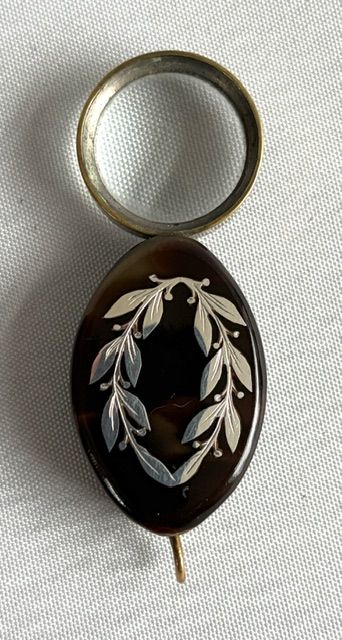
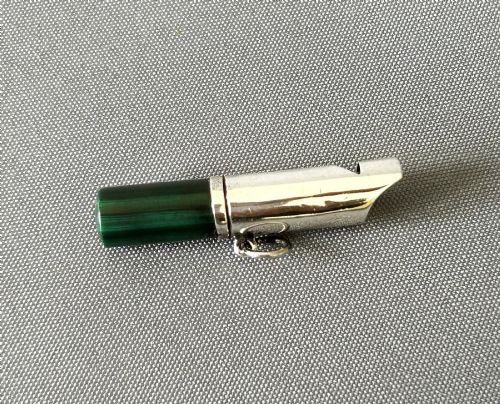
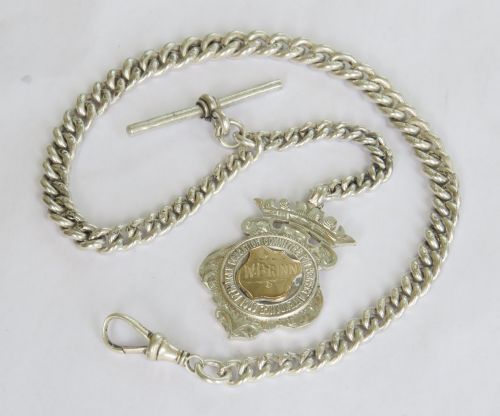
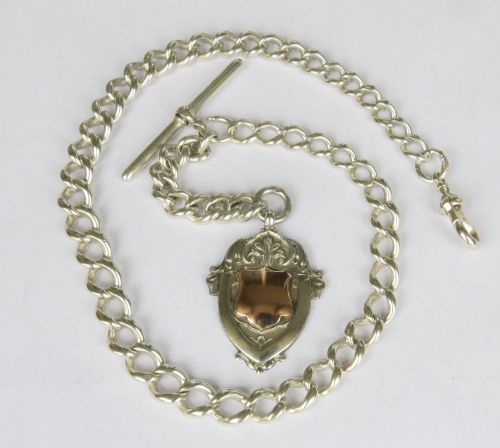
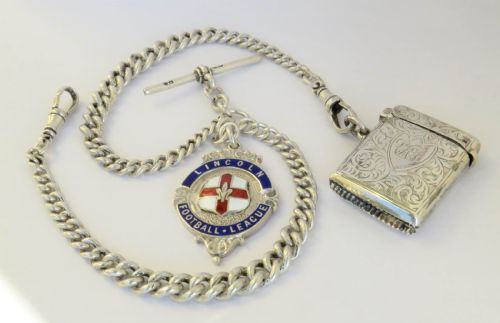
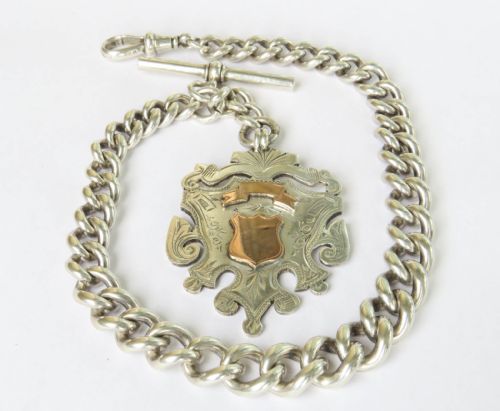
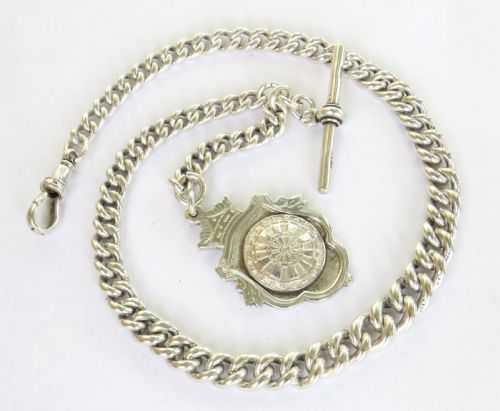
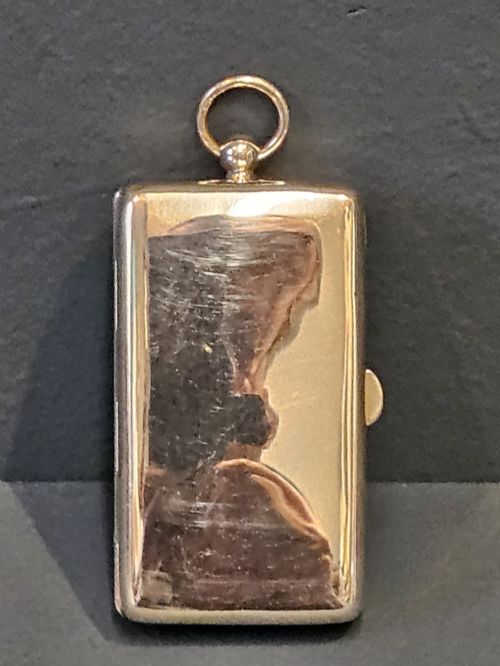
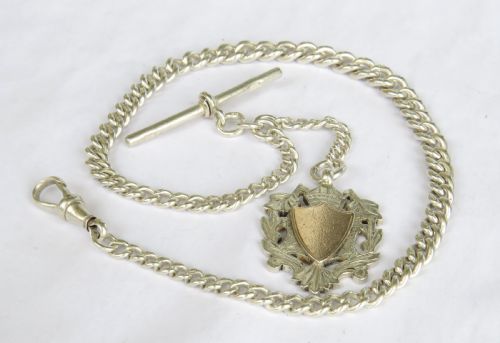
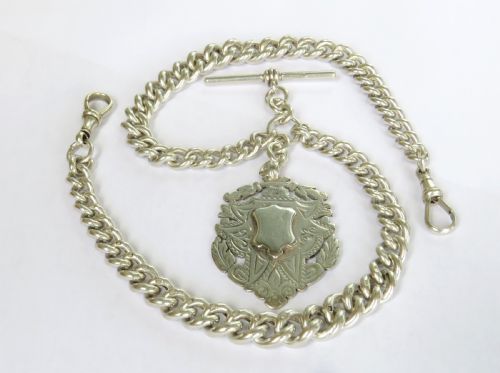
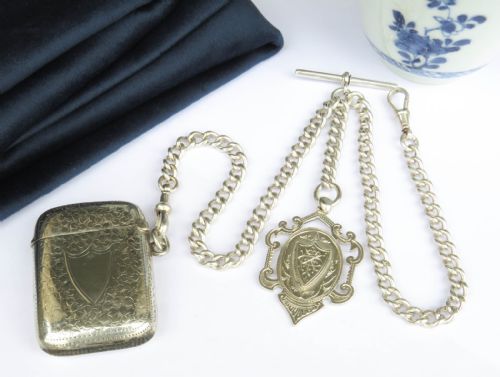
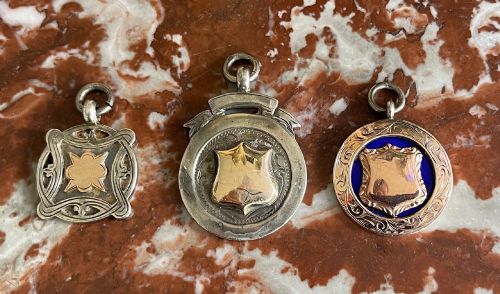
A victorian silver fob encompasses small decorative items, swivel seals, shields, and medallions attached to pocket watch chains rather than the timepieces themselves. The items seen here range from plain polished shields and engraved medals to novelty designs, compasses, and hardstone seals.
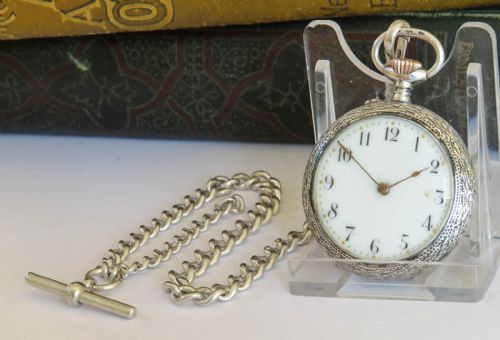
Most examples connect directly to the late nineteenth and early twentieth centuries, appearing alongside heavy albert chains, double alberts, and chatelaines. Collectors encounter these pieces as standalone pendants, integral parts of watch chains, or components suspended by a T-bar.
The form developed from practical utility into decorative insignia, sporting awards, and personal talismans. Many pieces preserve hallmarks from assay offices like Birmingham, pointing to a distinct manufacturing era.
How they were made
Makers utilised sterling silver alongside base metals, brass, and steel, frequently incorporating gold accents, enamel, and glass. Fobs often feature hardstone inserts such as bloodstone, tiger's eye, or agate mounted securely within the metal frame.
Techniques combined traditional silversmithing, stamping, and hand-engraving with bezel setting for stones and intricate chasing for figural subjects like animals, bugles, and pharaohs.
Victorian Silver Fob Retail Price Guide 2026
Typical asking prices for victorian silver fob among the pieces listed under this phrase on Sellingantiques today, from the lower quarter to the upper quarter. They describe what is for sale here now, not the wider market.
Listings feature sterling silver, gold accents, enamel, glass, and hardstone inserts across the Victorian, Edwardian, and George V periods.
What varies in quality
Quality rests upon the crispness of the hand-engraving, the depth of the metal gauge, and the security of stone settings. Superior examples display sharply defined crests, monograms, or motifs without softening from wear or over-polishing.
The presence of clear hallmarks adds significant merit, showing precise assay details. Fobs retaining original swivel mechanisms, matching chains, or untouched enamel work represent the upper tier of survivals.
Hamilton & Inches·Kendal & Dent·Hinds London·Stauffer·Waltham·Hamilton & Co Calcutta
The Victorian Silver Fob Glossary
- Albert chain
- A pocket watch chain named after Prince Albert, designed to stretch across a waistcoat or secure to a buttonhole. It often carries a T-bar at one end and a fob at the other.
- Vesta case
- A small pocket container designed to hold matches, frequently fashioned in sterling silver to match watch chains and fobs. These cases often feature engraved decoration or novelty shapes.
- T-bar
- A short transverse bar attached to a watch chain, used to anchor the chain securely through a waistcoat buttonhole. It remains a defining feature of nineteenth-century pocket watch assemblies.
- Swivel fob
- A pendant mounted on a rotating pivot that allows the wearer to display two different faces, such as a blank shield on one side and a hardstone on the other.
- Sovereign case
- A small circular container engineered to hold a gold sovereign coin safely in the pocket. These holders often appear alongside fobs on heavy albert chains.
Victorian Silver Fob: Frequently Asked Questions
What is a silver fob?
A silver fob is a small ornamental pendant, seal, or medallion suspended from a pocket watch chain. They were widely used during the Victorian period for decoration, sealing wax, or marking society memberships.
These pieces attach via jump rings or swivels, hanging alongside albert chains and pocket watches. Many doubled as functional items like compasses, whistles, or miniature containers.
How do you wear a fob today?
Modern collectors often wear fob pendants on contemporary chains as necklaces or attach them to waistcoats using original T-bars. They suit both traditional attire and modern styling.
Heavier examples work well suspended from substantial silver albert chains, while smaller charms look striking on shorter necklets or charm bracelets.
How do I date a silver fob?
Dating relies heavily on hallmarks stamped onto the silver, which indicate the assay office, standard, and specific year of manufacture. Stylistic clues also help narrow down the period.
Victorian and Edwardian pieces often display distinct engraving styles, maker's marks, and design motifs such as Egyptian Revival elements or sporting themes.
What are the common stones used?
Fob seals and medallions frequently incorporate hardstones like bloodstone, carnelian, agate, and tiger's eye. These materials provided a smooth surface for engraving intaglio crests.
The stones were chosen for their durability and rich colour, contrasting sharply with the polished sterling silver bezels that encircle them.