




Victorian Silver Condiment Spoon
A victorian silver condiment spoon brings precise, small-scale craftsmanship to the nineteenth-century dining table.
Victorian Silver Condiment Spoon
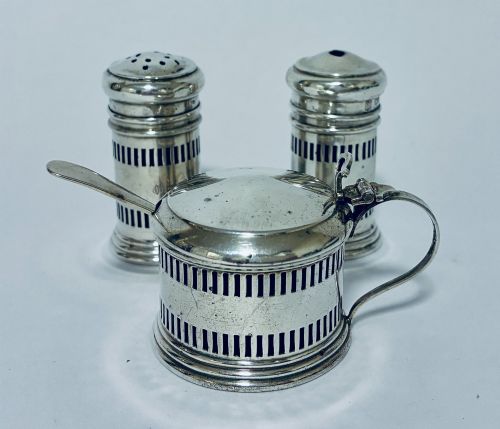
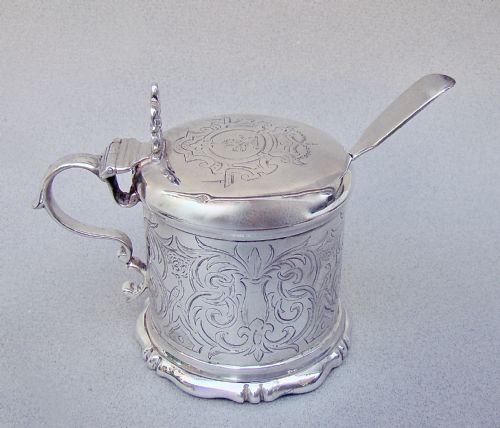
When searching for a victorian silver condiment spoon, buyers encounter small serving implements designed to accompany mustard pots, salt cellars, and preserve dishes. These items emerge from the nineteenth century alongside fitted cruet sets and boxed presentation collections.
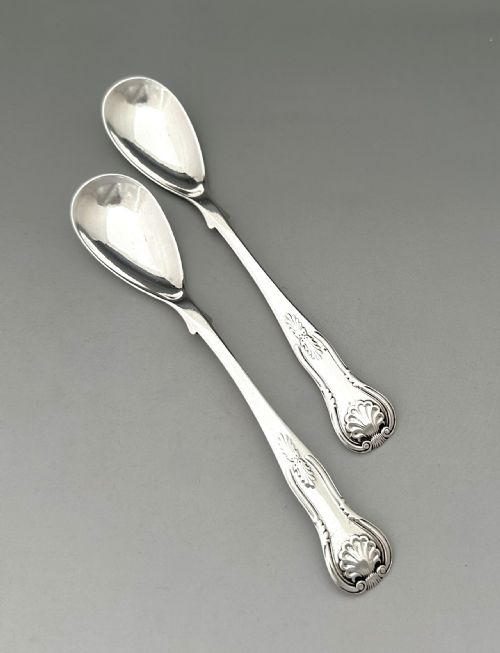
The pieces on this page appear in various regional British patterns, including fiddle, Onslow, and trailing vine designs. Many originate from London workshops, while others reflect Scottish provincial makers and continental production.
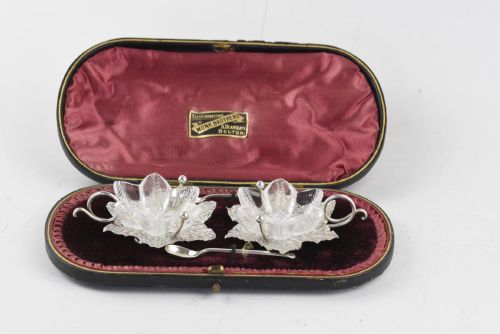
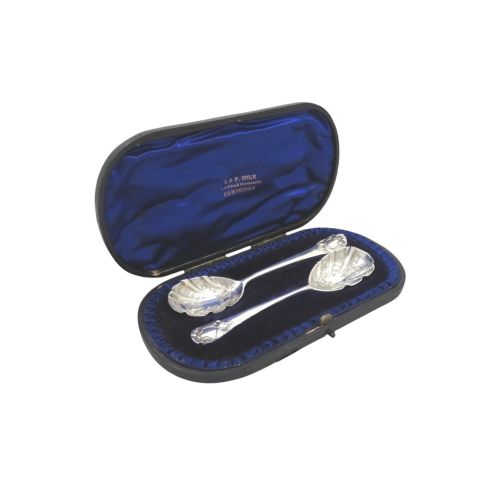
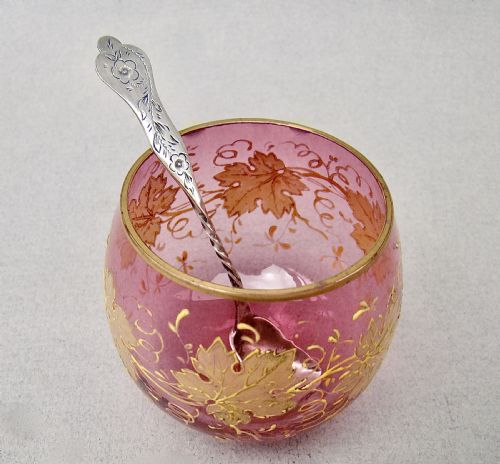
Collectors frequently meet these spoons paired with cobalt glass liners, cranberry glass vessels, or fitted leather and velvet cases. They range from standard salt shovels to specialised jam, mustard, and long-handled cayenne spoons.
Materials and construction
Silversmiths shaped these items primarily from sterling silver and solid silver, occasionally applying silver gilt for interior bowls. Production techniques combined traditional casting and hand-beating with detailed chasing and embossing.
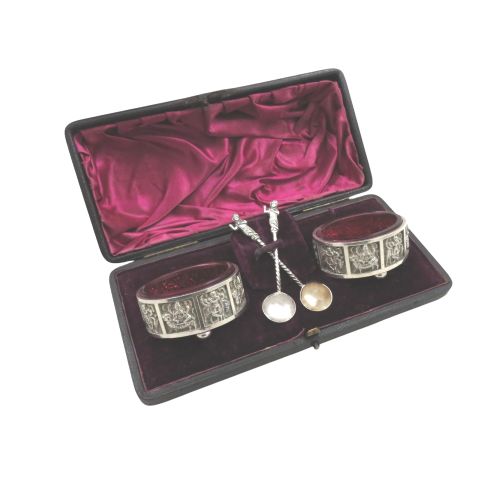
Many examples incorporate contrasting materials, pairing silver bowls and handles with cut glass, ruby red glass, and cobalt glass liners. Cased sets further integrate fitted wooden boxes lined with silk, velvet, and leather.
Some nineteenth-century tables featured swan-shaped salt cellars alongside bird and Hindu deity motifs, ensuring dinner guests shared space with an entire menagerie.
Judging quality and standard
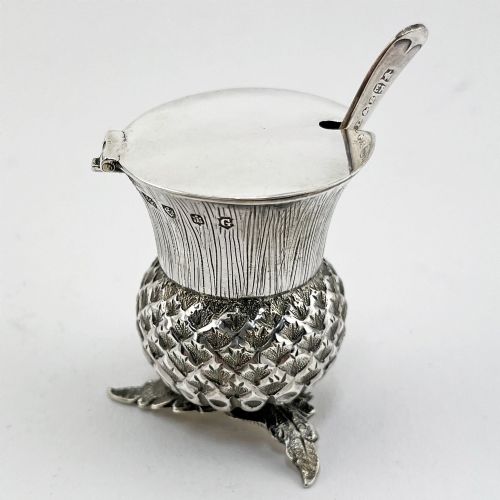
Distinction across these pieces rests on the crispness of the maker's mark and the depth of the chased or cast ornamentation. Pieces featuring detailed figural work, such as cherubs, birds, or regional thistle motifs, display greater individual artistry than plain utility items.
The integrity of the matching components determines the standing of a set. Cruet spoons paired with their original glass liners, fitted presentation boxes, and matching salt cellars hold closer alignment to their original workshop state.
Charles and George Fox·Hamilton and Inches·Charles Stuart Harris·Vale Brothers and Sermon·George Adams·John Wilmin Figg
The Victorian Silver Condiment Spoon Glossary
- Sterling silver
- A silver alloy containing 92.5 percent pure silver and 7.5 percent other metals, usually copper, ensuring structural durability for tableware.
- Silver gilt
- Silver objects that have been coated with a thin layer of gold on the surface, often used inside salt cellars to protect the metal from corrosive contents.
- Cruet set
- A matched assembly of small bottles, jars, or open pots holding condiments, typically presented together on a stand or within a fitted box.
- Fiddle pattern
- A traditional nineteenth-century flatware design characterised by a narrow stem that broadens sharply near the terminal into a shape resembling a violin.
- Onslow pattern
- An elaborate, scroll-terminated handle style popular on Georgian and Victorian silver spoons and ladles.
Victorian Silver Condiment Spoon: Frequently Asked Questions
What were condiment spoons used for?
These small implements served mustard, salt, and preserves from table cruets and open cellars onto individual plates. Their compact bowls matched the modest portions of sauces and spices served during nineteenth-century dining.
They allowed guests to transfer condiments cleanly without contaminating the main pots. Specialised forms like cayenne spoons handled potent powdered spices with narrow precision.
How do I identify a Victorian condiment spoon?
Examination of the metal often reveals standard British hallmarks indicating the assay office, city, and year of production. stylistic traits such as fiddle handles or trailing vine decoration point directly to the nineteenth century.
Many pieces arrive in fitted presentation boxes or alongside matching salt cellars with cobalt liners. Maker marks stamped into the silver provide a direct link to recorded workshops.
Are these spoons found with glass liners?
Many salt cellars and mustard pots retain their original cobalt blue, ruby red, or clear cut glass inserts. These liners protected the silver from corrosive salts and vinegars.
Finding a set with matching glass and original spoons indicates an intact survival. Replacement liners occur frequently due to the fragile nature of old glass.
How should I care for antique silver spoons?
Gentle cleaning with a soft cloth removes everyday tarnish without wearing down the engraved details or maker marks. Harsh abrasive pastes should be avoided to preserve the original surface finish.
Storage in dry, acid-free environments or lined wooden presentation boxes protects the silver from rapid re-tarnishing. Keeping pieces away from rubber and damp conditions prevents chemical discoloration.