




Victorian Silver Communion Cup
These victorian silver communion cup examples bring substantial ecclesiastical presence into the home, prized for their heavy metalwork and solemn forms.
Victorian Silver Communion Cup
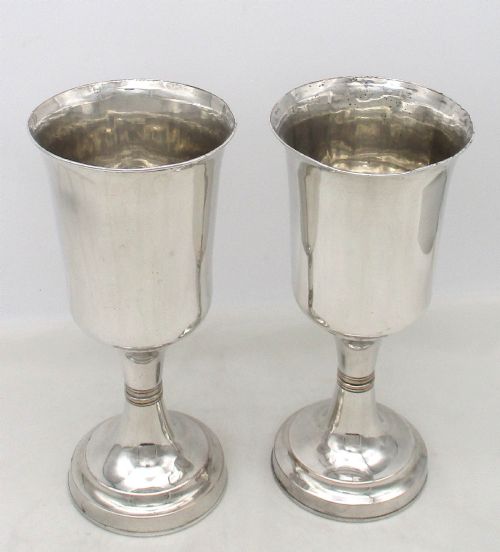
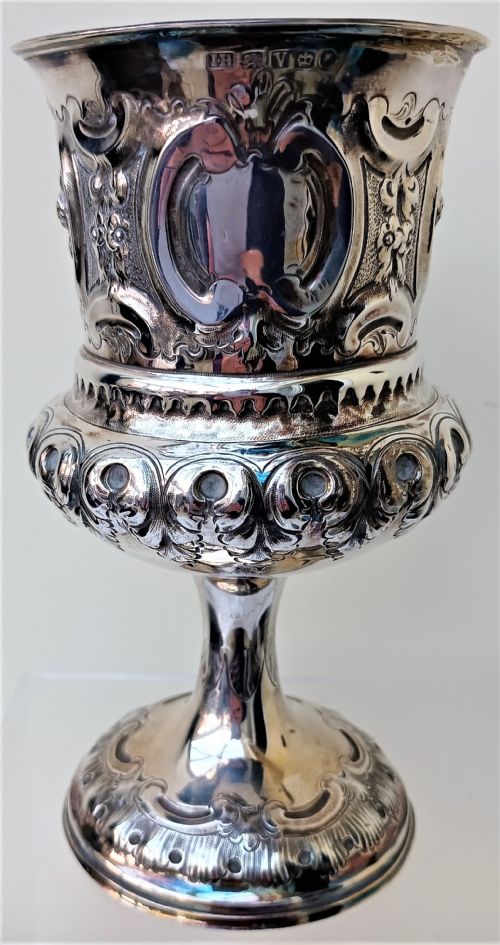
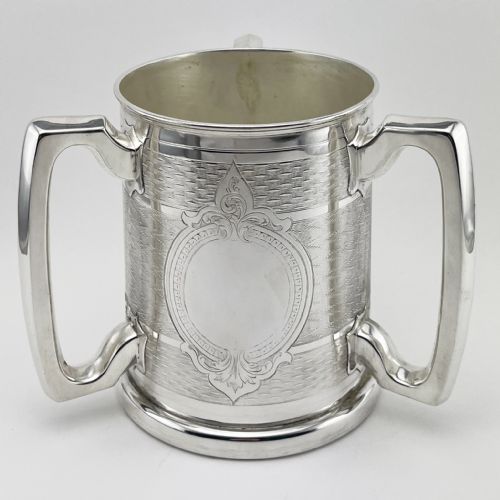
A victorian silver communion cup is a sacred vessel designed for ecclesiastical use, appearing on this page primarily in the form of chalices, goblets, and loving cups. These objects trace their origins to the nineteenth century, encompassing distinct styles such as Victorian and Gothic revivals.
Buyers will most frequently encounter silver plated, Old Sheffield plate, and sterling silver iterations, sometimes finished with gold gilding or parcel gilt. The forms range from tall church chalices dated to the eighteen-forties down to smaller goblets bearing late nineteenth-century hallmarks.
How they were made
Makers constructed these vessels using sterling silver, copper foundations, and various plating techniques including Old Sheffield plate and electroplated nickel silver. Working with these resilient metals allowed artisans to form deep bowls, knopped stems, and wide bases.
Surface enrichment often included gold gilding applied to the interior bowls or decorative parcel gilt highlights on the exterior silver. Workshops utilised traditional smithing and plating methods appropriate to the nineteenth century to achieve both durability and solemn visual weight.
Materials across these listings include sterling silver, silver plate, copper, and gold gilding.
What varies in quality
The distinction between standard production and superior craftsmanship rests in the weight of the metal and the clarity of the chasing. Pieces featuring substantial sterling silver or thick Old Sheffield plate demonstrate greater material integrity than lighter plated wares.
The refinement of the decorative details, from the execution of Gothic architectural motifs to the precision of gold gilding, separates ordinary vessels from those produced by notable silversmiths.
George Unite·John hunt and Robert Roskell·George Maudsley Jackson
The Victorian Silver Communion Cup Glossary
- Old Sheffield plate
- A method of fusing a thin sheet of silver to a thicker copper base before shaping the metal into a vessel. This technique produces distinct edge lines where the underlying copper occasionally shows through.
- Parcel gilt
- A decorative treatment where selected portions of an object, usually the interior bowl, receive a coating of gold while the rest remains silver. This method highlights specific design elements.
- Chalice
- A large cup or goblet specifically used to hold sacramental wine during religious ceremonies. These vessels typically feature a prominent stem and a wide, stable base.
- Electroplated nickel silver
- A base metal alloy of copper, nickel, and zinc coated with a thin layer of silver using an electrical current. This process became common in the nineteenth century for producing durable ecclesiastical wares.
Victorian Silver Communion Cup: Frequently Asked Questions
What is a victorian silver communion cup used for?
These vessels served primarily as chalices for holding sacramental wine during church communion services throughout the nineteenth century.
Today, buyers acquire them for display, collection, or as significant historical examples of ecclesiastical metalwork.
How do I care for silver plated communion cups?
Regular, gentle dusting and minimal polishing with a soft cloth preserve the plated surfaces without wearing away the metal layer.
Avoiding harsh chemical dips protects any existing gold gilding or parcel gilt details on the interior bowls.
Are these cups made of solid silver?
The inventory includes both solid sterling silver pieces and items constructed from copper with silver plating or Old Sheffield plate.
Examining the metal weight and looking for specific hallmarks helps determine whether a particular vessel is solid silver or plated.
What styles are common in nineteenth century chalices?
Victorian design heavily influenced these pieces, frequently incorporating Gothic revival architectural elements and Neoclassical revival shapes.
These stylistic choices appear in the shaping of the stems, knops, and footed bases of the chalices.