


Hallmarked Silver Goblet
A hallmarked silver goblet brings weight and brilliance to a table, offering a tangible link to centuries of domestic and ceremonial drinking customs.
Hallmarked Silver Goblet
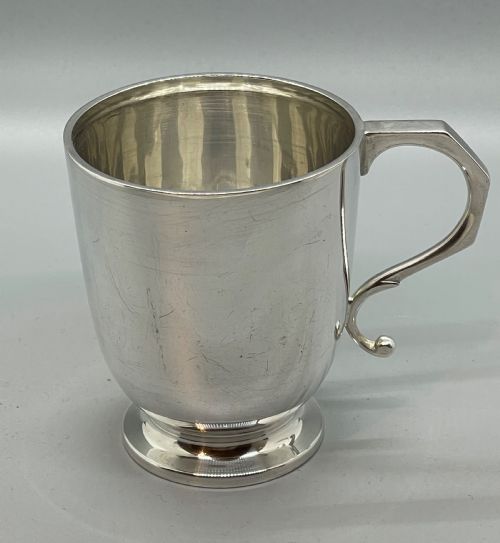
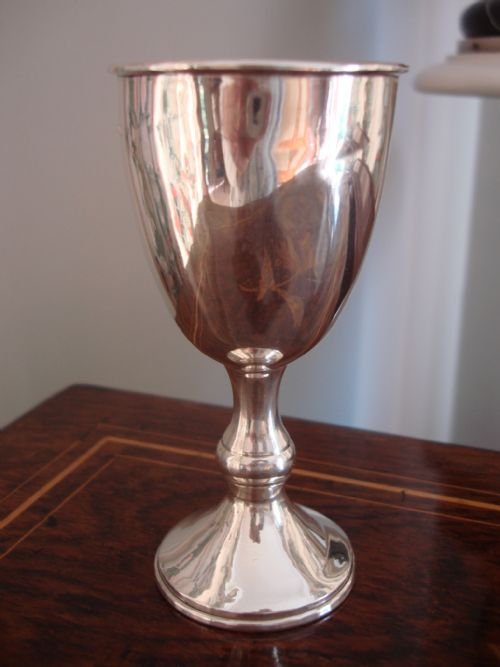
A hallmarked silver goblet is a drinking vessel raised from precious metal, often bearing official assay marks that record its metallic purity, town of origin, and year of manufacture. The pieces found here span from the Georgian period through the Victorian and Edwardian eras into Mid-Century Modern designs, encompassing formal presentation cups, hunting trophies, christening mugs, and Kiddush cups alongside classic wine goblets.
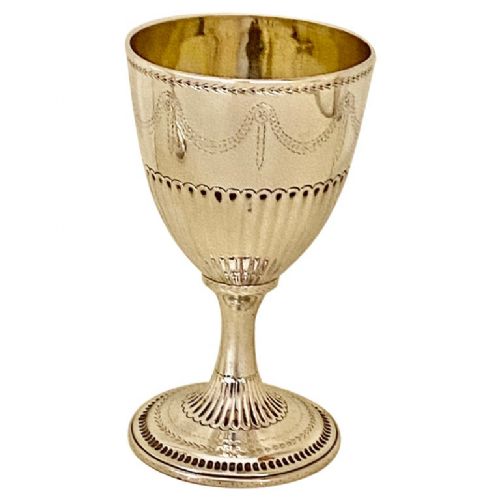
Victorian examples frequently showcase parcel gilt interiors and chased decoration, whereas later twentieth-century items lean toward cleaner geometric lines associated with Art Deco and Mid-20th Century styles. Alongside solid sterling silver forms, buyers encounter hybrid pieces combining silver mounts with stoneware bodies.
Most items on this page adhere to traditional goblet and chalice formats, though related forms such as beakers and tankards share the same fundamental function and metalwork heritage. Collectors select these items for display, historical interest, or continued use at celebratory occasions.
How they were made
Makers shaped these vessels primarily from sterling silver, employing techniques of raising, spinning, and casting to form the bowl, stem, and foot. Many nineteenth and twentieth-century examples incorporate parcel gilt, applying a thin layer of gold to the interior bowl to protect the silver from acidic wines.
Surface ornamentation relied on hand chasing, engraving, and repoussé work, executed by skilled silversmiths working in major British assay centres like London, Birmingham, and Sheffield. Selected pieces introduce contrasting textures through ebonised wood components or incorporate stoneware bodies with applied silver mounts.
Hunting trophies often record athletic triumphs from over a century ago, turning past equestrian victories into modern desk ornaments.
What varies in quality
Quality rests in the crispness of the maker's mark and the legibility of the full hallmarked sequence stamped into the metal. Depth of hand-engraving, the structural integrity of the stem junction, and the balance of the weighted or unweighted foot further distinguish superior examples from standard production.
The thickness of the silver sheet utilised for the bowl dictates the tactile weight and durability of the piece over generations of handling. Preservation of original parcel gilt interiors and crisp chased detail separates well-kept presentation pieces from heavily polished or worn vessels.
George Unite·James Deakin And Sons·Robert And David Hennell·Mappin And Webb·Napthali Hart
The Hallmarked Silver Goblet Glossary
- Hallmark
- An official stamp applied by an assay office to guarantee the purity of precious metal. These marks typically include symbols for the maker, standard of fineness, assay office, and date letter.
- Parcel Gilt
- A decorative technique where specific areas of an item, usually the interior bowl of a goblet, are gilded with gold while the exterior remains in natural silver.
- Chasing
- A method of metalworking where a silversmith depresses the front surface of the metal with punches to create a raised design without removing material.
- Assay Office
- An official body charged with testing the purity of precious metals and stamping items with the appropriate hallmarks. Principal British offices include London, Birmingham, and Sheffield.
- Repoussé
- A technique where metal is hammered from the reverse side to form a raised design in relief on the front. It is frequently paired with chasing to refine details.
Hallmarked Silver Goblet: Frequently Asked Questions
How do I read silver hallmarks?
Hallmarks consist of a series of small stamped symbols that reveal the maker, the city where the piece was tested, and the exact year of manufacture. Reference guides match the date letter and assay office symbol to establish provenance.
Sterling silver is typically identified by the lion passant mark in British pieces, denoting the standard fineness of the metal.
How should I clean silver?
Cleaning requires a soft cloth and a specialised silver polish designed to remove tarnish without abrading the surface detail. Harsh chemical dips should be avoided, particularly on pieces with parcel gilt or chased decoration.
Regular gentle dusting helps preserve the natural patina accumulated over decades of existence.
What is a parcel gilt goblet?
A parcel gilt goblet is a silver drinking vessel where only specific sections, most commonly the inside of the bowl, are coated in thin gold. This treatment combined the visual appeal of silver exterior work with the practical benefit of a gold drinking surface.
Victorian silversmiths employed this technique frequently on presentation cups and wine vessels.