
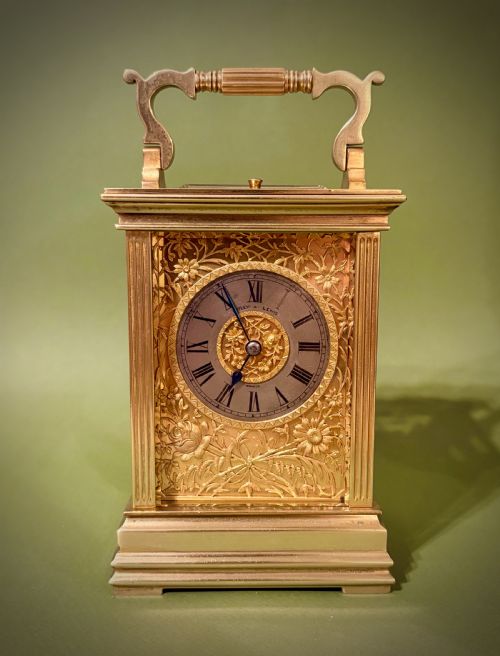


Victorian Silver Carriage Clock
These Victorian silver carriage clocks are portable timepieces housed in glazed metal cases, offering a blend of mechanical precision and decorative portability that collectors prize for travel and display.
Victorian Silver Carriage Clock
A victorian silver carriage clock is a portable mechanical timepiece typically designed for travel or desk use during the nineteenth century. These clocks combine functional escapements with decorative metalwork, often featuring bevelled glass panels to showcase the internal gear train.
The pieces on this page span the Victorian period alongside Edwardian and early twentieth century examples. Collectors will find miniature boudoir formats and striking models, reflecting the diverse practical demands of nineteenth and early twentieth century households.
Materials and construction
Makers constructed these timepieces using silver, brass, and gilt brass frameworks fitted with glass panels to protect the delicate internal movements. Some examples incorporate tortoiseshell or enamel details to enhance the visual appeal of the exterior case.
Internal mechanisms rely on steel components and brass gear trains, occasionally employing fusee movements or repeating functions. Master craftsmen chased the silver casing by hand to create intricate surface ornamentation.
Assessing quality and craftsmanship
The distinction between standard examples and the finest pieces rests upon the complexity of the movement and the crispness of the silver chasing. Repeating mechanisms and signed dials by notable makers elevate a piece above simpler timepieces.
Condition of the glass panels, original silver hallmarks, and the presence of specialised complications like date work or alarm functions further determine the standing of an individual clock within the wider market.
J Batson & Son·Thomas Cole and James Cole·Hunt And Roskell·Clerke Royal Exchange London·A Delépine·Delépine-Barrois·William Comyns·Kendal & Dent London
The Victorian Silver Carriage Clock Glossary
- Carriage clock
- A portable spring-driven timepiece originally designed for travellers in the nineteenth century. These clocks usually feature a swinging handle on top and glass sides.
- Fusee
- A cone-shaped pulley used in mechanical clocks to equalize the diminishing power of the mainspring as it unwinds. This mechanism ensures more consistent timekeeping.
- Repeating clock
- A timepiece equipped with a mechanism that chimes the hours and quarters upon demand when a lever or cord is pressed. This feature allowed users to check the time in the dark.
- Escapement
- The internal mechanism that controls the release of power from the gear train to the balance wheel or pendulum. It translates the unwinding spring into regulated ticking movements.
- Boudoir clock
- A smaller scale timepiece intended for private rooms rather than public salons. These pieces frequently emphasise decorative silver or tortoiseshell framing.
Victorian Silver Carriage Clock: Frequently Asked Questions
What is the swinging handle for?
The hinged handle on top of the case allowed travellers to carry the timepiece safely by hand during transit. When placed on a desk or mantelpiece, the handle typically folds flat against the upper casing.
While functional for historical travel, modern owners generally use the handle solely for repositioning the clock locally. Lifting the clock by the handle verifies the secure attachment of the top plate.
Why do some clocks strike the hours?
Striking mechanisms provide an audible hourly signal using internal gongs or bells mounted within the case. This acoustic feature was essential before widespread personal timekeeping devices.
Some advanced models include alarm functions or repeating capabilities for night-time use. The complexity of these gear trains often indicates a higher grade of production.
How are silver cases cleaned safely?
Dust the silver casing gently with a soft, dry microfibre cloth to remove surface particles without scratching the metal. Avoid liquid polishes that might seep into the movement or stain the glass panels.
Professional horological conservators should handle deep tarnish removal to protect delicate chasing and hallmarks. Keeping the clock away from direct sunlight preserves enamel and tortoiseshell elements.