


Victorian Silhouette Art
Victorian silhouette art captures profile likenesses in paper, glass and ink, offering intimate windows into nineteenth-century domestic life.
Victorian Silhouette Art
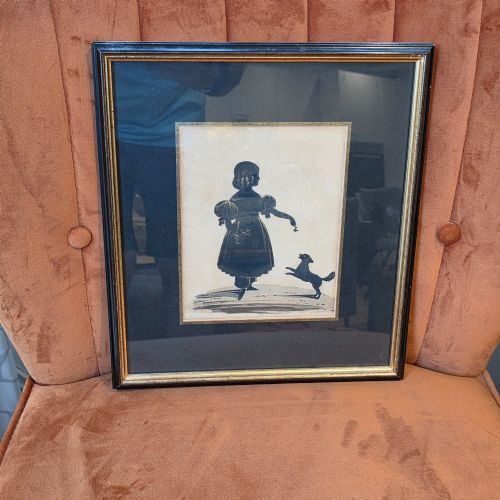
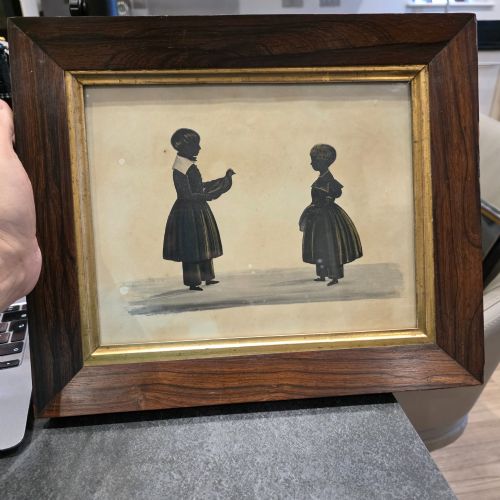
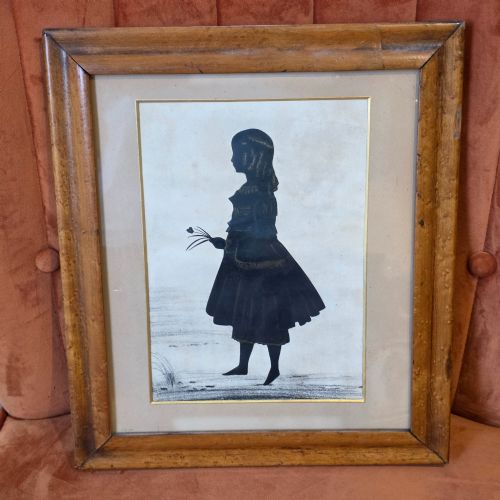
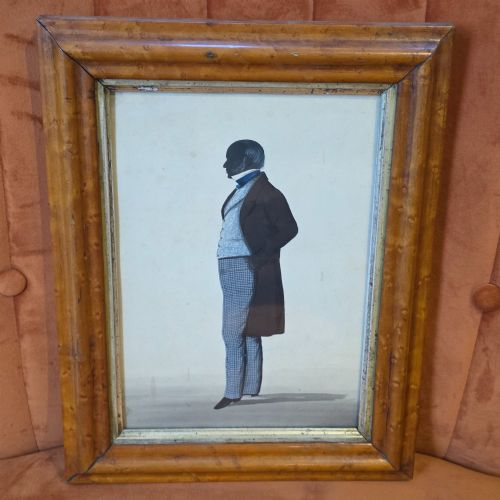
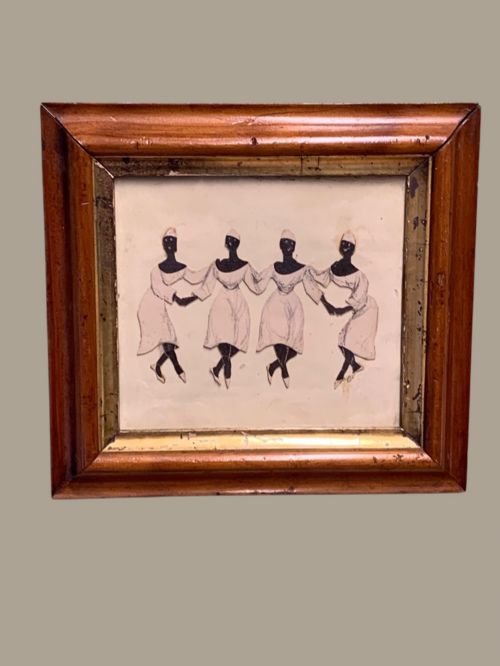
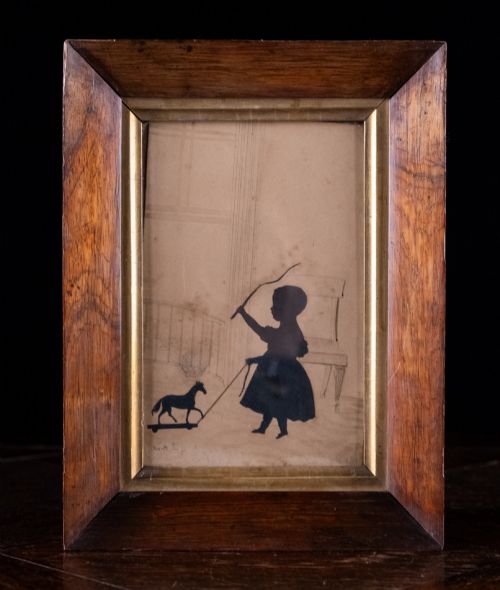
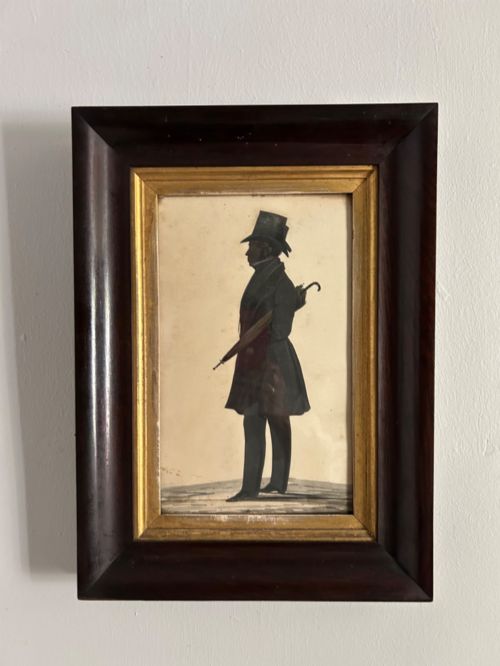
Victorian silhouette art encompasses framed portraits, conversation pieces, and reverse glass paintings produced during the nineteenth century. These works depict gentlemen, ladies, children, and animals through sharp paper cuttings or painted forms.
The pieces on this page lean heavily toward nineteenth-century examples, spanning the Regency era through to the late Victorian period. Full-length portraits of individuals and family groups appear frequently alongside animal subjects and equestrian scenes.
Makers and studios such as the Hubard Gallery and named artists shape the character of these listings. Collectors encounter folk art interpretations alongside highly detailed cut-paper and watercolour works.
Materials and technique
Makers produced Victorian silhouette art using black paper, ink, and watercolour on light backgrounds, often enclosing the finished work behind glass within timber frames. Rosewood, brass, and gilt elements frequently finish the presentation of these framed pieces.
Watch for the small dog patiently waiting at the foot of a cut-paper child.
What varies in quality
Quality in silhouette art rests upon the precision of the hand-cutting and the expressive accuracy of the profile. Superior pieces capture posture, costume details, and likeness with immense economy of line.
The sophistication of the backing, framing materials, and the inclusion of contemporary watercolour or gold leaf embellishments elevate a piece. Studio provenance, such as work originating from established galleries, also separates standard vernacular examples from master works.
William James Hubard·Augustin Edouart·Frederick Frith·Alfred Darbyshire
The Victorian Silhouette Art Glossary
- Silhouette
- A portrait profile filled in with a solid dark colour, typically black, against a pale background. The form relies entirely on the outline to convey identity.
- Reverse glass painting
- An artwork executed on the rear side of a pane of glass so that the image is viewed through the transparent front. This technique protects the paint surface from dust and damage.
- Conversation piece
- An informal group portrait showing people interacting in a domestic or outdoor setting. These works capture social narratives rather than formal single poses.
- Cut-paper
- An artistic method where shapes are excised from paper using small scissors or blades. Precision in the snips defines the crispness of the final silhouette.
Victorian Silhouette Art: Frequently Asked Questions
How are silhouettes dated?
Dating relies on costume details, hairstyles, and framing styles typical of the nineteenth century. Contemporary inscriptions on the reverse often provide specific years.
Paper types and mounting techniques also offer clues to the precise decade of production.
Where should I hang silhouette art?
These framed pieces suit small wall spaces, hallways, or gallery walls grouped alongside other nineteenth-century works. Their dark profiles stand out best against lighter wall colours.
Direct sunlight should be avoided to protect nineteenth-century paper and watercolour pigments from fading.
What is a hollow cut silhouette?
A hollow cut silhouette involves cutting the profile out of a sheet of white paper, which is then laid over a dark background fabric or paper. The resulting portrait appears in relief within the surrounding mount.
This method allowed artists to produce consistent likenesses rapidly.
Are all silhouettes signed?
Most nineteenth-century silhouettes remain unsigned, as many were produced anonymously by travelling artists or family members. Signed pieces often carry attribution to specific galleries or named cutters.
Stamps on the reverse of the frame occasionally indicate the studio of origin.