




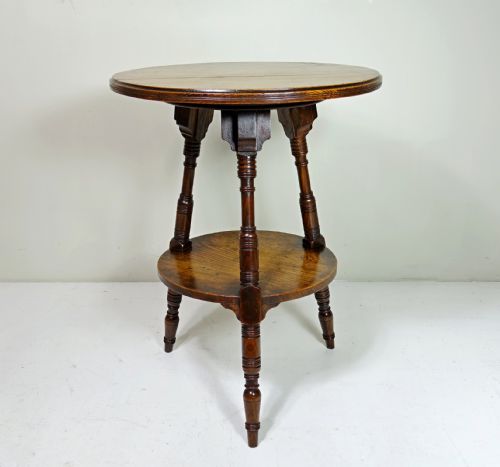


Victorian Side Table Undertier
These Victorian side table undertiers combine useful lower shelves with compact nineteenth-century timber frames, offering practical display space for living rooms.
Victorian Side Table Undertier
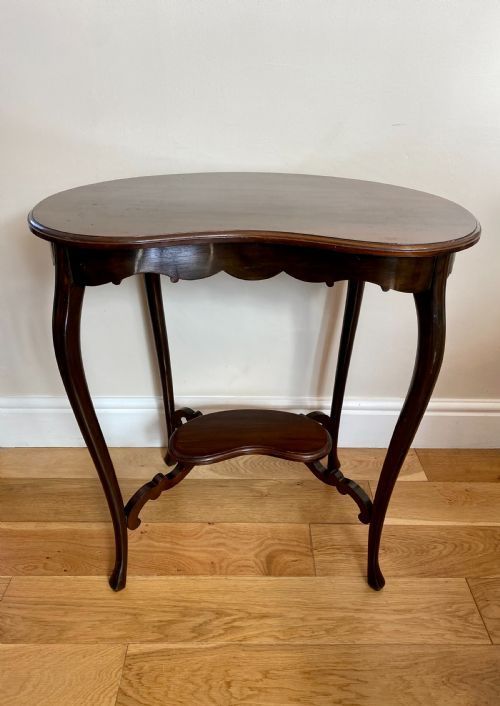
A victorian side table undertier provides a sturdy top surface alongside an additional lower shelf, known as an undertier, designed for holding books or decorative objects. The examples encountered here span the nineteenth century and into the Edwardian period, incorporating styles from plain country pine to intricate inlaid rosewood.
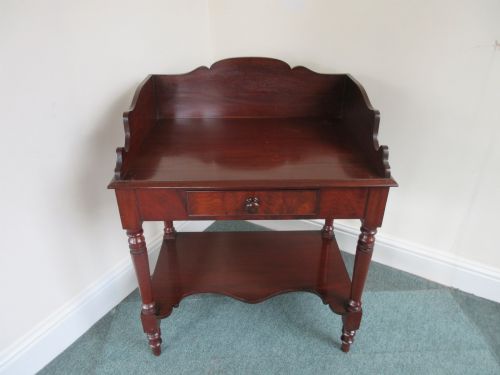
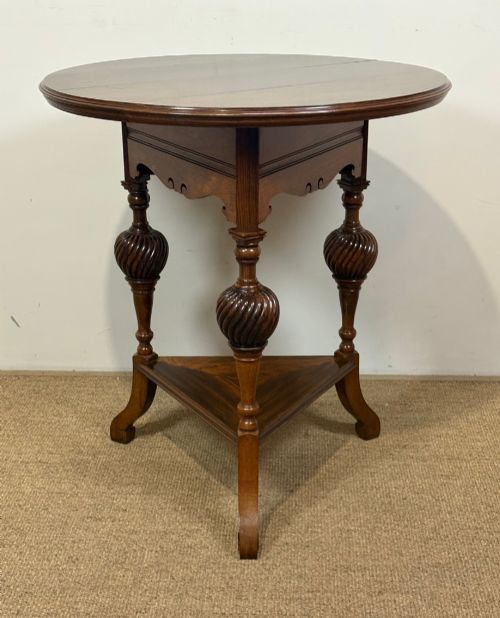
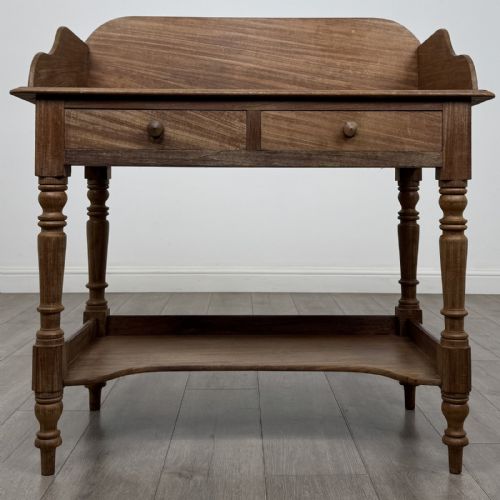
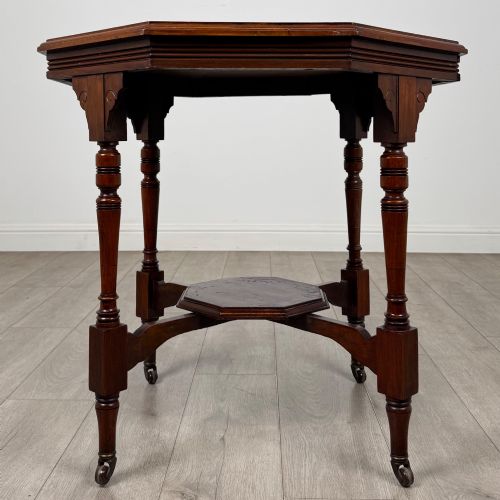
Makers utilised various formats including octagonal lamp tables, washstands with raised galleries, library tables, and cricket tables. Woods such as mahogany, oak, rosewood, and pollard oak dominate the selection, often complemented by brass castors, boxwood inlay, or marble tops.
Materials and construction
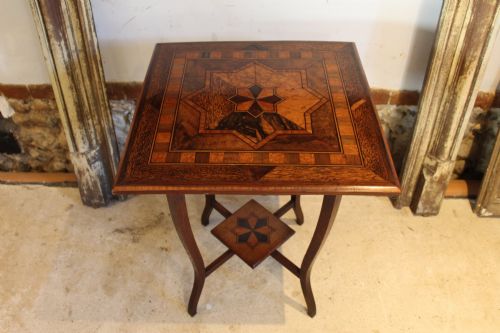
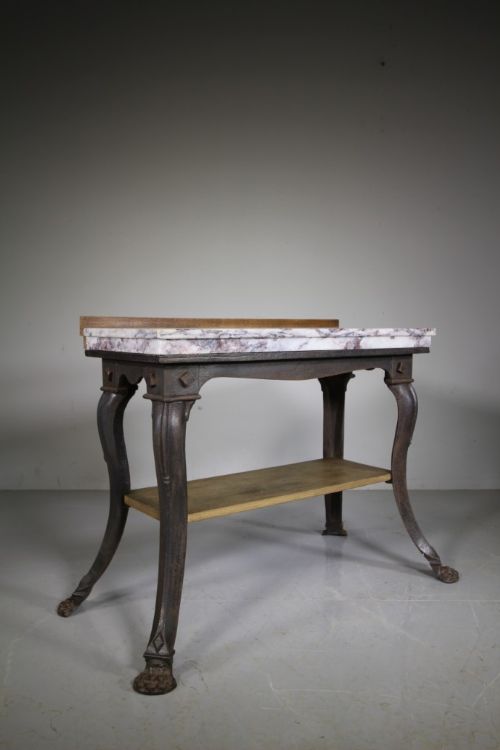
Cabinetmakers constructed these tables primarily using dense hardwoods like mahogany, rosewood, and oak, frequently employing flame mahogany veneers or contrasting boxwood inlay to create visual depth on the top surface and the undertier. Iron and marble also appear in specific utilitarian or exhibition pieces, providing heavier support and contrasting textures.
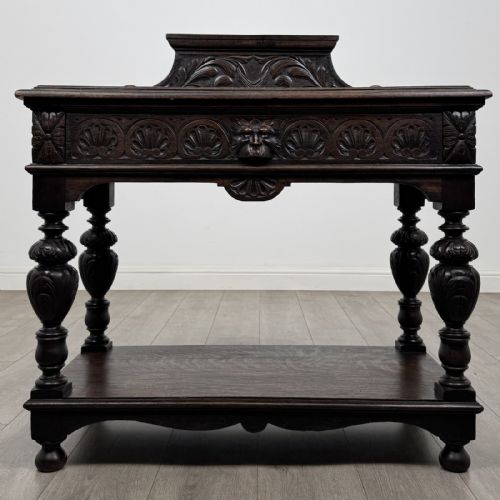
Joinery methods reflect traditional workshop practices of the period, utilising stable framing for the legs and lower shelves to support weights placed upon the undertier. Carved details, such as the Green Man masks on oak variants or applied mouldings, demonstrate hand-tool proficiency across both vernacular farmhouse items and refined cabinet work.
Victorian Side Table Undertier Retail Price Guide 2026
Typical asking prices for victorian side table undertier among the pieces listed under this phrase on Sellingantiques today, from the lower quarter to the upper quarter. They describe what is for sale here now, not the wider market.
Carved green man masks peer out from Victorian oak tables, watching silently over the books stacked on the undertier below.
Evaluating craftsmanship
The integration of the undertier shelf within the leg structure dictates the overall rigidity and balance of the table. Superior examples maintain firm joints and harmonious proportions between the upper surface and the lower shelf, whereas lesser items may exhibit timber shrinkage or poorly fitted secondary tiers.
Liberty & Co.
The Victorian Side Table Undertier Glossary
- Undertier
- A lower shelf placed beneath the main surface of a table, providing additional storage or display space. This shelf is typically supported directly by the lower stretchers or legs.
- Marquetry
- Decorative veneer work forming pictorial or geometric patterns using various coloured woods. Artisans carefully cut and fit pieces into a background veneer to create detailed surfaces.
- Gallery
- A raised wooden or brass rail bordering the edge of a table top or washstand. It prevents small items from rolling off the surface.
- Cricket table
- A small, lightweight circular table supported by three splayed legs. This traditional form offers stability on uneven floors.
- Specimen wood
- Furniture constructed using multiple distinct varieties of timber arranged for decorative effect. Makers often highlighted the natural colour contrasts between different global and domestic woods.
Victorian Side Table Undertier: Frequently Asked Questions
What is a victorian side table undertier?
A victorian side table undertier is a small nineteenth-century table featuring an auxiliary lower shelf beneath the primary top. This secondary tier provides extra space for books, small lamps, or decorative items.
These pieces were produced in various woods like mahogany, oak, and rosewood, serving diverse domestic functions from parlor lamp tables to larger library furnishings.
How were lower shelves used historically?
The lower shelf, or undertier, gave Victorians a designated place to stack current reading material, periodicals, or small display objects without cluttering the main tabletop. It made efficient use of compact spaces in drawing rooms and sitting rooms.
In some instances, particularly on washstands or larger library tables, the lower tier added structural stability to the legs while holding utility items.
How do I care for antique timber tables?
Keep antique timber tables away from direct sunlight and strong heat sources to prevent the wood from drying out and the veneers from lifting. Maintaining stable room humidity preserves the finish and the underlying joints.
Dust regularly with a soft, dry cloth and apply a quality beeswax polish occasionally to nourish the wood without building up heavy residues.
How can I tell the period of these tables?
Dating relies on examining the timber species, construction methods, and decorative styles characteristic of different decades. Mid-nineteenth-century pieces often display robust timbers like pollard oak or solid mahogany, while later nineteenth and Edwardian examples might feature lighter inlaid satinwood or Anglo-Japanese influences.
Hardware such as castors, screw types, and secondary woods like pine or oak used in framing also help narrow down the date of manufacture.