




Mahogany Washstand Drawer
Mahogany washstand drawer components and related side tables span the Georgian, Victorian, and Edwardian periods.
Mahogany Washstand Drawer
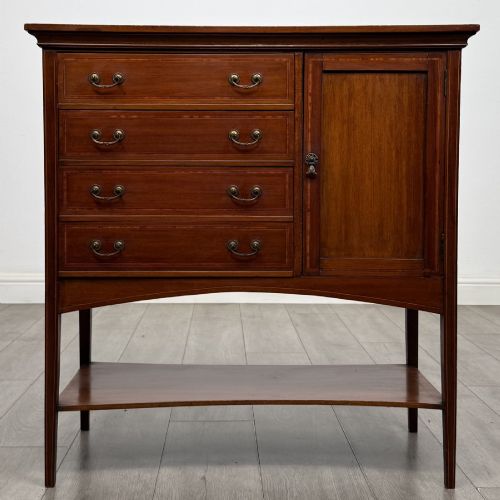
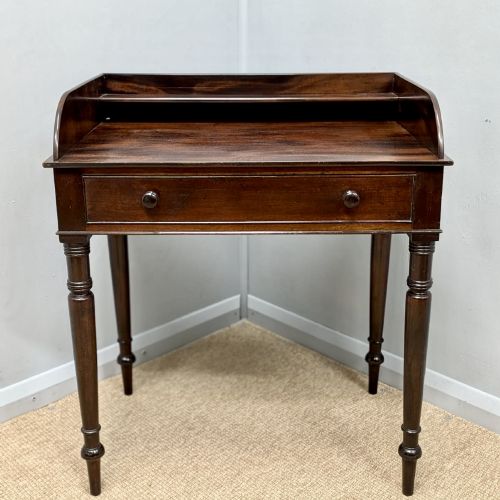
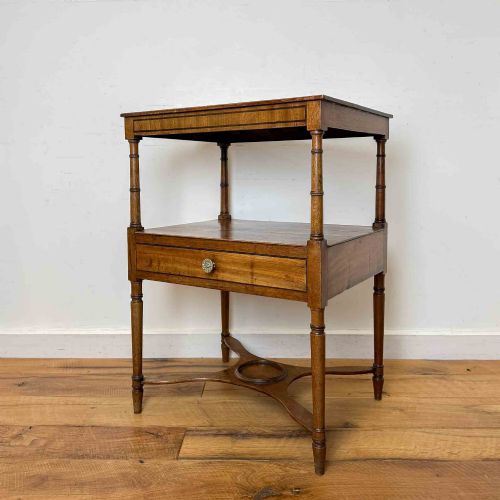
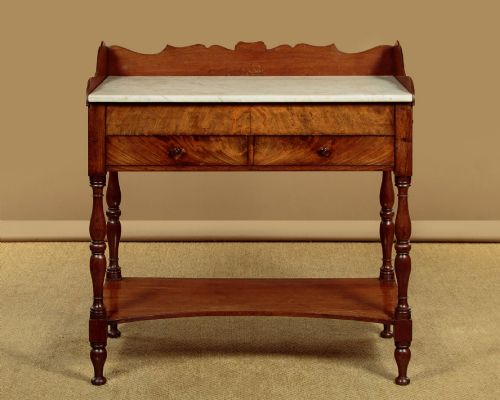
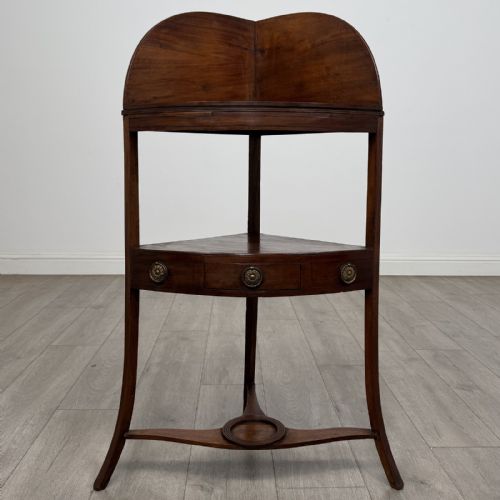
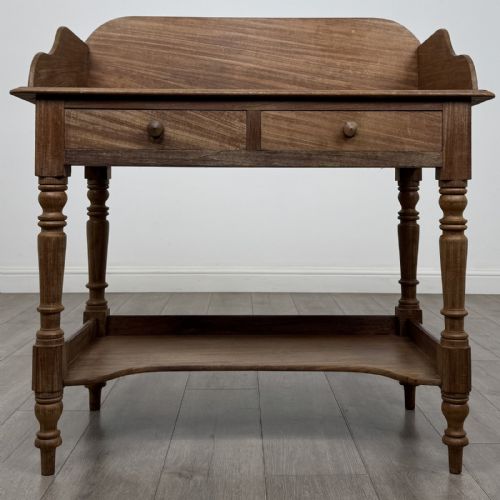
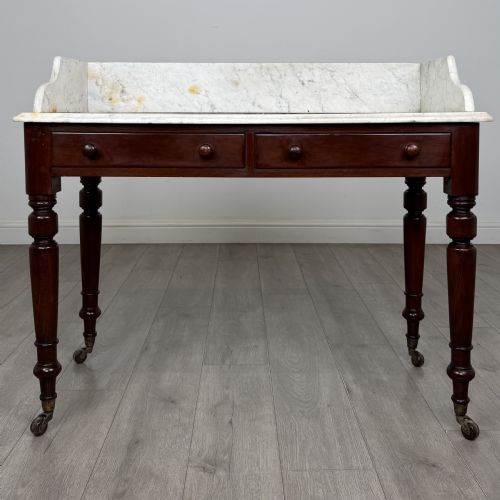
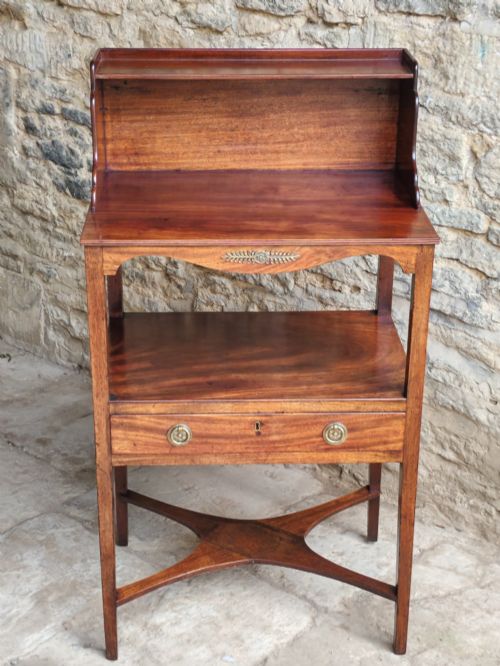
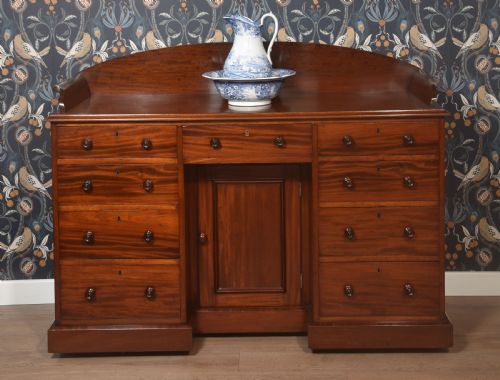
A mahogany washstand drawer search brings up a focused selection of functional timber furniture pieces spanning the Georgian, 18th Century, 19th Century, Victorian, William IV, Regency, and Edwardian periods. Buyers investigating this category frequently encounter bedside tables, side tables, dressing tables, basin stands, and wig stands rather than isolated joinery.
The objects originate from domestic domestic settings where personal ablutions and dressing required dedicated timber furniture. Pieces range from simple Georgian and 19th Century two-drawer side tables to elaborate marble-topped washstands and campaign chests.
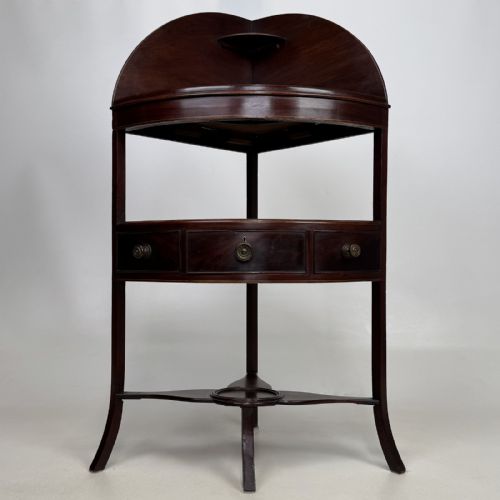
Variants include serpentine-fronted tables with gallery surrounds, corner washstands, and occasional tables featuring flame mahogany veneer or satinwood stringing. Each form retains the structural integrity and drawer configurations designed for daily use in period bedrooms and dressing rooms.
How they were made
Construction relies heavily on solid mahogany and flame mahogany veneer, often enhanced with contrasting boxwood and satinwood inlays. Workshops selected timber for grain movement and deep natural colour before shaping the primary carcase.
Surfaces frequently incorporate functional stones such as white or rouge marble alongside protective glass tops and brass hardware. Gallery surrounds and three-quarter rails were integrated into the top structures to retain wash vessels and grooming accessories.
Mahogany Washstand Drawer Retail Price Guide 2026
Typical asking prices for mahogany washstand drawer among the pieces listed under this phrase on Sellingantiques today, from the lower quarter to the upper quarter. They describe what is for sale here now, not the wider market.
Listings feature mahogany, marble, brass, and satinwood across Georgian, Victorian, and Edwardian periods.
What varies in quality
Gradations in quality stem from the selection of timber figures, such as highly figured flame mahogany veneer, matched against secondary woods. Cabinetmakers who employed precise dovetailing and subtle satinwood or boxwood stringing achieved a higher standard of finish.
The integration of materials like rouge marble tops, brass fittings, and carved gallery surrounds separates standard utility pieces from exceptional examples. Superior items demonstrate careful proportioning across serpentine fronts, wig stands, and galleried washstands.
J. Shoolbred
The Mahogany Washstand Drawer Glossary
- Flame mahogany veneer
- A thin slice of timber cut from the fork of a mahogany tree to produce a distinctive flickering flame pattern. This decorative veneer was applied to primary drawer fronts and tabletops.
- Washstand
- A piece of furniture designed to hold a basin, jug, and washing apparatus. Many examples include marble tops and galleried backs to protect surrounding walls from splashes.
- Gallery
- A raised wooden or brass rail positioned around the top edge of a table or washstand. It prevents items from sliding off the surface during daily use.
- Wig stand
- A specialised small-scale table or pedestal featuring a circular basin ring designed to hold a gentleman's wig powdering bowl. These compact pieces date predominantly from the Georgian era.
- Serpentine front
- A furniture front curved in a concave-convex-concave wave shape. This complex shaping requires advanced woodworking skill and indicates a higher grade of manufacture.
Mahogany Washstand Drawer: Frequently Asked Questions
What is a mahogany washstand drawer?
A mahogany washstand drawer is a storage component or integrated compartment housed within period washstands, bedside tables, and dressing chests. These drawers were utilised to store grooming tools, linens, and washing accessories.
Items appearing under this category encompass diverse forms from Georgian bedside tables to Edwardian marble-topped washstands and side tables.
How do I date a mahogany washstand?
Dating relies on observing structural characteristics, timber selection, and decorative styles across the Georgian, Victorian, and Edwardian eras. Earlier pieces often display simpler lines, while Victorian examples introduce marble tops and galleried backs.
Examining secondary woods, handle fixings, and dovetail construction helps narrow the period of manufacture between the eighteenth and early twentieth centuries.
Where were these pieces used?
These pieces served primarily in bedrooms, dressing rooms, and private chambers within period domestic properties. Washstands and wig stands provided dedicated spaces for morning hygiene and personal grooming.
Side tables and bedside cabinets acted as auxiliary surfaces for lighting, books, and chamber accessories close to the bed.
How do I care for mahogany and marble?
Maintain mahogany surfaces by applying appropriate wax polish sparingly and keeping timber away from direct heat sources and strong sunlight. Regular dusting preserves the natural grain and patina.
Clean marble tops with mild, non-acidic soap and warm water to prevent staining, avoiding harsh chemical cleaners that can etch the polished stone surface.