
Victorian Side Table Drawers
These pieces combine everyday utility with period character, offering functional storage beneath sturdy timber surfaces.
Victorian Side Table Drawers
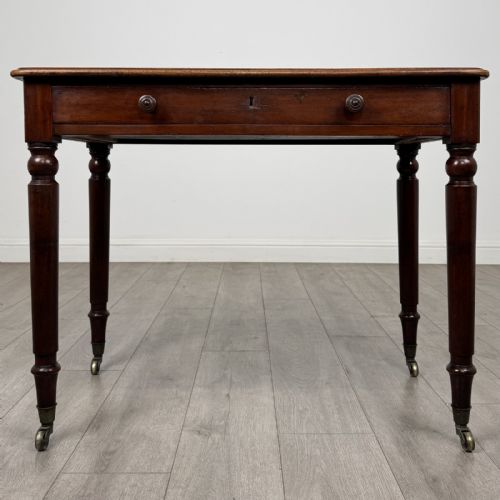
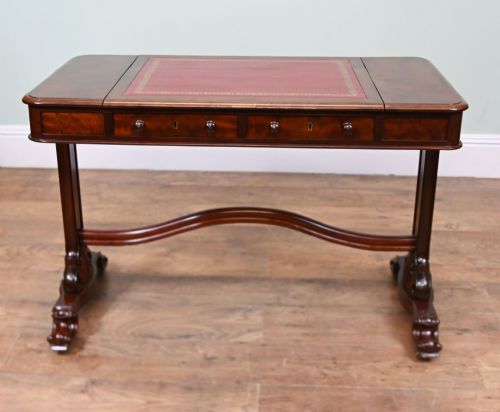
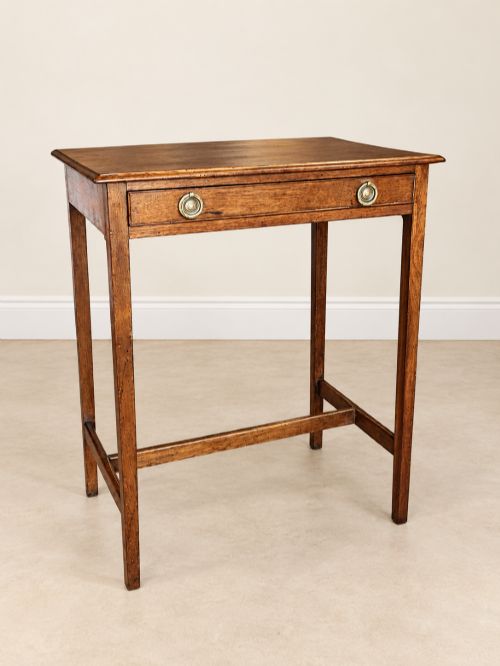
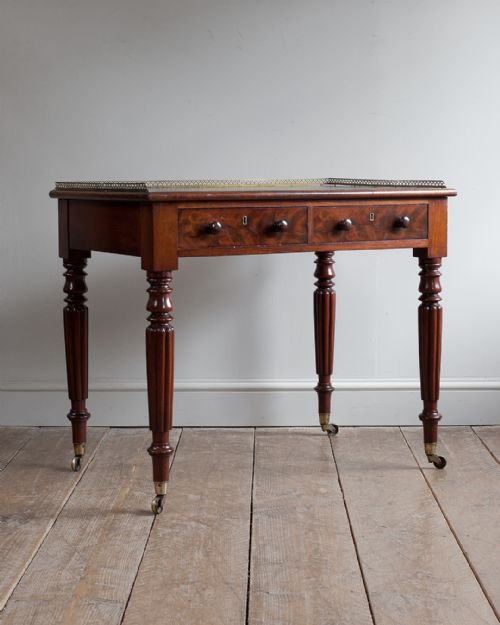
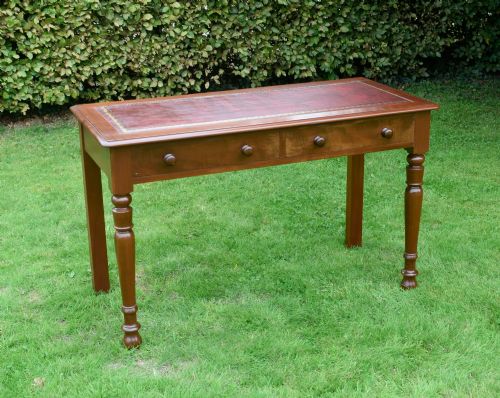
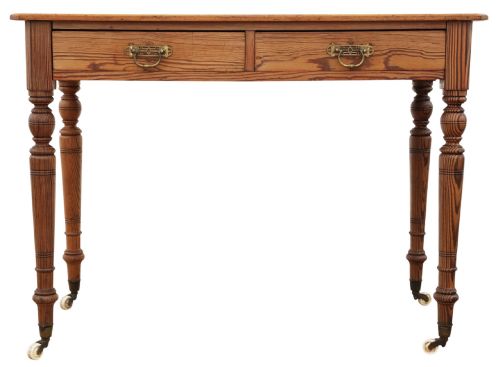
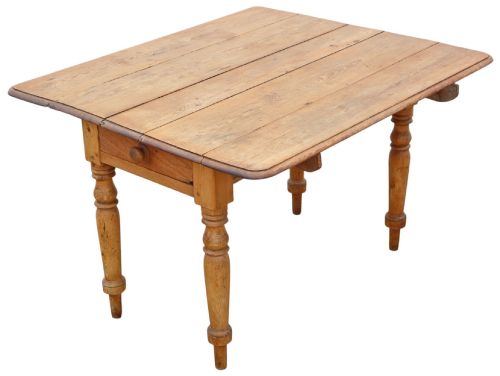
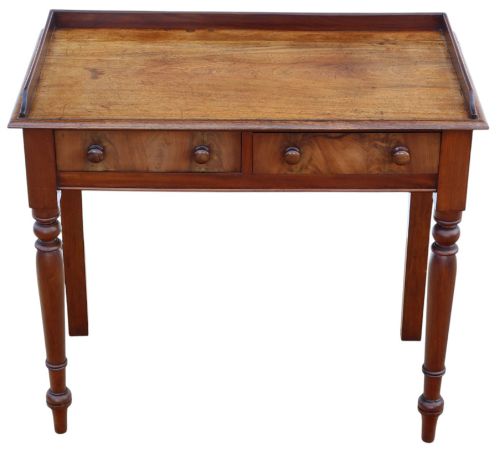
Victorian side table drawers encompass a variety of practical furniture forms designed for domestic work, writing, and storage during the nineteenth century. These items span simple pine farmhouse tables fitted with single frieze drawers to finely polished mahogany library and writing desks.
Buyers browsing this selection frequently encounter sturdy pine utility pieces alongside walnut and mahogany tables featuring integrated drawer compartments. Many examples originate from the Victorian period, supplemented by related pieces spanning the wider nineteenth century and the early twentieth century.
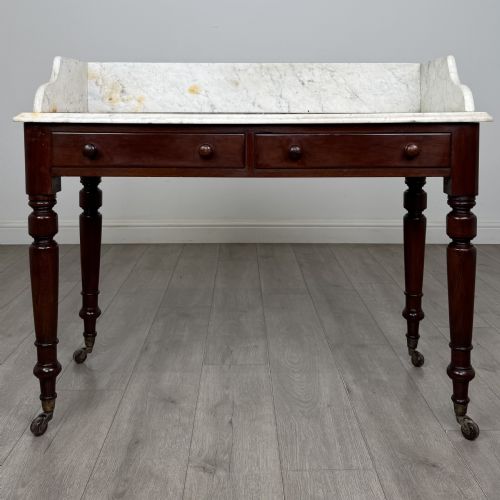
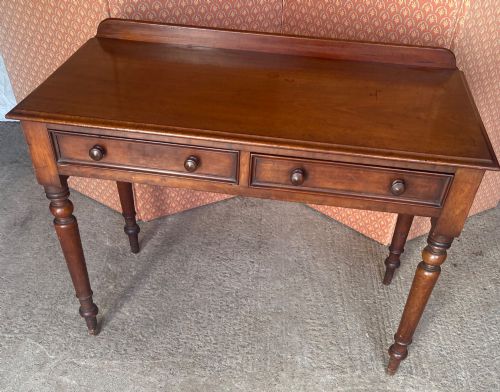
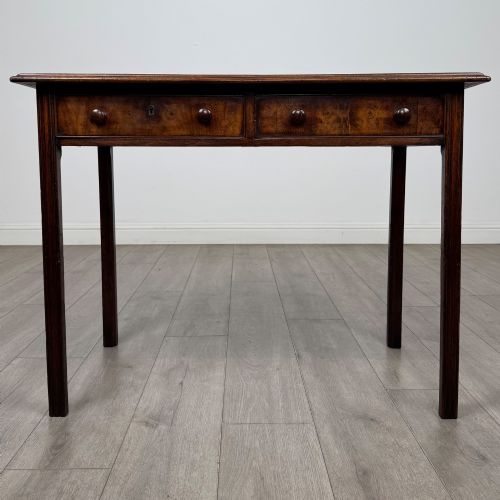
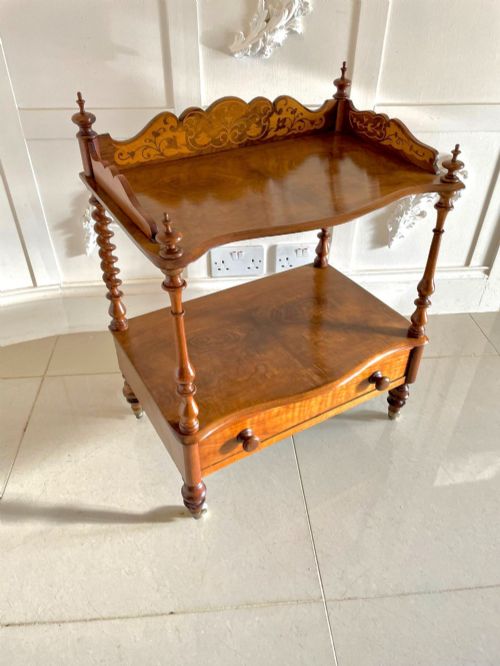
The primary forms include compact lamp tables, bedside cabinets, and side servers equipped with one or more drawers. These tables served various household roles, functioning equally as writing surfaces, dressing tables, and hallway consoles.
Materials and construction
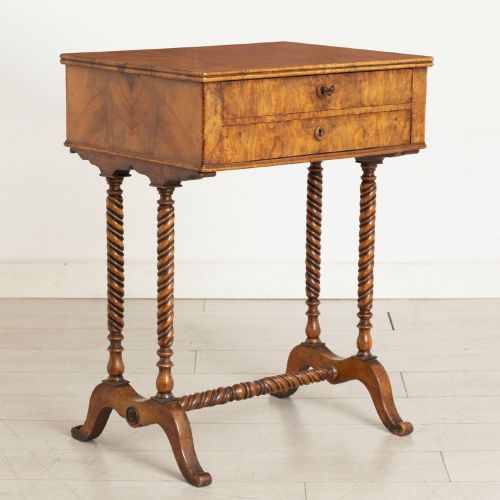
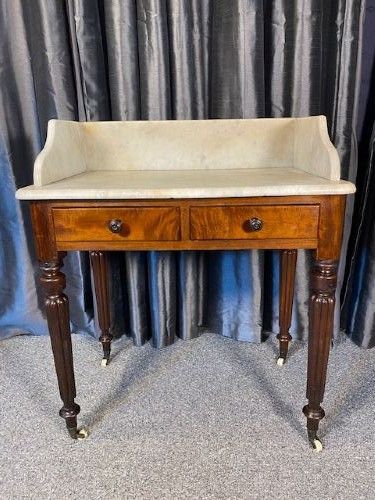
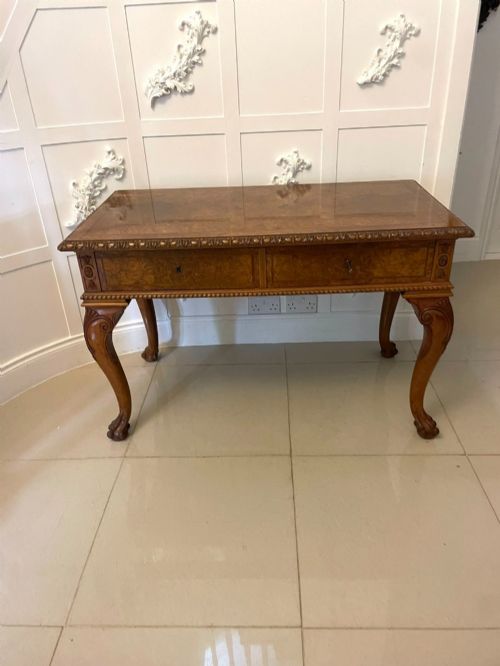
Makers utilised a range of domestic and imported timbers, predominantly relying on mahogany, walnut, and pine, alongside decorative veneers such as burr walnut and flame mahogany. Hardwoods provided structural rigidity for writing tables and desks, while softer pine served in functional farmhouse and kitchen furniture.
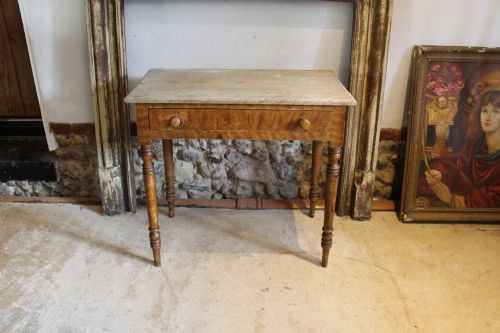
Construction methods involved traditional joinery techniques suited to frequent daily use, integrating drawers directly into the front frieze of the table frame. Details such as brass handles, inlaid decoration, and scumble painted finishes frequently complemented the timber structure.
A carved stags head occasionally peers backward from a gallery.
Craftsmanship and distinction
Quality differences emerge in the selection of timber veneers, the precision of the drawer construction, and the integrity of the original hardware. Superior examples display carefully matched grain patterns, such as burr walnut or flame mahogany, applied to well-proportioned frames.
The degree of decorative carving and secondary detailing, such as inlaid banding or specialised galleries, distinguishes standard utilitarian tables from more ambitious cabinet work. Preservation of original painted surfaces or patinated finishes also defines the standing of individual pieces.
Gillows
The Victorian Side Table Drawers Glossary
- Frieze drawer
- A drawer integrated into the horizontal band immediately beneath the table top. These compartments provided accessible storage for writing implements and small household items.
- Gallery
- A raised wooden or brass border fitted to the rear or sides of a table top. This feature prevented items from rolling off the surface.
- Scumble paint
- A decorative surface finish applied to imitate the appearance of finer wood grains or provide patterned coloration. It was frequently used on pine furniture.
- Pedestal table
- A freestanding table supported by a central pillar or column resting on a footed base. This configuration allowed maximum legroom around the surface.
Victorian Side Table Drawers: Frequently Asked Questions
What rooms suit a victorian side table drawers?
These tables adapt easily to hallways, bedrooms, and studies where surface space and concealed storage are required. Their modest footprints allow them to function as writing desks or lamp stands in compact areas.
Larger versions with multiple drawers also serve effectively as serving tables or console units in dining rooms and living spaces.
How were these tables originally used?
Household occupants utilised them for writing letters, storing dressing table accessories, or keeping hallway essentials organised within the drawers. Kitchen and farmhouse variants provided sturdy wooden surfaces for food preparation and general domestic tasks.
Many styles doubled as lamp tables or occasional surfaces in sitting rooms during the nineteenth century.
Are the drawers usually lockable?
Some writing tables and vanity desks incorporate working locks and keys to secure personal papers or valuables. Simpler pine or kitchen tables generally feature unkeyed drawers built strictly for open access.
Checking the interior of the drawer frieze reveals whether an escutcheon was originally fitted with a locking mechanism.
How do pine and mahogany models differ?
Pine versions tend to reflect country or domestic utility, often featuring painted finishes or straightforward timber construction. Mahogany and walnut variants represent more formal furniture styles intended for reception rooms and studies.
Hardwood models frequently display finer joinery, decorative inlays, and polished surfaces compared to their utilitarian pine counterparts.