
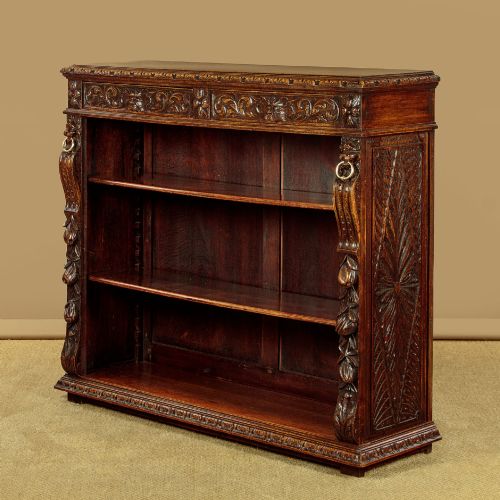
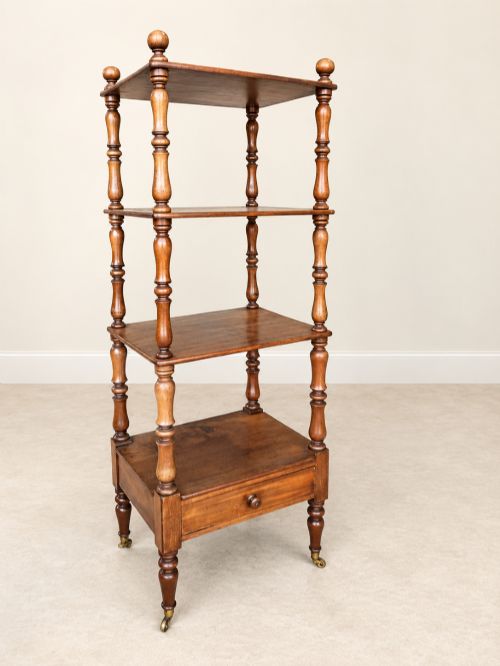
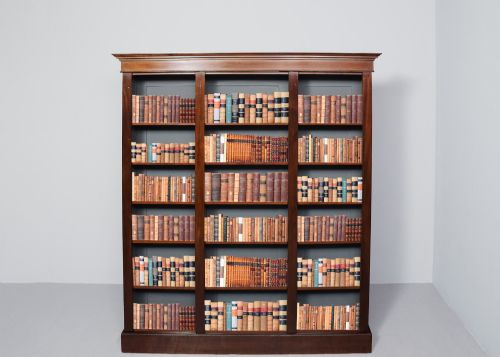
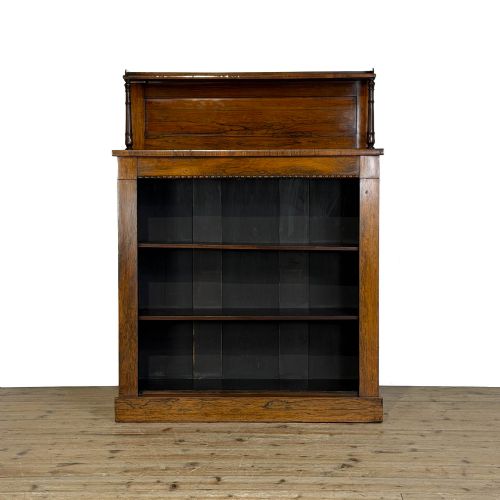
Victorian Shelf Unit
A victorian shelf unit provides practical display and storage, bringing timber warmth and architectural proportion to period interiors.

Victorian Shelf Unit
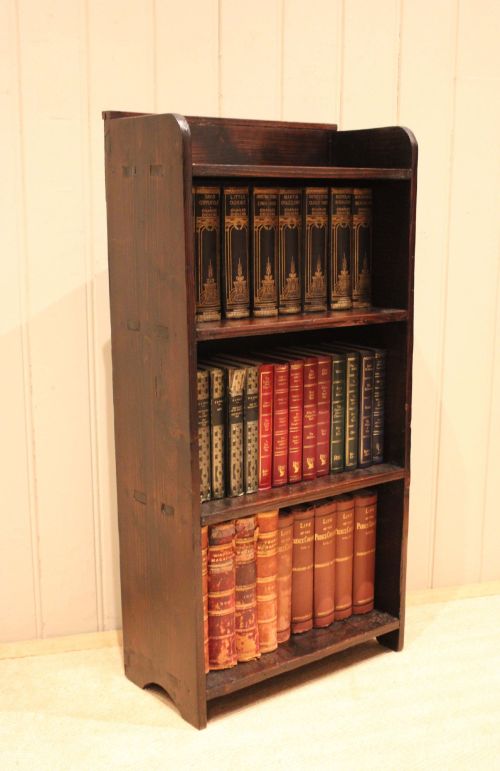
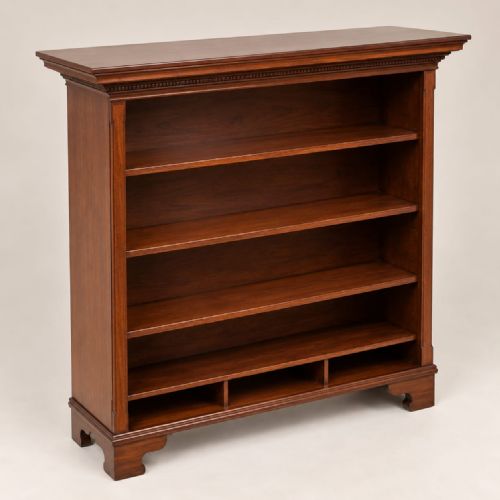
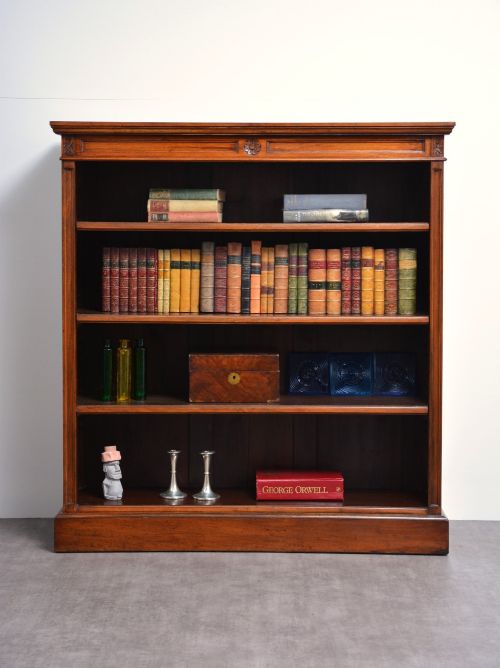
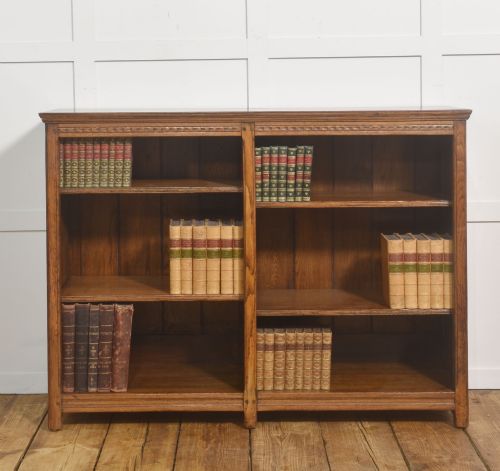
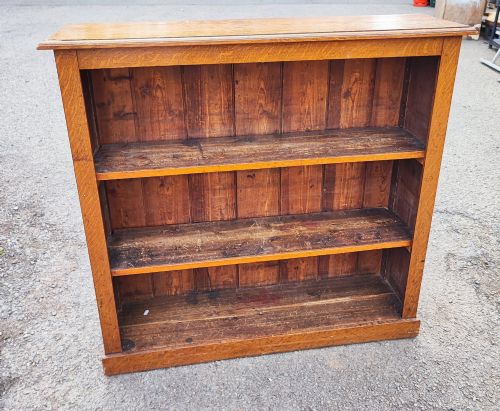
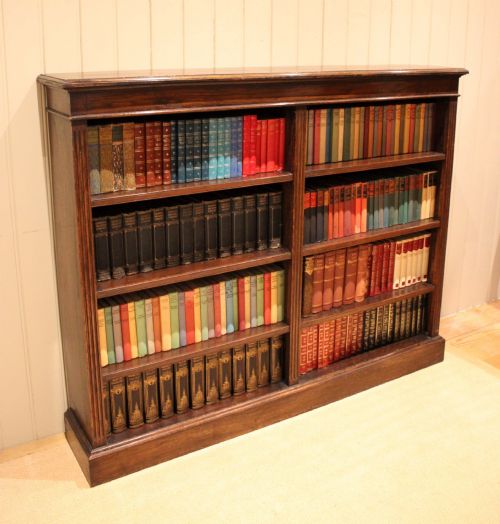
A victorian shelf unit encompasses open bookcases, tiered whatnots, wall shelves, and etageres designed for domestic display and book storage. Pieces range from compact pine kitchen racks and narrow walnut dwarf cabinets to large breakfront libraries.
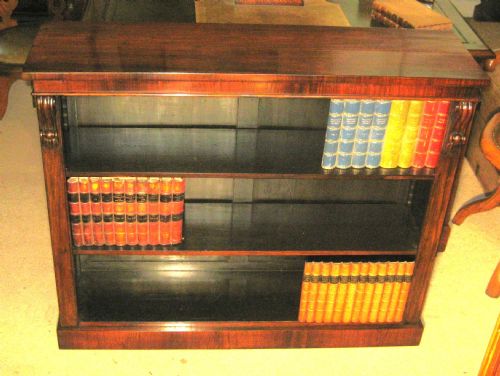
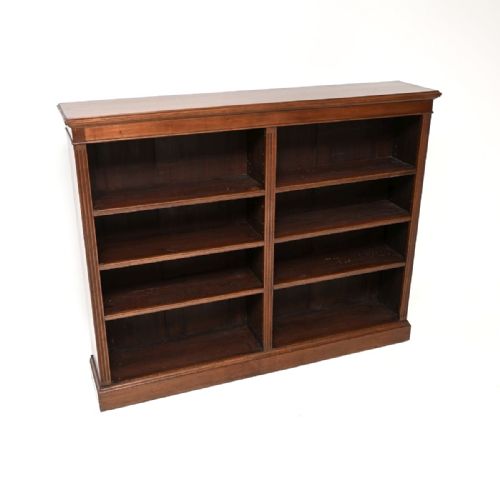
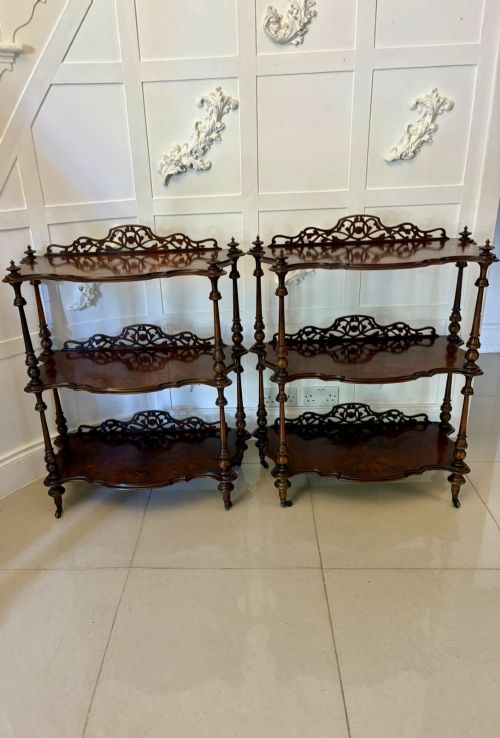
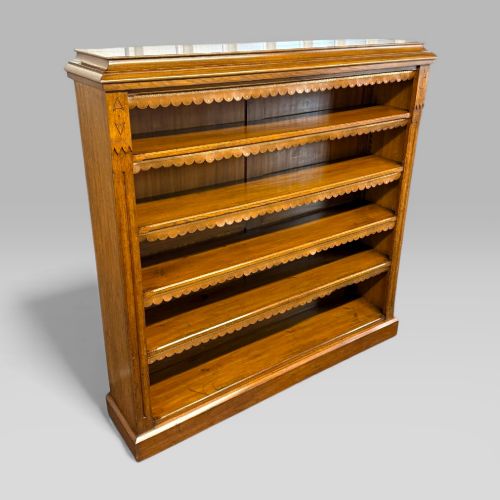
Open bookcases form the most common type encountered, often fitted with adjustable timber shelves to accommodate varying volumes. Multi-tiered etageres and whatnots supply lighter corner or freestanding display surfaces.
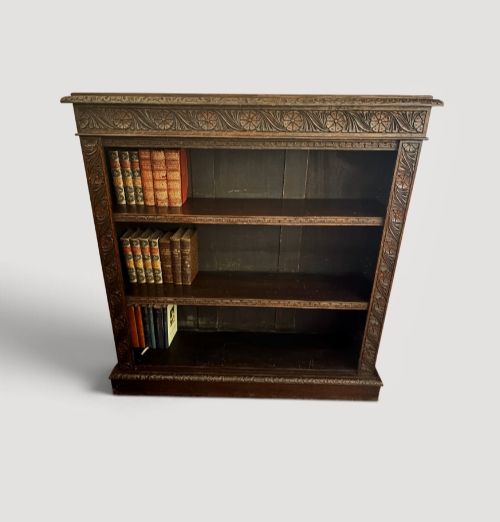
Origins span standard nineteenth-century British workshop production alongside distinct stylistic interpretations like Anglo-Indian padauk and Aesthetic Movement golden oak. Pieces appear in modest rustic country pine as well as formal parlour hardwoods.
How they were made
Cabinetmakers utilised dense native and exotic hardwoods including mahogany, walnut, burr walnut, rosewood, oak, and padauk, alongside utilitarian pine. Surfaces often display rich figuring, highlighted through polished finishes or ebonisation.
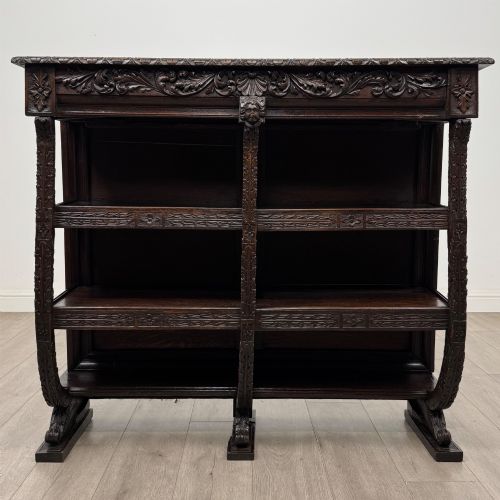
Construction techniques integrate traditional joinery with functional hardware such as brass castors on moveable pieces and adjustable shelf mechanisms. Decorative detailing relies on carved oak motifs, barley twist supports, and inlaid marquetry.
Specific forms incorporate integrated lower cupboards or stepped tiers, providing enclosed storage beneath open display surfaces. Wall-mounted variants utilise sturdy backplates for secure domestic hanging.
What varies in quality
The choice of timber creates a fundamental distinction, separating utilitarian pine from highly figured burr walnut, rosewood, and padauk veneers. Grain selection and matching across larger breakfront and serpentine forms indicate higher workshop standards.
Carpentry execution defines the structural integrity, seen in the precision of adjustable shelf mechanisms and the integration of carved ornamentation. Subtle details like turned barley twists, ebonised accents, and fine inlay elevate standard functional furniture into decorative art.
The Victorian Shelf Unit Glossary
- Whatnot
- A moveable set of open shelves used for displaying ornaments and small objects. These pieces often feature three or more tiers supported by turned columns.
- Etagere
- A piece of furniture consisting of a series of open shelves for displaying small articles. They frequently stand on castors for mobility in nineteenth-century drawing rooms.
- Burr walnut
- Timber taken from the warted growth of a walnut tree, yielding intricate swirling grain patterns. Cabinetmakers prized this veneer for high-status Victorian cabinets and bookcases.
- Barley twist
- A type of column or spindle carved in a spiral shape resembling twisted barley sugar. This decorative turning appears frequently on nineteenth-century supports.
- Breakfront
- A piece of furniture whose front projects forward in sections, typically with a central portion extending beyond the sides. This architectural layout adds depth to large bookcases.
Victorian Shelf Unit: Frequently Asked Questions
How do I use a whatnot?
A whatnot serves well in living spaces and bedrooms for displaying collections of ceramics, small books, or decorative objects. Their open tiered design allows light to pass through while keeping items accessible.
Because many sit on castors, they can be repositioned easily within a room. Ensure heavier objects rest on the lower tiers to maintain stability.
Where should I place wall shelves?
Victorian wall shelves suit kitchens, hallways, and studies where floor space is limited. Pine kitchen racks hold everyday crockery, while walnut or mahogany wall units display books and ornaments.
Fixings must be secured firmly into solid wall studs or masonry to support the weight of timber and books safely.
How do I adjust wooden shelves?
Many nineteenth-century bookcases feature adjustable shelves supported by wooden ratchets, brass studs, or metal strips. Lift the shelf slightly clear of its supports to reposition the timber.
Take care when sliding shelves past cabinet sides to avoid marking the polished interior surfaces with historical hardware.
Are these units suitable for modern books?
Victorian bookcases often accommodate modern hardbacks and paperbacks, particularly designs featuring adjustable shelving. Measure the internal depth and height before arranging larger volumes.
Shallow dwarf bookcases work best for standard octavo volumes, whereas larger library pieces take heavy folios.