




Victorian Sheep Watercolour Painting
These Victorian sheep watercolour painting examples capture pastoral life with soft pigments on paper, bringing quiet charm to a country interior.
Victorian Sheep Watercolour Painting
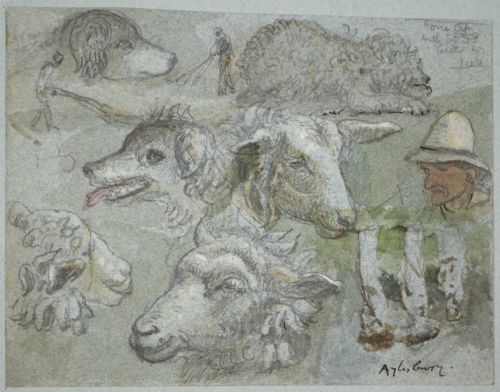
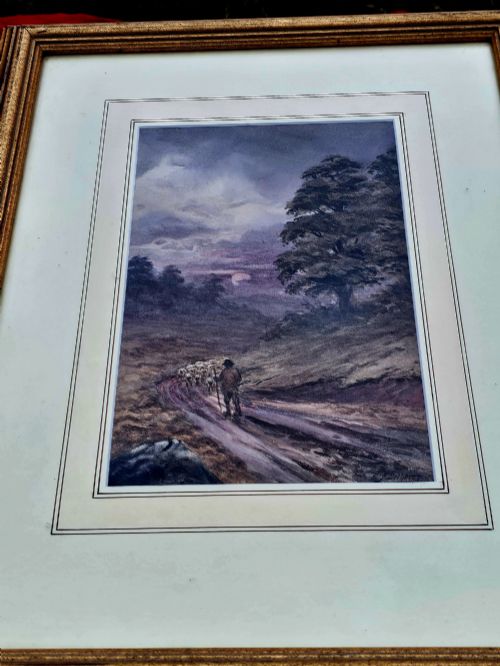
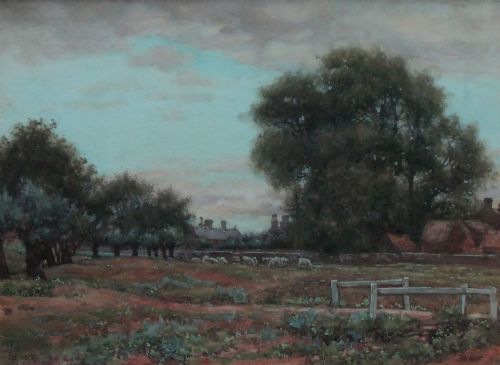
A victorian sheep watercolour painting portrays pastoral scenes, featuring flocks grazing on moorlands, hillsides, and meadows across the British countryside. These watercolours document rural life through the lens of nineteenth-century and early twentieth-century artists who observed agricultural scenes directly from nature.
Most pieces on this page originate from the nineteenth century or the Edwardian period, spanning dates from the eighteen-seventies up to nineteen-twenty. They commonly depict drovers, shepherds, and rural farmsteads alongside livestock in varied regional landscapes from Wales to Dorset.
Collectors encounter works attributed to known British painters as well as unsigned examples from the English School. Framed formats dominate these selections, often preserved behind glass within wooden or gesso frames.
Materials and methods
Artists painted these works using water-soluble pigments applied directly onto paper sheets. Many sheets also show underlying graphite sketches where the painter planned the composition before adding colour.
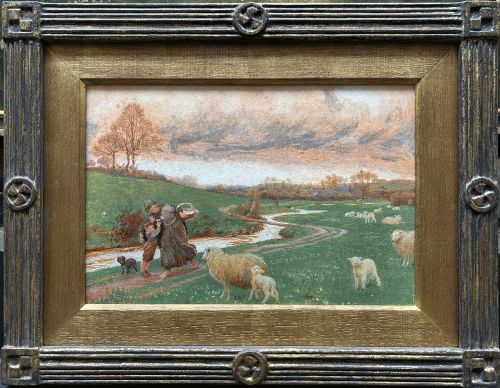
Completed paintings found their protection inside wooden and gilt wood frames, frequently sealed beneath glass sheets. Moulded gesso details often embellished the wooden moulding of the frames to enhance their decorative finish.
Victorian Sheep Watercolour Painting Retail Price Guide 2026
Typical asking prices for victorian sheep watercolour painting among the pieces listed under this phrase on Sellingantiques today, from the lower quarter to the upper quarter. They describe what is for sale here now, not the wider market.
Listings span the nineteenth century and extend into nineteen-twenty, utilising paper, watercolour, graphite, and gilt wood materials.
Judging quality
Quality rests upon the artist's ability to render the movement and texture of wool and landscape with fluid brushwork. Finer watercolours display confident handling of light and atmospheric depth across the hills and pastures.
The preservation of the paper and the integrity of the original framing elements influence the character of each piece. Intact nineteenth-century mounts and gilt wood frames contribute to the overall presentation of the artwork.
James Smetham·EJ Letheren·Frederick Walker·Cornelius Pearson·Bernard Walter Evans·Henry Charles Fox·Basil Bradley·A Winter Shaw·Henry Birtles·George Faulkner Wetherbee·John D Walker·Charles James Adams·Edmund George Warren·JS Cooper·T Sidney Cooper
The Victorian Sheep Watercolour Painting Glossary
- Watercolour
- A painting method where fine pigments are suspended in a water-based binder and applied to paper. This medium allows for transparent washes of colour that create luminous skies and soft landscape effects.
- Gesso
- A plaster-like mixture applied to wooden frame mouldings as a base for gilding or painting. It provides a smooth surface that takes crisp decorative detail.
- English School
- A classification for works produced by artists trained or working within England. It unites painters sharing stylistic traditions without implying a single formal institution.
- Pastoral
- A genre of art depicting rural life, shepherds, and farm animals in idealized or natural settings. These scenes evoke a peaceful detachment from urban industrial life.
Victorian Sheep Watercolour Painting: Frequently Asked Questions
How do I care for a watercolour painting?
Keep watercolours away from direct sunlight to prevent the pigments and paper from fading over time.
Maintain stable room humidity levels to protect the paper substrate and the wooden frame from warping.
Are these paintings original works?
The pieces listed are original hand-painted watercolours on paper, created by individual artists rather than being mechanical reproductions.
Each work reflects the distinct hand and technique of its period creator.
How do I hang a framed watercolour?
Use sturdy picture hooks suited to the weight of the wood and glass frame to secure the artwork safely to the wall.
Select an interior wall that avoids damp conditions and excessive temperature fluctuations.
What subjects appear besides sheep?
Artists frequently included accompanying figures such as shepherds, drovers, and farm workers tending to livestock in the countryside.
Surrounding elements often feature rural cottages, rivers, coastal estuaries, and extensive moorland hills.