
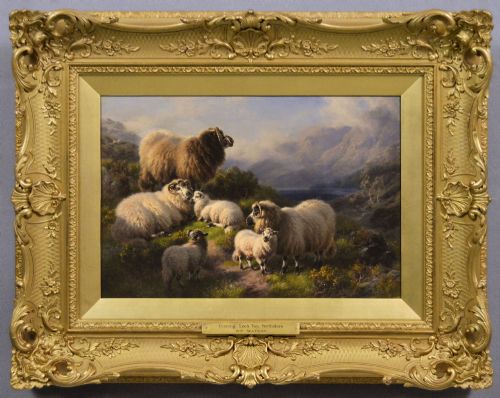
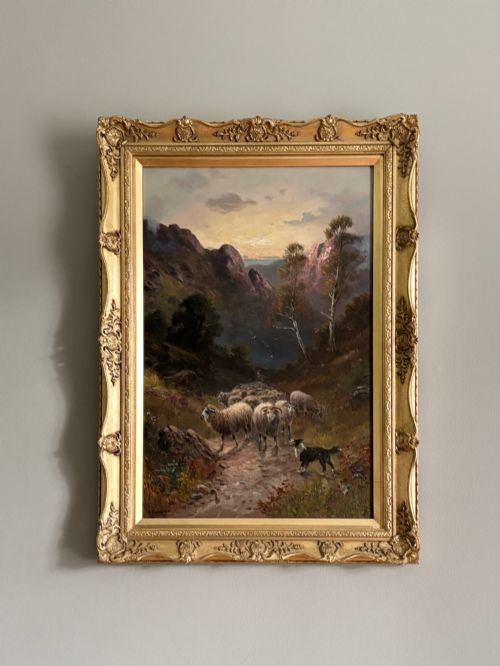
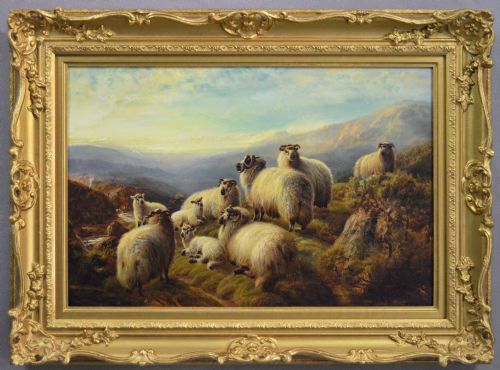
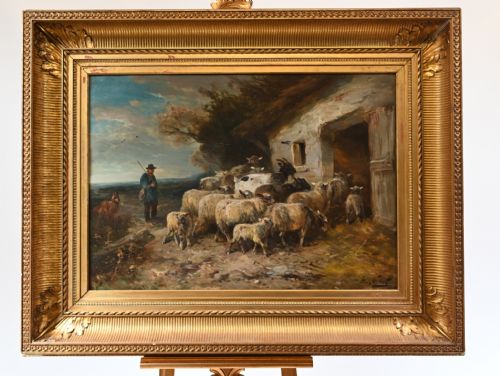


Victorian Sheep Landscape Art
Victorian sheep landscape art captures pastoral scenes of flocks and shepherds across the nineteenth and early twentieth centuries, offering buyers a window into traditional rural life.
Victorian Sheep Landscape Art
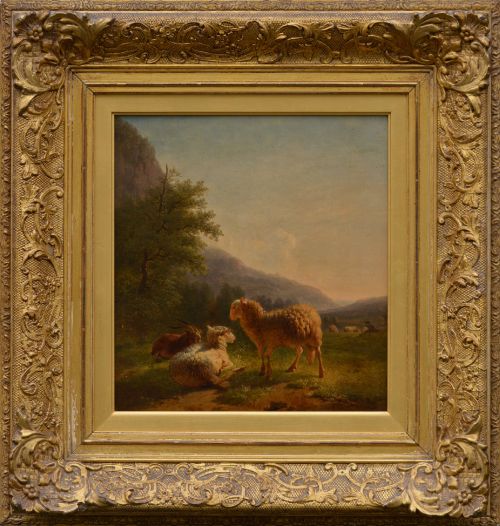
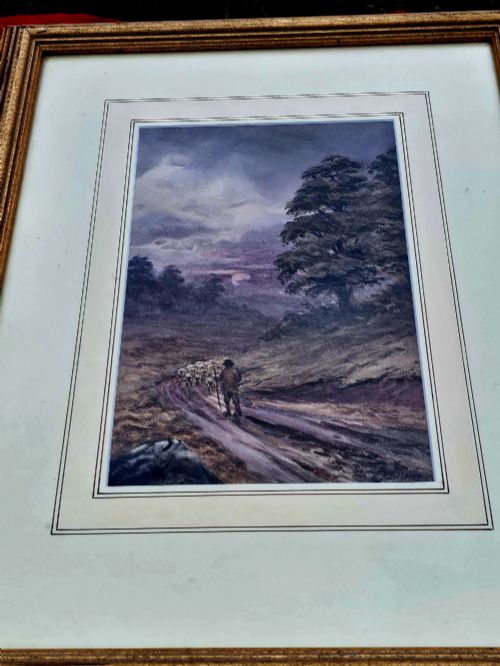
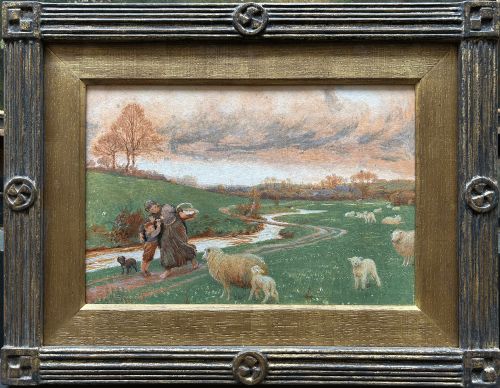
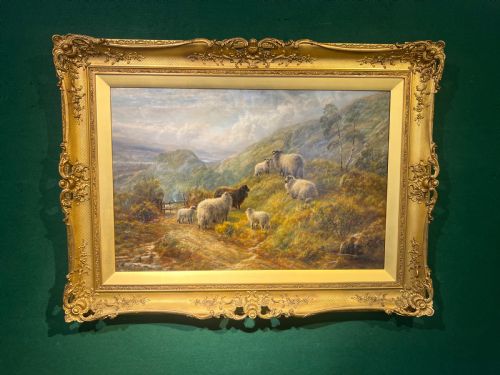
Victorian sheep landscape art represents a major category of fine art depicting pastoral life, rural scenery, and agricultural settings. Buyers encounter numerous examples in oil on canvas and watercolour, framed in traditional wood and gesso.
The works span the nineteenth century into the early twentieth century, incorporating styles such as Victorian Pastoral, 19th Century Realism, and English School. Common subjects include resting shepherds, flocks driven to market, and Highland landscapes.
Originating from British and continental European traditions, these paintings record rural industries and countryside views. The selection ranges from intimate watercolours on paper to large oil paintings housed in ornate giltwood frames.
How They Were Made
Artists applied oil paint to stretched canvas or watercolour to paper, utilising brushwork to capture the texture of wool, vegetation, and atmospheric skies. Many works are preserved behind glass within wooden frames finished with moulded gesso.
Makers built up compositions using layered pigments to achieve depth in rural valleys, coastal cliffs, and snowy mountain passes. Framing often involved carved wooden mouldings finished with gilt or paint to complement the pastoral subject matter.
Listings feature works spanning the 1860s to the 1920s, utilising oil on canvas and watercolour on paper.
What Varies in Quality
Quality rests in the handling of light, anatomical precision of the animals, and compositional balance between the flock and the surrounding terrain. Stronger works demonstrate accomplished draftsmanship in rendering wool textures and the natural postures of sheep.
Materials also separate examples, as finely woven canvas and heavy giltwood frames indicate higher production standards than simpler paper supports. The reputation of the painter and the specific regional school influence the standing of an individual piece.
Eugène Verboeckhoven·EJ Letheren·Frederick Walker·Robert Watson·William Watson Jnr·Douglas Cameron·Henry Schouten·Cornelius Pearson·William Henry Mander·Thomas Sidney Cooper·Franz van Severdonck·William Sydney Cooper·Robert John Hammond·Walter J Watson·Bernard Walter Evans·Henry Charles Fox·Basil Bradley·Charles Jones·George Turner·A Winter Shaw·GW Horlor·Frederick Richard Lee·Henry Birtles·George Faulkner Wetherbee·Charles James Adams
The Victorian Sheep Landscape Art Glossary
- Oil on Canvas
- Pigment bound in drying oil applied to a woven fabric support. This medium allowed artists to achieve rich colour saturation and subtle blending in pastoral scenes.
- Watercolour
- Paint consisting of colour suspended in a water-soluble vehicle, typically applied to paper. This technique produced translucent washes suited to atmospheric countryside views.
- Giltwood
- Wood carved and coated with gold leaf or a gold-coloured finish. This material formed the decorative frames that historically accompanied fine paintings.
- Gesso
- A paint mixture consisting of a neutral binder mixed with chalk, pigment, or plaster. It served as a smooth preparation layer on wooden frames before gilding.
- English School
- A classification for artists working within British artistic traditions during the eighteenth, nineteenth, and early twentieth centuries. It encompasses diverse landscape and animal painters.
Victorian Sheep Landscape Art: Frequently Asked Questions
What subjects appear in Victorian sheep landscape art?
Paintings commonly feature flocks grazing in valleys, shepherds tending animals on moorland, and sheep driven along country lanes. Coastal views and Highland settings also recur.
Animals appear alongside farm buildings, rivers, and winter snow scenes, reflecting rural life across Britain and Europe.
How do I care for antique paintings on paper and canvas?
Keep works away from direct sunlight to prevent fading of watercolours and oil pigments. Maintain stable indoor humidity to protect wooden stretchers and paper supports.
Display pieces in dry environments and consult a professional restorer before attempting any cleaning or frame repairs.
How can I distinguish watercolours from oil paintings?
Watercolours utilise paper supports and are typically displayed under glass to protect the absorbent surface. Oil paintings use canvas and do not require glass protection.
Oil surfaces exhibit visible brush texture and a distinct sheen, whereas watercolours present a flat, matte appearance.
Which artists painted Victorian sheep landscapes?
Numerous British and European painters specialised in pastoral subjects during the nineteenth century. Figures like Thomas Sidney Cooper and Robert Watson produced notable animal and landscape studies.
Followers and contemporaries frequently contributed to the genre, recording rural topography across England, Scotland, and Wales.