

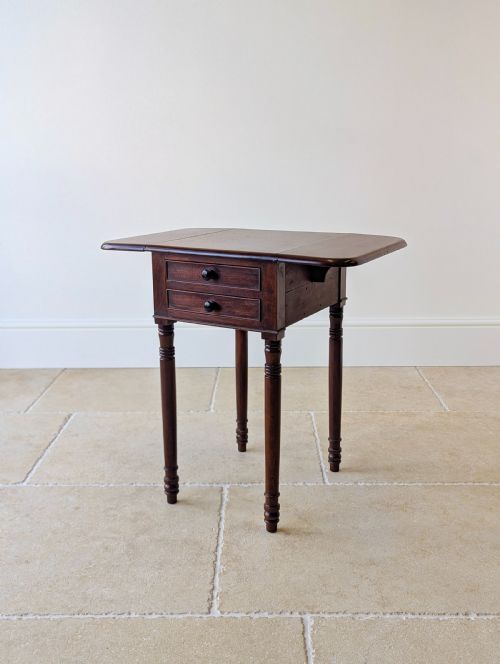


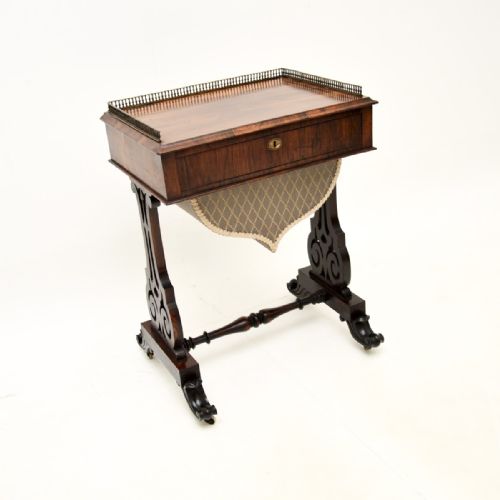

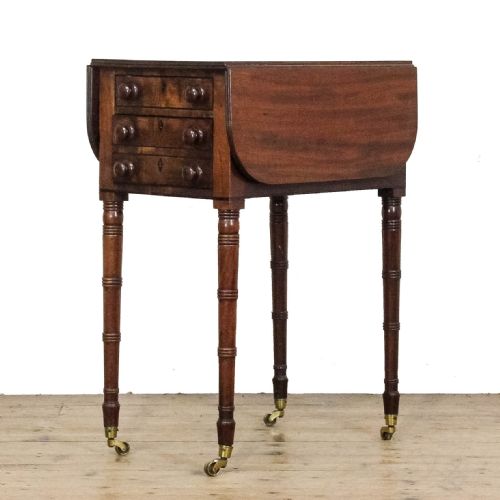

Victorian Sewing Furniture
Victorian sewing furniture combines intricate compartments with fine timber, offering a practical workspace that doubles as an elegant side table.
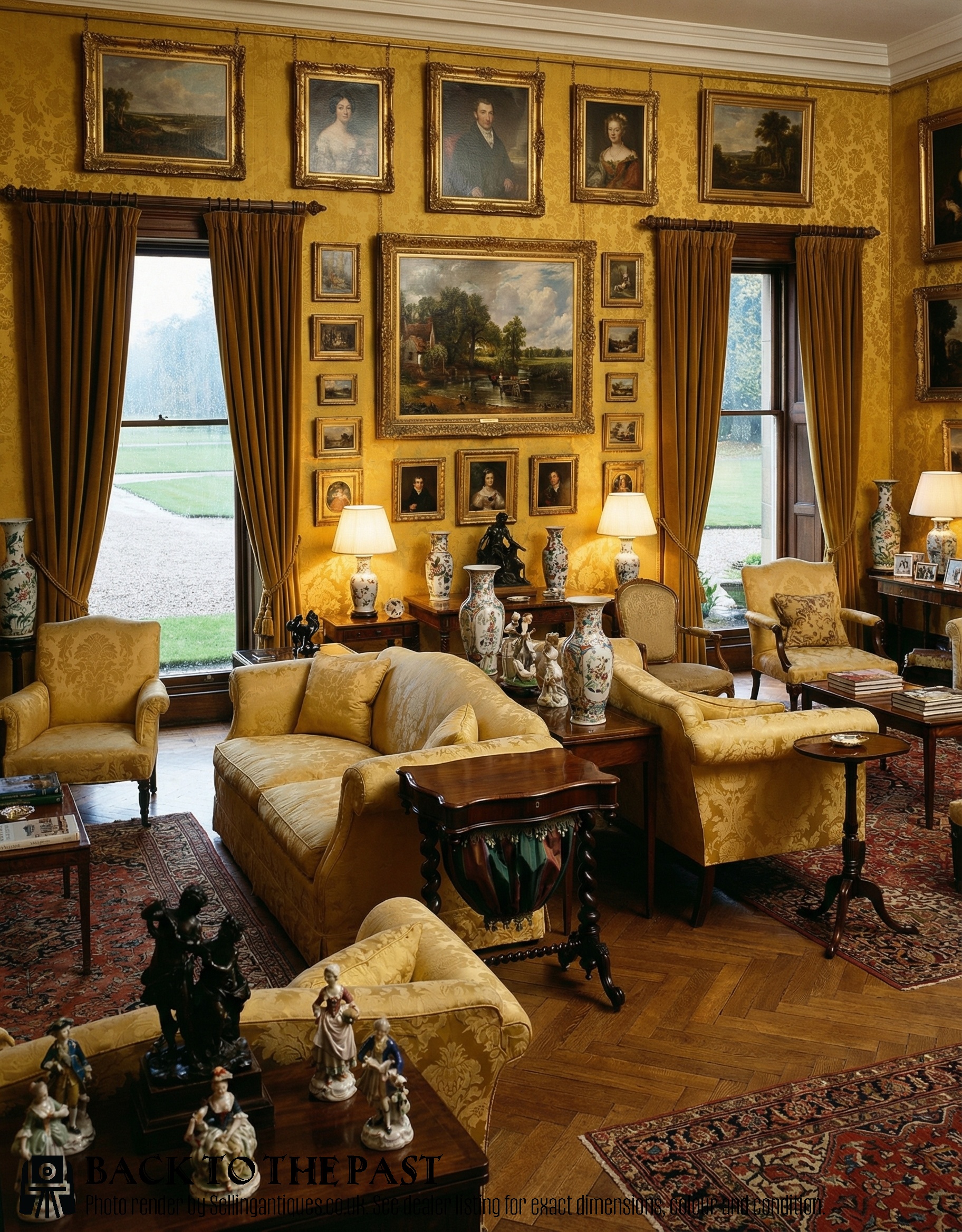
Victorian Sewing Furniture
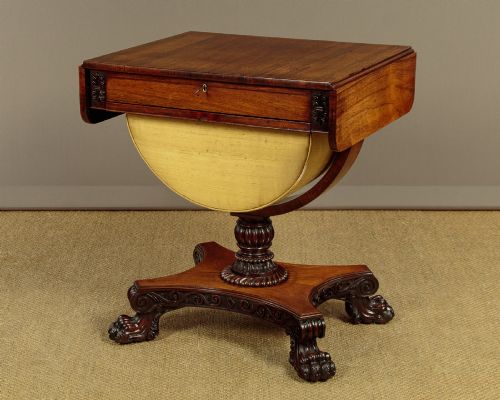
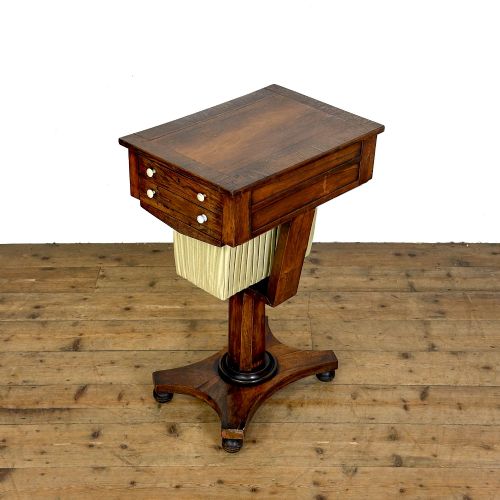
Victorian sewing furniture comprises dedicated work tables and sewing boxes designed for domestic needlework and crafts. These pieces typically feature fitted internal compartments for threads, needles, and tools, often sitting above a fabric bag or drop-down storage well.
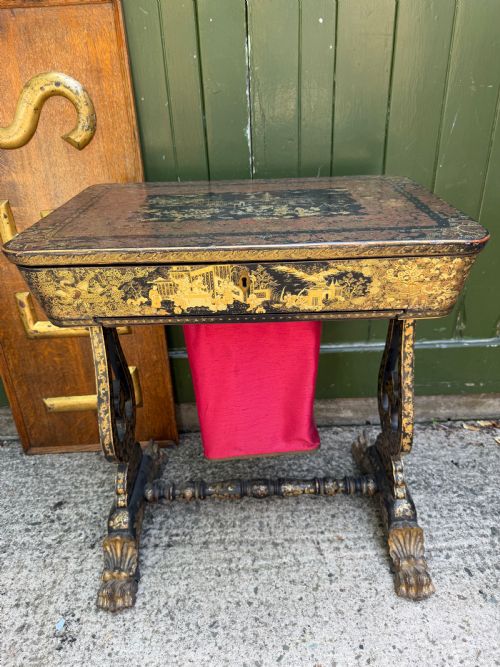
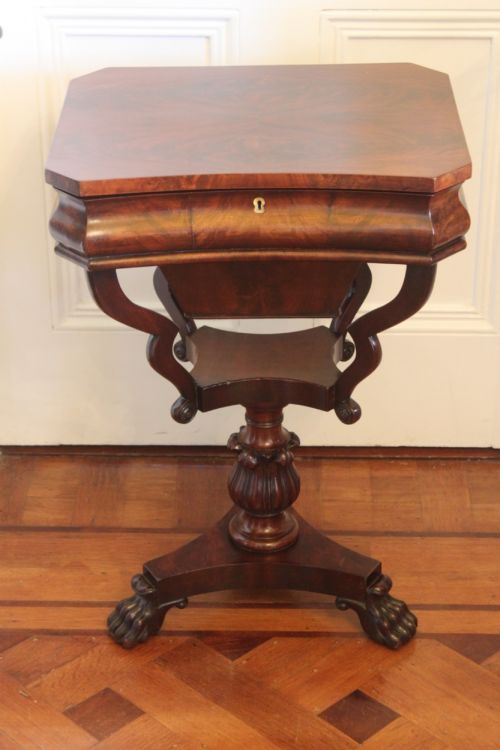
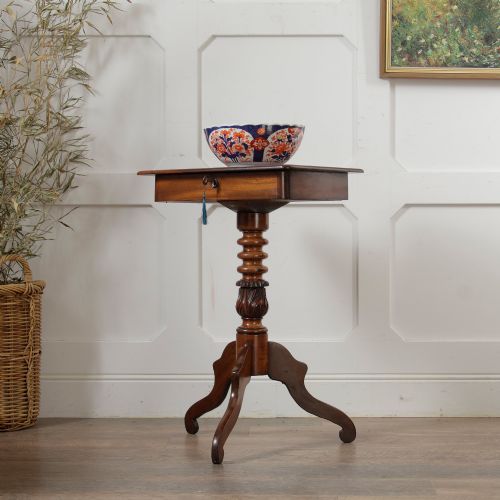
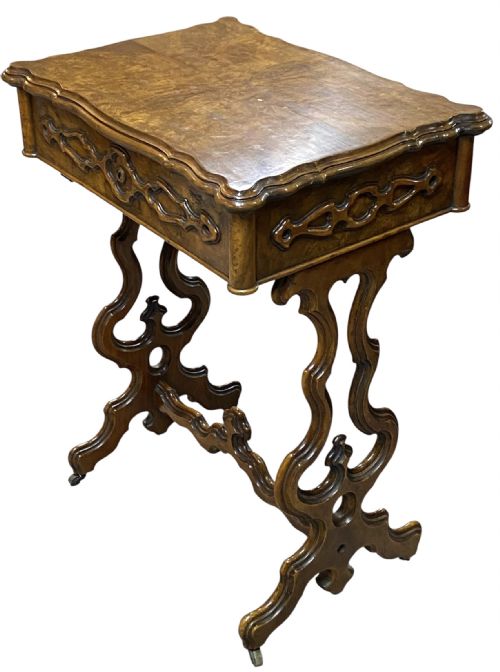
The selections available range from early Victorian mahogany and rosewood pieces to later burr walnut, birch, and inlaid examples. Makers utilised various regional traditions, producing forms from simple bobbin-turned pedestals to elaborate games tables and Chinese export lacquer items.
Materials and Construction
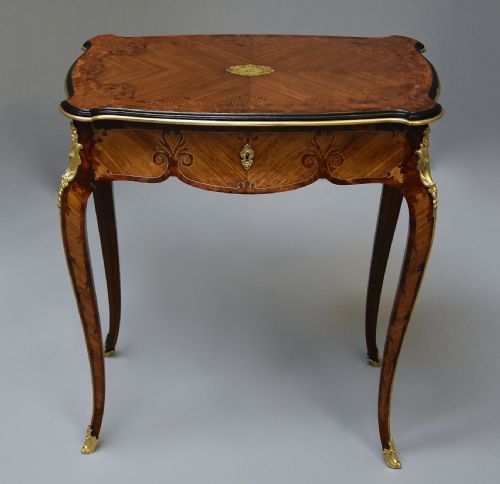
Cabinet makers relied heavily on dense hardwoods such as rosewood, mahogany, and walnut, frequently employing burr veneers and marquetry inlay to enrich the exterior surfaces. Structural frames incorporated turned pedestals, carved supports, and delicate boxwood stringing.
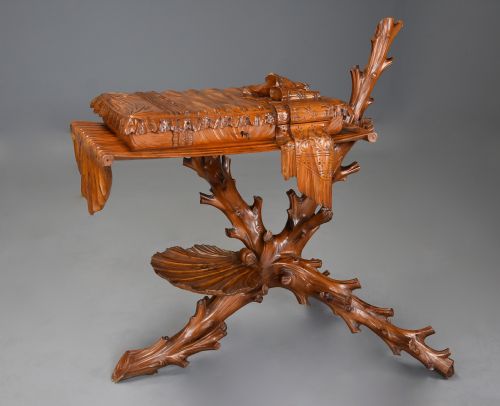
Internal compartments required precise joinery to organise small tools and accessories. Working mechanisms, sliding trays, and fitted writing or reading ledges were integrated into the primary table forms.
Period styles represented include Regency, William IV, Biedermeier, Louis XV Revival, and Italian Grotto.
Craftsmanship and Detailing
Quality rests upon the selection of timber veneers, the precision of the marquetry inlay, and the complexity of the internal fittings. Superior examples display sophisticated mechanisms, hand-painted decoration, or specialised regional woods like Killarney arbutus and carved padouk.
Simpler interpretations depend on solid timber construction and honest turning, whereas finer items exhibit elaborate carving, specialised compartments, and retained original silk or leather linings.
Boothroyd Sons Rimmer Southport·Heal Son
The Victorian Sewing Furniture Glossary
- Work table
- A small domestic table designed specifically for needlework, featuring internal storage compartments and often a suspended fabric bag. These pieces gained immense popularity during the nineteenth century for home craft use.
- Pembroke table
- A table equipped with two hinged drop leaves on opposing sides, offering an adaptable surface area. They frequently served as sewing or occasional tables in Victorian parlours.
- Marquetry
- The art of applying decorative pieces of veneer to a structure to form intricate patterns and pictorial designs. Cabinet makers used contrasting timbers like boxwood and rosewood to create geometric or floral motifs.
- Bobbin-turned
- A style of furniture turning where the wood is shaped into a series of rounded spheres resembling bobbins or spools. This technique was common on the supports of Victorian pedestals and occasional stands.
- Killarney ware
- Distinctive decorative woodwork produced in Ireland, typically fashioned from arbutus wood and embellished with intricate marquetry views and shamrock motifs. These items form a specialised category within nineteenth-century sewing furniture.
Victorian Sewing Furniture: Frequently Asked Questions
What is Victorian sewing furniture used for?
These pieces were built to house sewing equipment, threads, and small personal items used in domestic needlework. The integrated trays and compartments kept materials organised while the top surface served for writing or reading.
Today, they function well as decorative side tables or occasional stands in living spaces. Their internal compartments remain useful for storing small modern accessories.
What woods were used for these tables?
Makers predominantly utilised rich hardwoods such as rosewood, mahogany, and walnut. Burr walnut and figured veneers were frequently chosen for high-status decorative surfaces.
Alternative materials include bamboo, lacquered finishes, papier-mâché, and regional timbers like arbutus and padouk.
How do I date a Victorian sewing table?
Dating relies on stylistic shifts from early Victorian mahogany pieces with simple lines to the ornate marquetry and exotic woods of the later nineteenth century. Architectural details, turning styles, and specific revival influences offer further chronological clues.
Evidence shows production spanning from the early decades through the late 1900s, reflecting changing Victorian interior fashions.