


Carved Rosewood Sewing Table
A carved rosewood sewing table is a domestic piece for needlework and small crafts, prized for rich timber grain and intricate carving.
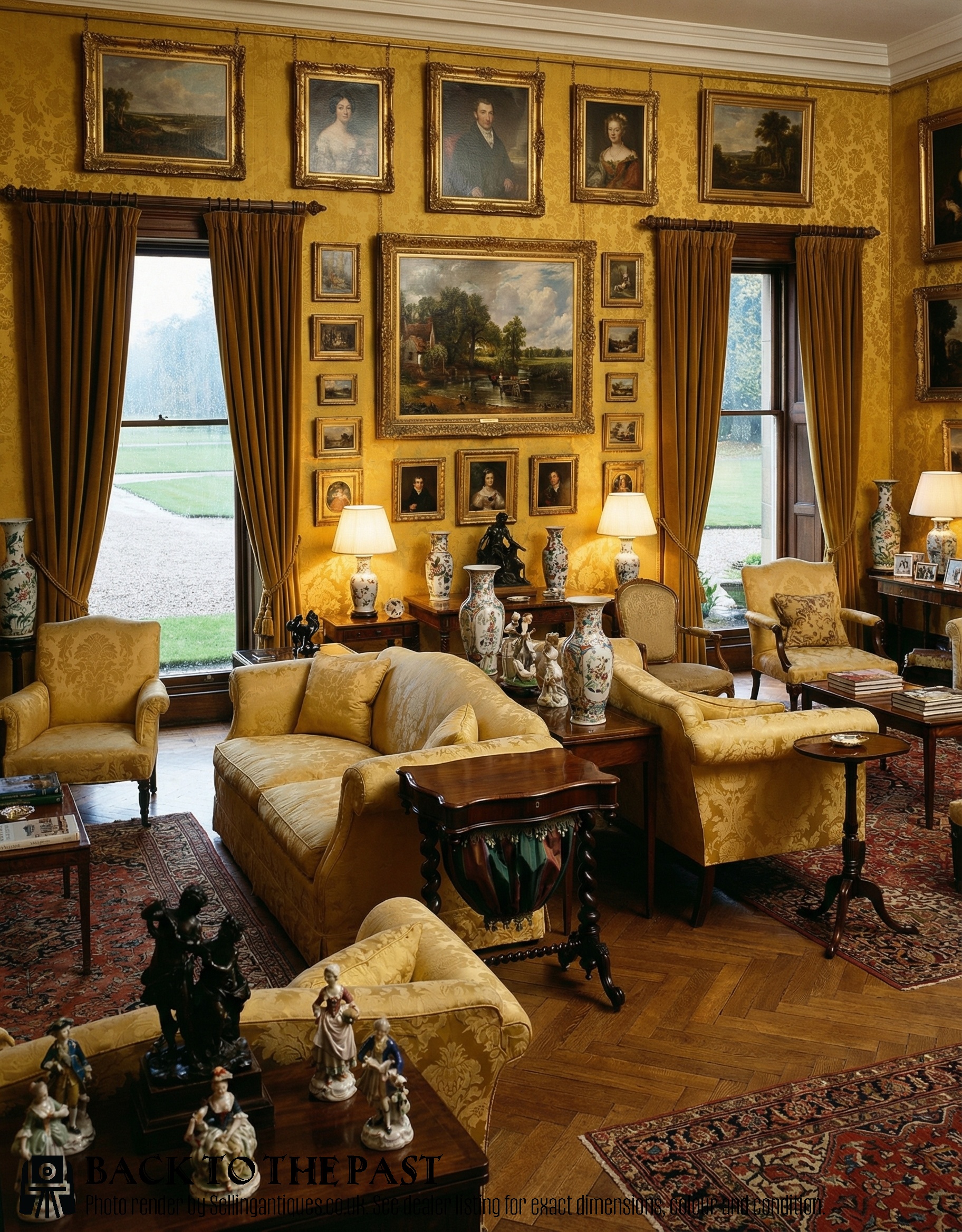
Carved Rosewood Sewing Table
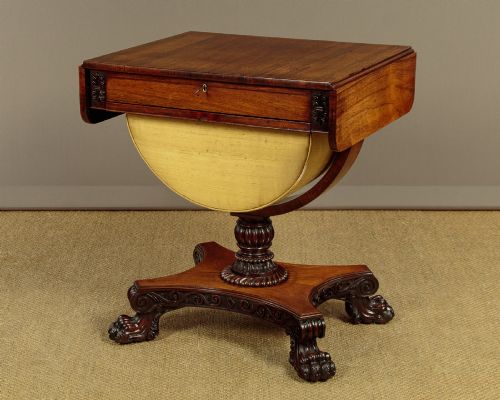
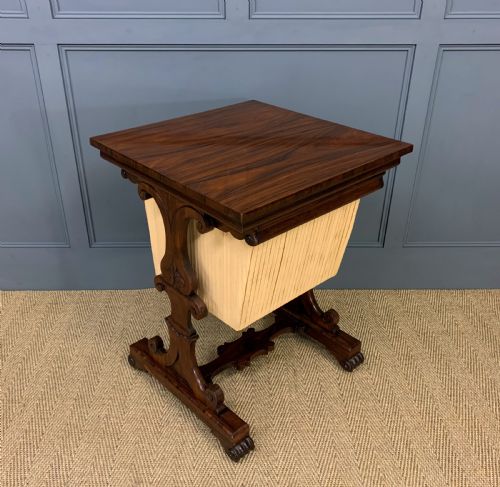
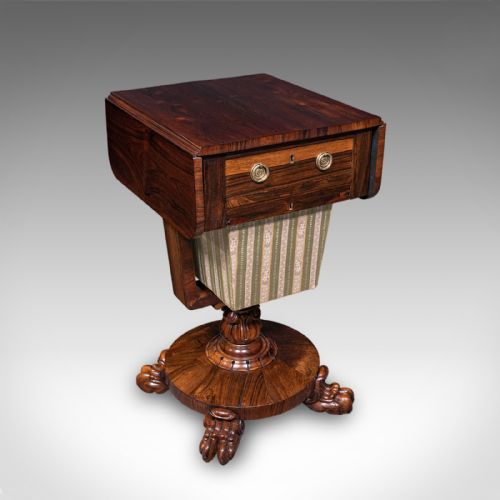
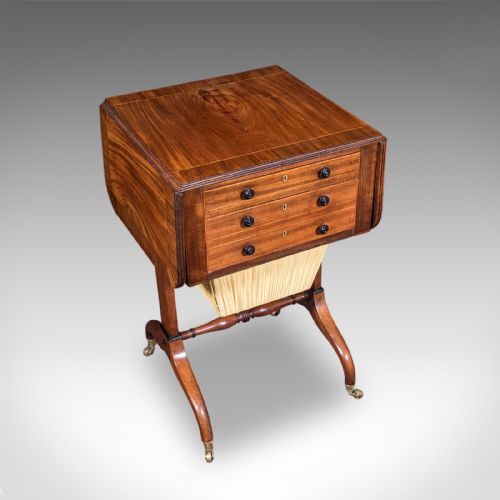
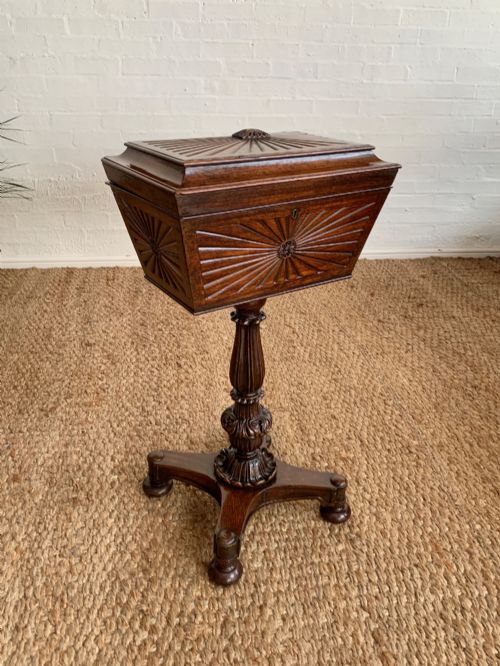
A carved rosewood sewing table brings together the refined forms of the Regency, William IV, and Victorian periods. These pieces function as work tables, occasional tables, or games tables, designed for parlours and drawing rooms where ladies engaged in needlepoint and crafts.
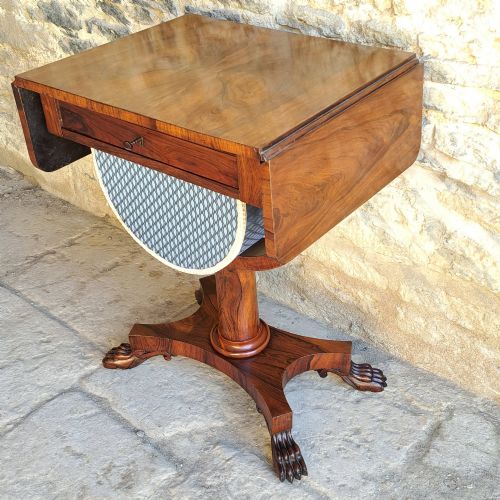
The versions most commonly met on this page date from the nineteenth century, spanning eras from George IV through to late Victorian decades. They appear in drop-leaf formats, with caddy tops, trumpet bodies, or fold-over surfaces for games.
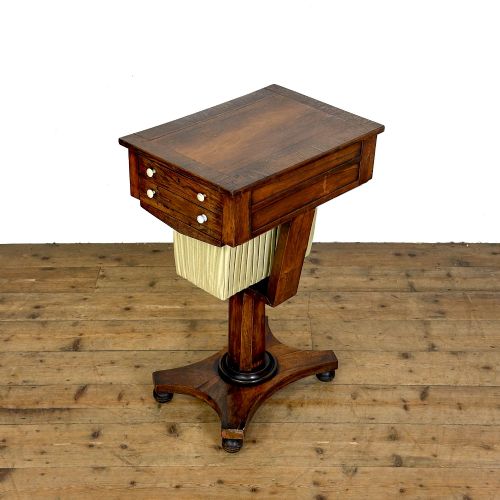
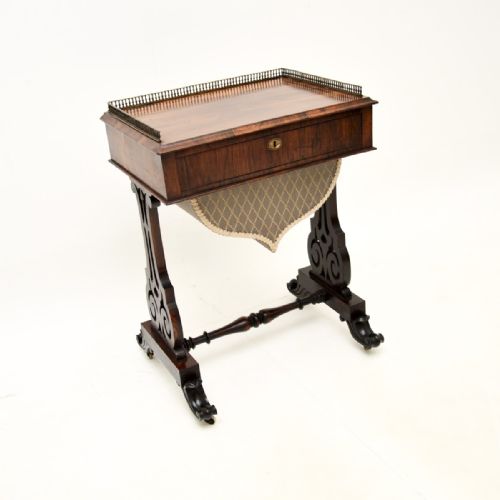
Makers of the period often produced these items with fitted interiors, silk bags, or compartments for sewing implements, combining storage with decorative presence. English manufacture dominates the selection, alongside pieces associated with workshops such as Gillows.
How they were made
Craftsmen built these tables using dense tropical rosewood and palisander, frequently applying marquetry inlay, boxwood stringing, and brass hardware. Solid timbers and veneered surfaces provide the deep colour and figured grain characteristic of the nineteenth century.
Structural elements incorporate drop-leaf mechanisms, turned pedestals, and sunburst carving executed by hand. Interiors often feature fabric, needlepoint tapestry, and silk linings to house sewing accessories.
Listings span the nineteenth century, including Regency, William IV, and Victorian periods executed in rosewood, mahogany, and boxwood.
What varies in quality
The standard of a carved rosewood sewing table rests on the crispness of its woodwork and the selection of timber veneers. Superior examples display deep, deliberate carving on pedestals and friezes, rather than shallow or mechanical shaping.
Interior fittings and mechanisms also separate standard items from finer productions. Intricately partitioned sewing boxes, intact silk compartments, and well-fitted drop leaves indicate higher workshop standards during manufacture.
The Carved Rosewood Sewing Table Glossary
- Rosewood
- A heavy, dense timber with a dark brown or reddish hue and pronounced dark grain, highly favoured in nineteenth-century cabinet making.
- Palisander
- A term frequently applied to Brazilian rosewood, known for its rich colour and decorative figuring on cabinet surfaces.
- Marquetry
- The art of applying pieces of veneer to a structure to form decorative patterns, often seen on Victorian trumpet tables.
- Caddy top
- A hinged or lift-off lid style reminiscent of tea caddies, providing access to top storage compartments.
- Drop leaf
- A table top with hinged flaps on the sides that can be raised or lowered to adjust the surface area.
- Needlepoint tapestry
- Canvas worked with wool or silk thread in counted stitches, commonly utilised for the panels and inserts of sewing stands.
Carved Rosewood Sewing Table: Frequently Asked Questions
What is a sewing table used for?
A sewing table serves as a specialised piece of parlour furniture designed to hold needlework, threads, and small crafting tools.
Interiors typically include compartments, trays, or suspended bags to keep materials organised during fine handwork.
How do I date a rosewood table?
Dating relies on stylistic clues such as the transition from Regency elegance to heavier William IV proportions and Victorian detailing.
Construction methods, hardware types, and specific decorative motifs like sunburst carving provide further context for the decade of manufacture.
Are these tables good for small spaces?
Drop-leaf variants and compact trumpet forms make these tables suitable for placement beside seating in smaller rooms.
Their narrow profiles allow them to function as lamp tables or occasional surfaces when not utilised for sewing.